★
Loading archive…
Loading archive…

First Sergeant, U.S. Army
Support & adopt this hero ↓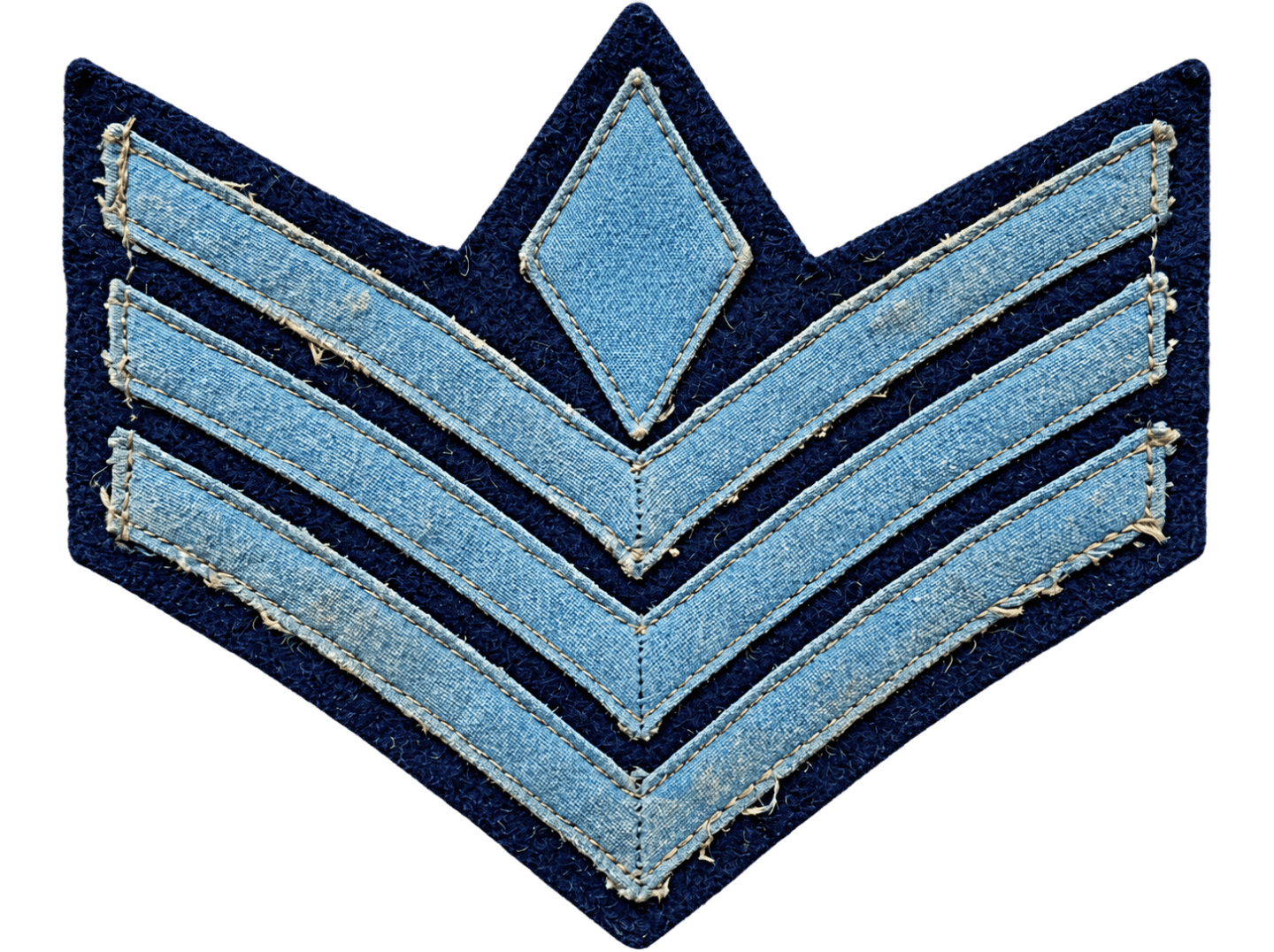
From Enslavement to Heroism at New Market Heights
Powhatan Beaty was an African American Union Army soldier, Medal of Honor recipient, and accomplished stage performer whose life spanned the struggle against slavery and the development of African American theater in the United States. Serving as First Sergeant of Company G, 5th United States Colored Infantry, he distinguished himself at the Battle of New Market Heights, Virginia, on September 29, 1864. When every officer in his company was killed or wounded, Beaty assumed command and led the remaining soldiers against Confederate defenses. His extraordinary battlefield leadership earned him the Medal of Honor on April 6, 1865.
Beaty was born on October 8, 1837, in Richmond, Virginia. He was born into slavery during a period when African Americans in the South faced severe legal restrictions and the constant threat of exploitation. His family eventually relocated to Cincinnati, Ohio, around 1849, where he gained his freedom and received an education.
In Cincinnati, Beaty attended school and developed an early interest in public performance. He made his theatrical debut during a school concert, an experience that began his lifelong association with acting and public speaking. After completing his education, he learned cabinetmaking and worked as a skilled craftsman.
When the American Civil War began in 1861, Beaty was living in Cincinnati. The city's location on the Ohio River, directly opposite the slave state of Kentucky, placed it near the conflict's western frontier.
In September 1862, Confederate advances into Kentucky raised fears that Cincinnati might come under attack. African American men in the city, including Beaty, were compelled to participate in defensive construction work. The workers became associated with the Black Brigade of Cincinnati, which helped construct fortifications to protect the city.
This experience preceded Beaty's formal enlistment in the Union Army.
On June 7, 1863, Beaty enlisted as a private. Two days later, he received promotion to sergeant, reflecting the leadership responsibilities assigned to him during the organization of Black volunteer troops in Ohio.
The soldiers initially formed part of the 127th Ohio Volunteer Infantry, a regiment established for African American recruits. In November 1863, the regiment was redesignated as the 5th United States Colored Infantry, becoming part of the expanding United States Colored Troops.
Beaty served in Company G and eventually attained the rank of First Sergeant. This position made him the company's senior enlisted noncommissioned officer, with responsibilities involving discipline, organization, and the direction of soldiers.
The 5th United States Colored Infantry began active operations in Virginia and North Carolina. It participated in fighting at Sandy Swamp in December 1863 and later served during the Richmond–Petersburg Campaign.
During 1864, the regiment took part in operations against Confederate positions surrounding Richmond and Petersburg. Its service included the capture of City Point and operations connected with the prolonged struggle for control of these strategically important Virginia cities.
By September 1864, Beaty's regiment was serving under Major General Benjamin F. Butler in the Union forces operating north of the James River.
On September 29, 1864, Union troops launched an offensive against Confederate defenses near Richmond. The operation, known as the Battle of Chaffin's Farm, included an assault on the fortified position at New Market Heights.
The Confederate defensive line was protected by earthworks, obstacles, and rifle fire. Union forces assigned African American infantry regiments to attack these positions, placing the soldiers under extremely dangerous battlefield conditions.
The 5th United States Colored Infantry was among the regiments committed to the assault.
As Company G advanced toward the Confederate defenses, its soldiers encountered intense enemy fire. The attackers suffered heavy casualties, and the company's officers were either killed or wounded.
With the officers incapacitated, the company faced the immediate danger of losing its command structure during the battle.
At this critical moment, First Sergeant Powhatan Beaty assumed command.
Rather than allowing the remaining soldiers to become disorganized, Beaty gathered the men and led them forward against the Confederate position. His leadership helped maintain the company's participation in the assault despite its severe losses.
Historical accounts also describe Beaty's remarkable survival under fire. Bullets struck his equipment, including his knapsack, cap, canteen, and footwear, while he continued participating in the fighting.
One account records that Beaty recovered his company's fallen colors from the battlefield. Although this incident is preserved in historical narratives, the official Medal of Honor citation recognizes his assumption of command and leadership of the company as the central act of heroism.
Beaty led the remaining soldiers of Company G in a renewed advance against the Confederate works.
The assault ultimately helped drive Confederate defenders from their position. However, the victory came at an enormous cost. Historical accounts record that only sixteen of the company's original eighty-three men remained standing after the engagement, with the others killed, wounded, or captured.
Beaty's conduct attracted the attention of senior Union commanders.
Major General Benjamin F. Butler formally recognized the bravery of several African American noncommissioned officers who had assumed command after their companies lost their officers. In an order dated October 11, 1864, Butler specifically named Powhatan Beaty alongside Milton M. Holland, James H. Bronson, and Robert A. Pinn for their courage and leadership.
The recognition was particularly significant because African American soldiers serving in the United States Colored Troops faced discrimination within the military establishment, including restrictions on opportunities for commissioned leadership.
On April 6, 1865, Beaty received the Medal of Honor for his actions at New Market Heights. His official citation recognized him for taking command after the company's officers were killed or wounded and leading the soldiers with exceptional courage.
Beaty was among fourteen African American soldiers who received the Medal of Honor for bravery during the Battle of New Market Heights.
He continued serving with the 5th United States Colored Infantry during the final months of the Civil War. The regiment participated in additional operations before completing its military service in 1865.
Beaty was mustered out of the Union Army on September 20, 1865. By the end of his service, historical accounts credited him with participation in thirteen battles and numerous skirmishes.
After the war, Beaty returned to Cincinnati and resumed civilian life. He worked in occupations that included cabinetmaking and other employment while continuing to develop his longstanding interest in theater.
His acting career became an important part of his postwar identity.
Beaty performed Shakespearean drama and gained recognition as an actor and public speaker within African American cultural circles. His theatrical work brought him into contact with prominent performers, including Henrietta Vinton Davis.
During the 1880s, Beaty and Davis appeared together in dramatic productions, including performances featuring scenes from Shakespeare's Macbeth. Their work reached audiences beyond Cincinnati and received attention in cities such as Washington and Philadelphia.
Beaty also participated in dramatic and literary organizations. In 1888, he became the drama director of Cincinnati's Literary and Dramatic Club, which he had helped establish. His public readings and performances contributed to the cultural activities of the city's African American community.
His interests extended to playwriting. Historical accounts record that he wrote a dramatic work addressing the transition from slavery to freedom, connecting his theatrical pursuits with themes closely associated with his own lifetime.
Beaty continued to receive recognition for both his military accomplishments and his work on the stage. His career demonstrated that his public contributions extended well beyond the battlefield.
Powhatan Beaty died on December 6, 1916, in Cincinnati, Ohio, at the age of seventy-nine. He was buried in Union Baptist Cemetery in Cincinnati.
His military service has remained an important part of the history of the United States Colored Troops. In 2000, a highway bridge near Richmond, Virginia, was named the Powhatan Beaty Memorial Bridge in recognition of his Civil War heroism.
Powhatan Beaty's life remains distinguished by two significant achievements: his courageous leadership under Confederate fire at New Market Heights and his contribution to African American theatrical life after the war. Born into slavery, he became a decorated Union soldier and later an accomplished performer. His Medal of Honor preserves the memory of the day he assumed command of Company G and led his fellow soldiers through one of the most dangerous assaults of the Richmond–Petersburg Campaign.
Become the named supporter for this profile and edit the tribute biography and portrait (Owner account required). Proceeds help keep the archive online.
$25 USD / year — annual sponsorship renewal. Keeps the page online and, where enabled, the family anniversary remembrance emails active.