★
Loading archive…
Loading archive…
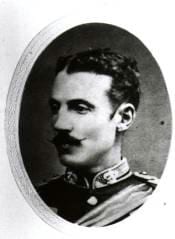
A wounded cavalryman lay helpless in a riverbed, exposed to enemy fire from both sides. Without hesitation, one British officer ran approximately 1,200 yards across the battlefield to reach him. That officer was Lieutenant Reginald Clare Hart of the Royal Engineers, whose extraordinary courage during the Second Anglo-Afghan War earned him the Victoria Cross, Britain's highest award for gallantry.
General Sir Reginald Clare Hart, VC, GCB, KCVO, was born on 11 June 1848 at Scarriff, County Clare, Ireland. The son of Lieutenant-General Henry George Hart, he received his education at Marlborough College and Cheltenham College before entering the Royal Military Academy at Woolwich. On 13 January 1869, he was commissioned into the Corps of Royal Engineers, beginning a distinguished military career that would take him across several continents and eventually to the highest ranks of the British Army.
Hart's early service demonstrated that his courage extended far beyond the battlefield. On 27 July 1869, while at Boulogne, France, he risked his own life to rescue a Frenchman from drowning in the harbour. During the rescue, Hart struck submerged rocks and seriously injured himself. His bravery earned him the Royal Humane Society's Silver Medal and later recognition from the French President with the Medal of Honour for Acts of Courage and Devotion, First Class. This was only the beginning of a remarkable record of service and lifesaving actions.
In 1872, Hart was posted to India, where he served with the Bengal Sappers and Miners. He subsequently held instructional appointments at Ambala and developed his expertise in military engineering, training and operational planning. His abilities would soon be tested during one of the most demanding campaigns on the North-West Frontier.
During the Second Anglo-Afghan War of 1878–1880, Hart served with the Peshawar Field Force and took part in operations involving the Khyber Column. On 31 January 1879, while accompanying a convoy in the Bazar Valley, he witnessed a wounded sowar of the 13th Bengal Lancers lying exposed in a riverbed under intense enemy fire. Recognising the danger, Hart immediately ran approximately 1,200 yards towards the wounded cavalryman, despite being exposed to hostile fire from both flanks and from enemy fighters in the riverbed itself. Reaching the injured man, he drove off the attackers and, assisted by soldiers who had followed him, brought the wounded sowar under cover. Although the trooper later died of his wounds, Hart's extraordinary determination to risk his own life in an attempt to save another earned him the Victoria Cross. His award was announced in the London Gazette on 10 June 1879, and Queen Victoria personally presented him with the decoration at Windsor Castle on 9 December 1879.
Hart's military career continued to develop after his Afghan service. In 1881, he accompanied Sir Samuel Rowe, Governor and Commander-in-Chief of the West African settlements, on special service along the West African coast. The following year, he served in the Egyptian campaign as aide-de-camp to Major-General Gerald Graham, VC, and subsequently as Assistant Quartermaster-General. He participated in operations at Ismailia, Cairo, Kassassin and Tel-el-Kebir. His Egyptian service brought further distinction, including two mentions in despatches, the Egypt Medal with the Tel-el-Kebir clasp, the Khedive's Star and the Ottoman Order of Osmanieh, Fourth Class.
In 1884, Hart returned to India, where he performed another act of lifesaving courage. He rescued an Indian gunner from the Rurki Canal, an action that earned him a Silver Clasp to his Royal Humane Society medal. His professional responsibilities continued to expand, and he served in engineering and instructional appointments at Ambala and Ranikhet. In 1889, he became Director of Military Education in India, a significant appointment that reflected his growing reputation as an officer of exceptional technical ability and organisational experience.
His operational leadership was further demonstrated during the Tirah Expedition of 1897–1898. Commanding the 1st Brigade under General Sir William Lockhart, Hart participated in operations against tribal forces along India's North-West Frontier. His service included the Punjab Frontier and Tirah campaigns, and he was again mentioned in despatches. He subsequently commanded the Quetta District and took part in the Waziristan operations of 1901–1902. His campaign honours included the India General Service Medal 1895–1902 with the clasps Punjab Frontier 1897–1898, Tirah 1897–1898 and Waziristan 1901–1902.
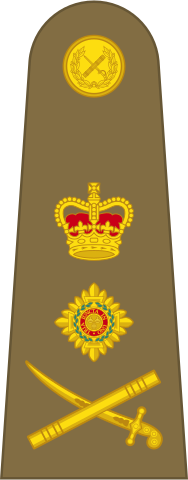
Hart's later career brought him into some of the most senior positions within the British Army. In 1896, he became a Companion of the Order of the Bath, followed by promotion to Knight Commander in 1899. In 1902, he became Commandant of the School of Military Engineering and General Officer Commanding the Thames District. He later commanded the Cape Colony District in South Africa from 1907 and was appointed Lieutenant-General in 1908. In March 1912, he became Commander-in-Chief of British forces in South Africa, succeeding Field Marshal Lord Methuen. His promotion to the rank of General followed in May 1914.
With the outbreak of the First World War, Hart assumed another important responsibility. From November 1914 until June 1918, he served as Lieutenant-Governor and Commander-in-Chief of Guernsey and Alderney in the Channel Islands. He retired from active service in June 1918, having devoted nearly five decades to the British Army. In 1922, he was appointed Colonel Commandant of the Royal Engineers, an enduring recognition of his contribution to the Corps.
His honours continued to reflect a lifetime of exceptional service. He was appointed Knight Commander of the Royal Victorian Order in 1904 and received promotion to Knight Grand Cross of the Order of the Bath in 1931. Alongside the Victoria Cross, his distinctions included the Afghanistan Medal, Egypt Medal with Tel-el-Kebir clasp, India General Service Medal with three clasps, Khedive's Star, Ottoman Order of Osmanieh, Royal Humane Society Silver Medal with its lifesaving clasp, and the French Medal of Honour, First Class.
General Sir Reginald Clare Hart died at Bournemouth on 19 October 1931, aged 83. He was buried at Netherbury, Dorset. His legacy extends far beyond the Victoria Cross he earned on the North-West Frontier. He was an accomplished Royal Engineers officer, a military educator, a senior commander and a man whose courage repeatedly led him to risk his own life to save others. From the riverbeds of the Bazar Valley to the highest levels of British military command, Hart's life stands as a remarkable testament to courage, professional dedication and service.
Become the named supporter for this profile and edit the tribute biography and portrait (Owner account required). Proceeds help keep the archive online.
$25 USD / year — annual sponsorship renewal. Keeps the page online and, where enabled, the family anniversary remembrance emails active.