★
Loading archive…
Loading archive…
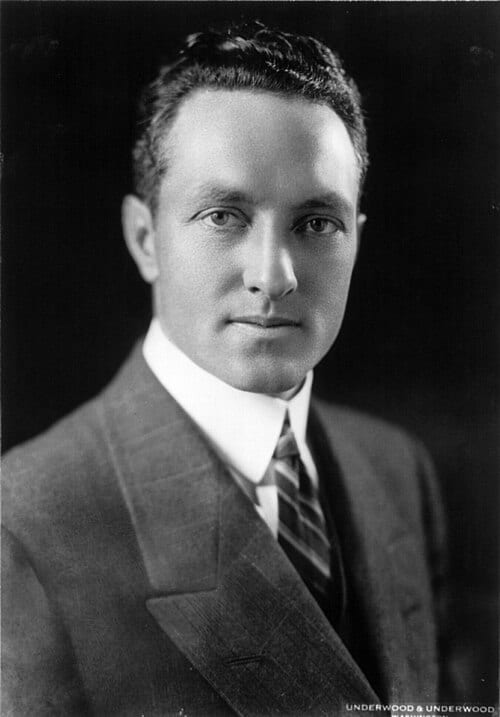
Rear Admiral, U.S. Navy
Support & adopt this hero ↓
Few naval officers ever pushed the boundaries of aviation, exploration, science, and military service as far as Rear Admiral Richard Evelyn Byrd Jr. A Medal of Honor recipient, pioneering U.S. Navy aviator, and one of the defining figures of twentieth-century polar exploration, Byrd built a career around places where maps ended and survival itself was uncertain. From pioneering polar flights to commanding enormous Antarctic expeditions, his life became inseparable from the history of American exploration.
Born on 25 October 1888 in Winchester, Virginia, Byrd graduated from the United States Naval Academy with the Class of 1912. He served aboard several Navy ships before a service-related leg injury placed him on the retired list in 1916. His naval career, however, was far from finished. Recalled to active duty, Byrd entered aviation, qualified as a naval aviator during the First World War, and commanded U.S. naval aviation activities in Canada. His wartime commendation recognized valuable work organizing training, instructing aviation personnel, directing rescue activities, and helping oversee American air forces in Canada. Even before becoming famous as an explorer, Byrd had demonstrated personal courage at sea, twice going overboard fully clothed to rescue a sailor, actions that contributed to his receipt of the Silver Lifesaving Medal.
Byrd's name entered international headlines in May 1926, when he and aviation pilot Floyd Bennett flew from Spitsbergen in the aircraft Josephine Ford on an Arctic flight officially credited at the time with reaching the North Pole. The achievement brought Byrd the Medal of Honor. His citation praised his conspicuous courage and intrepidity at the risk of his life and recognized the flight as demonstrating that an aircraft could travel from an inhabited region over the North Pole and return. He also received his first Navy Distinguished Service Medal, whose citation emphasized his courage, professional ability, and role in demonstrating the potential of heavier-than-air aircraft in polar flight. The precise geographic extent of the 1926 flight later became a subject of historical debate, but the award and the contemporary official recognition remain part of Byrd's documented naval record.
Byrd soon proved that the Arctic had not exhausted his appetite for aviation. From 29 June to 1 July 1927, he commanded the America on a transatlantic flight from New York toward France. Severe weather prevented the planned landing in Paris, and after nearly forty hours in the air the aircraft came down near Ver-sur-Mer. Byrd's Distinguished Flying Cross citation specifically recognized his courage, resourcefulness, skill, and judgment in directing the expedition through extreme weather and bringing the aircraft down without serious injury to the crew. It was another example of the quality that repeatedly defined his career: when a mission ceased to go according to plan, leadership became more important than the plan itself.
Antarctica would become Byrd's greatest arena. During his first Antarctic expedition, he established Little America and on 29 November 1929 commanded and navigated the historic flight over the South Pole. His Navy Cross citation described a hazardous mission conducted through extreme cold, over high mountain ranges and plateaus, and far beyond any realistic possibility of rescue following a forced landing. It credited Byrd's leadership, navigation, preparation, energy, and judgment with bringing the flight to a successful conclusion. His accomplishments were so significant that Congress advanced him to Rear Admiral on the retired list in December 1929 in recognition of his scientific investigations and aerial exploration of Antarctica.
He returned again and again. Byrd led another Antarctic expedition from 1933 to 1935, during which he nearly died from carbon monoxide poisoning while spending months alone at an isolated meteorological station. He later commanded the United States Antarctic Service Expedition of 1939 to 1941. That work earned him a second Navy Distinguished Service Medal, represented by a gold star. The citation praised the rapid organization of the expedition, establishment of two Antarctic bases about 1,500 miles apart, penetration of dangerous and poorly known seas, and aerial exploration that discovered new mountain ranges, islands, a peninsula, more than 100,000 square miles of territory, and hundreds of miles of previously unknown coastline.
The Second World War brought Byrd's experience into a different kind of service. He undertook special missions in both the Pacific and European theaters and served as an adviser at the highest levels of the Navy. His first Legion of Merit recognized his leadership of a special Navy mission in the Pacific in 1943, during which a multidisciplinary team surveyed or investigated 33 islands to identify potential air-base sites important to wartime defense and future civil aviation. His second Legion of Merit, represented by a gold star, honored his service as confidential adviser to the Commander in Chief, United States Fleet, and the Chief of Naval Operations. Its citation credited his professional judgment, detailed planning, foresight, and special missions on the fighting fronts with making a material contribution to the American war effort.
Peace did not end Byrd's Antarctic work. In Operation Highjump of 1946 to 1947, he helped lead the largest Antarctic expedition mounted to that point, involving thousands of personnel, numerous ships, aircraft, scientific investigations, mapping, and extensive cold-weather operations. His experience then became central to the establishment of a more permanent American scientific presence on the continent. During Operation Deep Freeze, President Dwight D. Eisenhower selected Byrd to serve as Officer in Charge of U.S. Antarctic Programs as the United States prepared for the International Geophysical Year.
Near the end of his life came one of the clearest summaries of what his decades of exploration had meant. On 21 February 1957, Byrd received the original Medal of Freedom for exceptionally meritorious service to the United States. The citation praised his leadership of American Antarctic programs, his contribution to permanent Antarctic policy, his work in international scientific cooperation and goodwill, and a lifetime that had encompassed transatlantic aviation, polar exploration, and five historic Antarctic expeditions. It was recognition not simply of one flight or one mission, but of a career that had helped transform Antarctica from an almost inaccessible frontier into a place of sustained scientific exploration.
Foreign governments also recognized Byrd's achievements. His honors included appointment as a Commander of Portugal's Military Order of Aviz, advancement to Commander of France's Legion of Honour, Romania's Order of Aeronautical Virtue, and the Dominican Republic's Order of Christopher Columbus. His American service record also encompassed the Antarctic expedition medals associated with his pioneering journeys, as well as campaign and service medals spanning the First World War, the Second World War, and his long relationship with Antarctica.
Rear Admiral Richard Evelyn Byrd Jr. died in Boston, Massachusetts, on 11 March 1957 and was buried at Arlington National Cemetery. Yet his legacy remained embedded in the geography and history of Antarctica. Byrd Station carried his name, the Navy later commissioned the guided-missile destroyer USS Richard E. Byrd, and the programs he helped establish continued long after his death. His career connected the wooden-deck Navy of the early twentieth century with naval aviation, global war, modern scientific exploration, and the permanent American presence in Antarctica.
Richard E. Byrd was more than a decorated naval officer and more than a polar explorer. He was a navigator of the unknown, a leader who repeatedly carried men and machines beyond the accepted limits of his era, and a central figure in the history of American aviation and Antarctic exploration.
Become the named supporter for this profile and edit the tribute biography and portrait (Owner account required). Proceeds help keep the archive online.
$25 USD / year — annual sponsorship renewal. Keeps the page online and, where enabled, the family anniversary remembrance emails active.