★
Loading archive…
Loading archive…

Lt General, Canadian Army
Support & adopt this hero ↓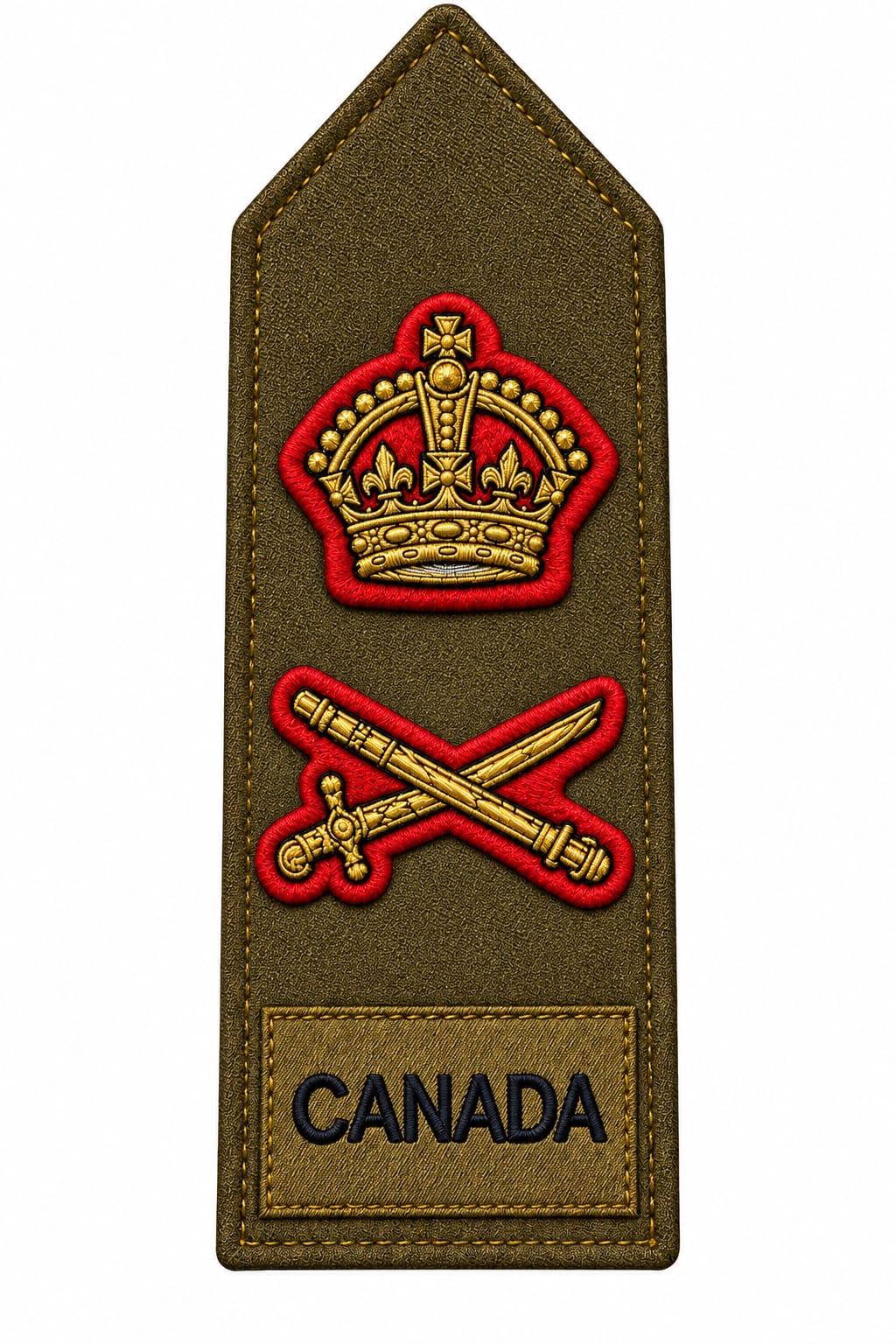
Canadian Victoria Cross Hero and First World War Commander Few Canadian soldiers had careers that stretched from a desperate cavalry fight in South Africa to the highest levels of command during the First World War. Lieutenant-General Sir Richard Ernest William Turner, VC, KCB, KCMG, DSO, was one of them. Wounded in battle, decorated with the Victoria Cross for saving British guns from capture, and later entrusted with the organization of Canada's vast overseas military establishment, Turner lived a military life that moved from close-range combat to the strategic problems of commanding an army at war. Richard Ernest William Turner was born in Quebec City on 25 July 1871. He entered Canada's Non-Permanent Active Militia in 1892, receiving his commission in the 10th Queen's Own Canadian Hussars. When the South African War began, Turner volunteered for overseas service and joined the Royal Canadian Dragoons. It was in South Africa that his name first became associated with exceptional courage. Library and Archives Canada records his commission in the Hussars, his service with the Dragoons, and the military career that eventually carried him to lieutenant-general. Collection Search His first major distinction came before the action for which he became famous. Turner received the Distinguished Service Order for his South African War service, with the award effective from 29 November 1900. Contemporary and later medal records connect the DSO with his conduct at the Vet River on 6 May 1900. The appointment was published in The London Gazette on 19 April 1901. His South African service also brought repeated mentions in despatches and the Queen's South Africa Medal with six clasps: Cape Colony, Johannesburg, Diamond Hill, Belfast, Orange Free State and South Africa 1901. Academic Dictionaries and Encyclopedias Then came the moment that defined his public reputation. On 7 November 1900 at Leliefontein, near the Komati River, Boer forces threatened the retreating British column and the guns of "D" Battery, Royal Canadian Field Artillery. Turner had already been wounded, yet when the guns again appeared in danger of capture he dismounted his men and engaged the attacking Boers at close range. His small force drove them back and helped save the artillery. The official Victoria Cross citation recorded that Turner, "although twice previously wounded... drove off the Boers, thus saving the guns." His Victoria Cross was announced in The London Gazette, No. 27307, on 23 April 1901. Turner was one of three Royal Canadian Dragoons recognized with the VC for separate acts during the fighting at Leliefontein. Canada For many soldiers, a Victoria Cross would have been the climax of a career. For Richard Turner, it was only the beginning. After South Africa he continued to rise through the Canadian militia, commanding the 10th Queen's Own Canadian Hussars from 1905 to 1907 and later the 3rd Eastern Townships Cavalry Brigade. By the eve of the First World War he had reached colonel. When Canada mobilized in 1914, Turner went overseas with the Canadian Expeditionary Force and received command of the 3rd Canadian Infantry Brigade of the 1st Canadian Division. The VC and GC Association The transition from mounted warfare in South Africa to industrial war on the Western Front was brutal. At the Second Battle of Ypres in April 1915, Turner and his brigade faced the confusion created by the German gas attack and the collapse of neighbouring positions. His conduct as a senior battlefield commander has remained the subject of historical debate. Later operations, particularly the difficult fighting around the St Eloi Craters in 1916, intensified criticism of the command arrangements within the Canadian formations. Modern scholarship, however, has also challenged the older portrayal of Turner as simply an unsuccessful field commander, emphasizing the extraordinary battlefield conditions and the much stronger administrative contribution he made later in the war. dokumen.pub Turner nevertheless continued to advance. In August 1915 he became major-general commanding the 2nd Canadian Division. His wartime services brought appointment as a Companion of the Order of the Bath, followed by higher honours. In the King's Birthday Honours of 1917 he was appointed Knight Commander of the Order of St Michael and St George, KCMG, specifically for valuable services connected with the war and military operations in the field. The appointment appeared in The London Gazette of 4 June 1917. The Gazette His next assignment revealed a different side of his abilities. Turner was transferred from divisional command to Britain, where he became responsible for Canadian forces and the immense machinery required to train, organize and reinforce the Canadian Corps in France. The system in Britain had suffered from duplication and administrative disorder. Turner helped impose greater structure on the overseas organization, and in 1918 became Chief of the General Staff of the Overseas Military Forces of Canada. Library and Archives Canada identifies this as a central phase of his later wartime career. Collection Search Recognition followed at the highest level. On 1 January 1918, Turner was appointed Knight Commander of the Order of the Bath, Military Division, KCB. The official Gazette entry identifies him as Major-General and temporary Lieutenant-General Sir Richard Ernest William Turner, commanding the Canadian Forces in the United Kingdom. His earlier CB was therefore superseded in his final honours style by KCB. The Gazette Turner's reputation was not limited to Canada and Britain. France appointed him a Commander of the Légion d'honneur, with Canadian General Order 71 recording the Croix de Commandeur and the King's unrestricted permission to wear the decoration. France also awarded him the Croix de Guerre 1914-1918 avec Palme. Imperial Russia conferred upon him the Order of the White Eagle with Swords, an award specifically recorded under that title in The London Gazette of 14 January 1918. These foreign honours reflected international recognition of his wartime service rather than simply ceremonial additions to an already distinguished group. Wartime Canada The full span of Turner's service can be read in the surviving medal group associated with him. Alongside the Victoria Cross, KCB, KCMG and DSO were his Queen's South Africa Medal with six clasps, 1914-15 Star, British War Medal, Victory Medal with Mention in Despatches emblem, King Edward VII Coronation Medal, King George V Silver Jubilee Medal, King George VI Coronation Medal, Queen Elizabeth II Coronation Medal, Colonial Auxiliary Forces Officers' Decoration, and Canadian Forces' Decoration with clasp, together with his French and Russian distinctions. A published study of Turner's service, drawing upon his service jacket at Library and Archives Canada, also records that he was Mentioned in Despatches six times during his career. His preserved medal display provides additional physical corroboration for the royal commemorative medals and later service decorations. dokumen.pub Turner's service did not end with the armistice. After returning to Canada he served for years on the Canadian Pension Tribunal and Canadian Pension Commission, working on issues directly affecting veterans. He was also associated with the development of Canada's organized veterans' movement. In 1950, half a century after Leliefontein, Turner stood beside one of the guns saved during that famous action as Canada commemorated the battle and the three Victoria Crosses won by the Royal Canadian Dragoons. By then, the young lieutenant who had fought on foot beside threatened guns had become one of the last living links to Canada's South African War generation. Collection Search Lieutenant-General Sir Richard Ernest William Turner died on 19 June 1961 at Sainte-Foy, Quebec, aged 89, and was buried in Mount Hermon Cemetery in Quebec. His career remains unusually compelling because it cannot be reduced to a single medal or a single battle. He was a cavalry officer who became a Victoria Cross recipient, a controversial battlefield commander who later proved important to Canada's wartime administration, and a Canadian general whose service was recognized by Britain, France and Imperial Russia. More than sixty years after his death, Turner's name remains inseparable from the guns at Leliefontein and from the formative years of Canada's army on the world stage. The VC and GC Association
Become the named supporter for this profile and edit the tribute biography and portrait (Owner account required). Proceeds help keep the archive online.
$25 USD / year — annual sponsorship renewal. Keeps the page online and, where enabled, the family anniversary remembrance emails active.