★
Loading archive…
Loading archive…
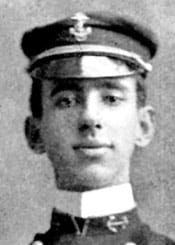
Commander, U.S. Navy
Support & adopt this hero ↓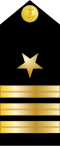
Richard Wainwright Jr.: The U.S. Navy Medal of Honor Hero Who Led Under Fire at Veracruz
When bullets tore through the streets of Veracruz, Mexico, in April 1914, Lieutenant Richard Wainwright Jr. led his men into some of the fiercest fighting of the American intervention. Facing sustained fire from concealed enemy positions, he demonstrated extraordinary courage and composure while directing his battalion in the seizure of a strategically important customhouse. His leadership under fire earned him the Medal of Honor, America's highest military decoration for valor.
Born on September 15, 1881, in Washington, D.C., Richard Wainwright Jr. came from a distinguished naval family. He was the son of Rear Admiral Richard Wainwright, a respected United States Navy officer. Following in his family's naval tradition, he entered the United States Naval Academy as an appointee from the District of Columbia and graduated in May 1902.
Wainwright began his professional naval career with the demanding sea service expected of a newly graduated officer. He served aboard USS Indiana and USS Chauncey before receiving his commission as an Ensign in May 1904. After a period of illness and recovery, he returned to sea aboard USS Texas and subsequently joined USS Louisiana. His service during the Cuban intervention brought him recognition through the Cuban Pacification Medal.
His naval career continued aboard USS Connecticut, where he participated in the historic Great White Fleet's voyage around the world between 1907 and 1909. This remarkable expedition demonstrated American naval power and strengthened the United States' international maritime presence. Promoted to Lieutenant in May 1907, Wainwright subsequently served at the Washington Navy Yard before receiving orders to USS Florida in September 1911.
It was aboard USS Florida that Wainwright became part of one of the defining episodes of his military career. During the American intervention at Veracruz, Mexico, on April 21 and 22, 1914, he commanded a naval landing battalion operating ashore. His men faced determined resistance and devastating concealed gunfire as American forces fought to secure key positions in the city. Wainwright personally demonstrated exceptional courage, skill and judgment while leading his battalion in the seizure and defence of the customhouse. His calm leadership under prolonged enemy fire distinguished him during both days of fighting.
For his extraordinary conduct at Veracruz, Lieutenant Wainwright Jr. received the Medal of Honor. His award recognized not simply his presence in battle, but his conspicuous leadership and ability to maintain control under exceptionally dangerous conditions. His name became permanently associated with one of the most notable naval actions of the Mexican Campaign.
In September 1914, Wainwright received orders to the United States Naval Academy, where he continued serving for the remainder of his active naval career. Promoted to Lieutenant Commander in April 1915, he remained connected to the institution that had shaped his professional life. His service during the First World War also qualified him for the World War I Victory Medal. He retired from active naval service in March 1921.
Retirement did not end his contribution to the Navy's institutional history. From November 1925 until January 1929, he served as Superintendent of the Navy Department Library, helping oversee an important centre of naval knowledge and historical records. During the Second World War, he was recalled to active duty in February 1942 and promoted to Commander, demonstrating his continued value to the service even after retirement.
His military honours reflected a career spanning several important periods of American naval history, including the Cuban intervention, the Veracruz expedition, the First World War and the Second World War. Alongside the Medal of Honor, his recognised campaign and service awards included the Cuban Pacification Medal, Mexican Service Medal, World War I Victory Medal and World War II Victory Medal.
Richard Wainwright Jr. died on March 28, 1944, in Annapolis, Maryland, and was buried at the United States Naval Academy Cemetery. His name also lives on through USS Wainwright (CG-28), a guided-missile cruiser named in his honour.
Richard Wainwright Jr.'s legacy is one of courage, professional dedication and enduring naval service. From the decks of the battleships that carried America's Great White Fleet around the world to the dangerous streets of Veracruz, he served through an era of profound transformation in American naval power. Yet it was his leadership under fire in April 1914 that secured his place in American military history. His Medal of Honor remains a lasting tribute to an officer whose courage and composure inspired the men he commanded.
Become the named supporter for this profile and edit the tribute biography and portrait (Owner account required). Proceeds help keep the archive online.
$25 USD / year — annual sponsorship renewal. Keeps the page online and, where enabled, the family anniversary remembrance emails active.