★
Loading archive…
Loading archive…
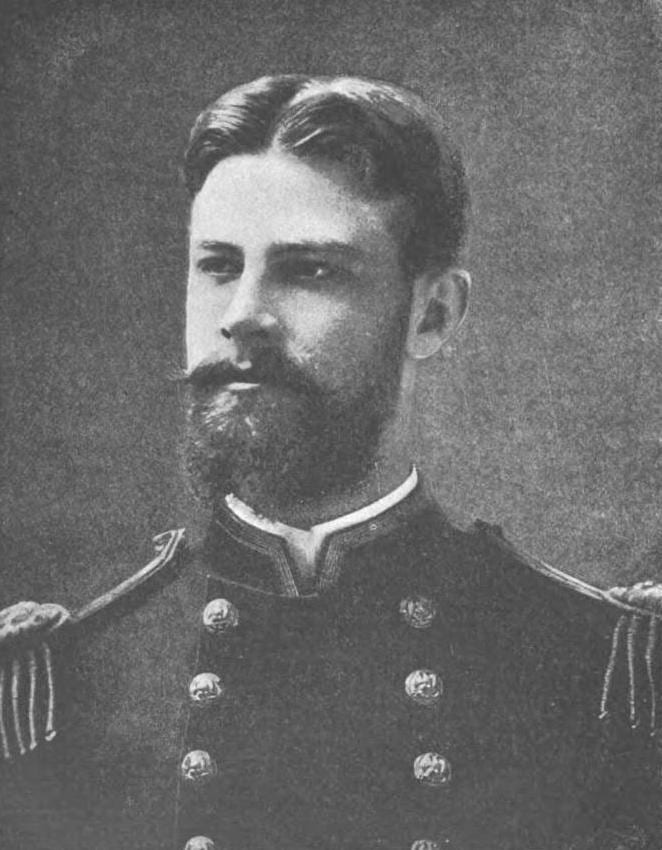
Rear Admiral, U.S. Navy
Support & adopt this hero ↓
What would you do if you were ordered to sail a ship into an enemy harbour, knowing that you might never return? On 3 June 1898, Lieutenant Richmond Pearson Hobson and seven volunteers faced exactly that decision. Under intense Spanish fire, they deliberately took the collier USS Merrimac into Santiago de Cuba harbour in an attempt to block the Spanish fleet's escape route. The ship sank, the mission did not achieve its intended objective, and Hobson and his entire crew were captured. Their extraordinary courage would make them national heroes and eventually earn Hobson the United States' highest military decoration.
Richmond Pearson Hobson was born on 17 August 1870 in Greensboro, Alabama. Driven by a strong interest in naval service and engineering, he entered the United States Naval Academy, graduating in 1889. He subsequently pursued advanced naval construction studies in France and developed a reputation as a capable naval constructor. His professional background in ship design and engineering would later become an important part of his military career.
During the Spanish-American War, Hobson volunteered for one of the most dangerous naval operations of the conflict. His mission was to sink USS Merrimac in the narrow entrance to Santiago de Cuba harbour, preventing Spanish warships from escaping. On the night of 2 to 3 June 1898, he and seven fellow volunteers navigated the collier into the harbour under heavy enemy fire. Despite their determination, the vessel failed to block the channel. The men survived the sinking but were taken prisoner by Spanish forces. Their courage captured the imagination of the American public, and their eventual release turned the eight sailors into celebrated figures across the United States.
Hobson continued his naval career after returning from captivity, serving in naval construction and engineering assignments. His service during the Spanish-American War was recognised with the Spanish Campaign Medal and the Specially Meritorious Medal, the latter specifically recognising his daring Merrimac operation. Although his heroism had become famous in 1898, the Medal of Honor did not arrive until 29 April 1933, when President Franklin D. Roosevelt presented it to him. The delayed recognition made his story particularly remarkable, demonstrating that extraordinary courage can receive its fullest recognition many years after the event.
In 1903, Hobson resigned from the United States Navy and entered public life. He was elected to the United States House of Representatives, serving Alabama from 1907 to 1915. During his congressional career, he became a prominent advocate of naval preparedness and military strength, while also campaigning vigorously for prohibition and measures against narcotics. His public influence extended well beyond his celebrated wartime service.
In 1934, Congress placed Hobson on the retired list of the United States Navy with the rank of Rear Admiral, recognising his distinguished service and national contributions. He died in New York City on 16 March 1937 and was laid to rest at Arlington National Cemetery.
Richmond P. Hobson's legacy is not defined by whether the Merrimac successfully blocked Santiago harbour. It is defined by the courage to accept an almost impossible mission, the loyalty he demonstrated towards his fellow sailors, and the determination that carried him from naval service into national public life. His story remains one of the most memorable episodes of American naval history and a powerful example of courage, sacrifice and service.
Become the named supporter for this profile and edit the tribute biography and portrait (Owner account required). Proceeds help keep the archive online.
$25 USD / year — annual sponsorship renewal. Keeps the page online and, where enabled, the family anniversary remembrance emails active.