★
Loading archive…
Loading archive…

The Medal of Honor Hero Who Risked Everything for His Men in Vietnam
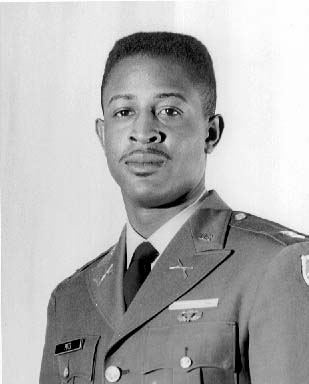
What kind of courage drives a soldier to throw himself onto a grenade to protect his men, knowing it could mean certain death? On October 31, 1967, Captain Riley Leroy Pitts demonstrated that extraordinary bravery during a fierce battle in Vietnam. His actions would cost him his life, earn him America's highest military decoration, and make him the first African American commissioned officer to receive the Medal of Honor.
Born on October 15, 1937, in Fallis, Oklahoma, Riley Leroy Pitts graduated from Wichita State University in 1960 with a degree in journalism. After working for Boeing, he entered the United States Army, eventually earning an officer's commission. A devoted husband to Eula Mae and father of two children, Stacie and Mark, Pitts began his Vietnam service in December 1966. Initially serving as an information officer, he later became an infantry commander, leading Company C, 2nd Battalion, 27th Infantry Regiment, 25th Infantry Division, known as the Wolfhounds.
On October 31, 1967, Captain Pitts and his company were ordered to reinforce American troops engaged against a powerful Viet Cong force near Ap Dong, South Vietnam. What began as an airmobile assault quickly became a desperate fight for survival. Enemy machine guns opened fire from three directions, with fortified bunkers positioned dangerously close to his soldiers. Despite the overwhelming resistance, Pitts personally led his men against the enemy positions.
As dense jungle foliage made rifle fire ineffective, Pitts seized an M79 grenade launcher and began targeting enemy bunkers. When a grenade he had thrown struck the vegetation and bounced back toward his position, he immediately threw himself upon it to protect his soldiers. Miraculously, the grenade failed to explode. Yet his courage did not end there.
Rather than withdraw, Pitts reorganized his company, coordinated supporting artillery fire, and personally led another assault. Moving into an exposed position, he continued firing at enemy fortifications while directing and encouraging his men. He remained at the forefront of the fighting until he was mortally wounded, sacrificing his life at just 30 years old.
For his extraordinary leadership and selfless actions, Captain Riley Leroy Pitts was posthumously awarded the Medal of Honor. His official citation recognized his exceptional heroism, personal courage under intense enemy fire, and unwavering determination to lead his soldiers despite the danger. His other documented honours included the Silver Star and two Purple Hearts, reflecting a military career distinguished by courage and sacrifice. His Vietnam service also brought campaign recognition, while his battalion received Vietnamese unit citations for its wartime service.
On December 10, 1968, President Lyndon B. Johnson presented the Medal of Honor to Pitts's widow, Eula, and their two children at the White House. The ceremony marked a historic milestone in American military history, honouring the first African American commissioned officer to receive the nation's highest decoration for military valor.
Today, Captain Riley Leroy Pitts rests at Hillcrest Memory Gardens in Spencer, Oklahoma. His name is also preserved on the Vietnam Veterans Memorial in Washington, D.C. His legacy reaches beyond medals and military recognition. It lives in the example of a commander who repeatedly placed the lives of his soldiers above his own.
Captain Riley Leroy Pitts did not simply lead his men into battle. He showed them what courage, sacrifice, and leadership truly meant.
Become the named supporter for this profile and edit the tribute biography and portrait (Owner account required). Proceeds help keep the archive online.
$25 USD / year — annual sponsorship renewal. Keeps the page online and, where enabled, the family anniversary remembrance emails active.