★
Loading archive…
Loading archive…
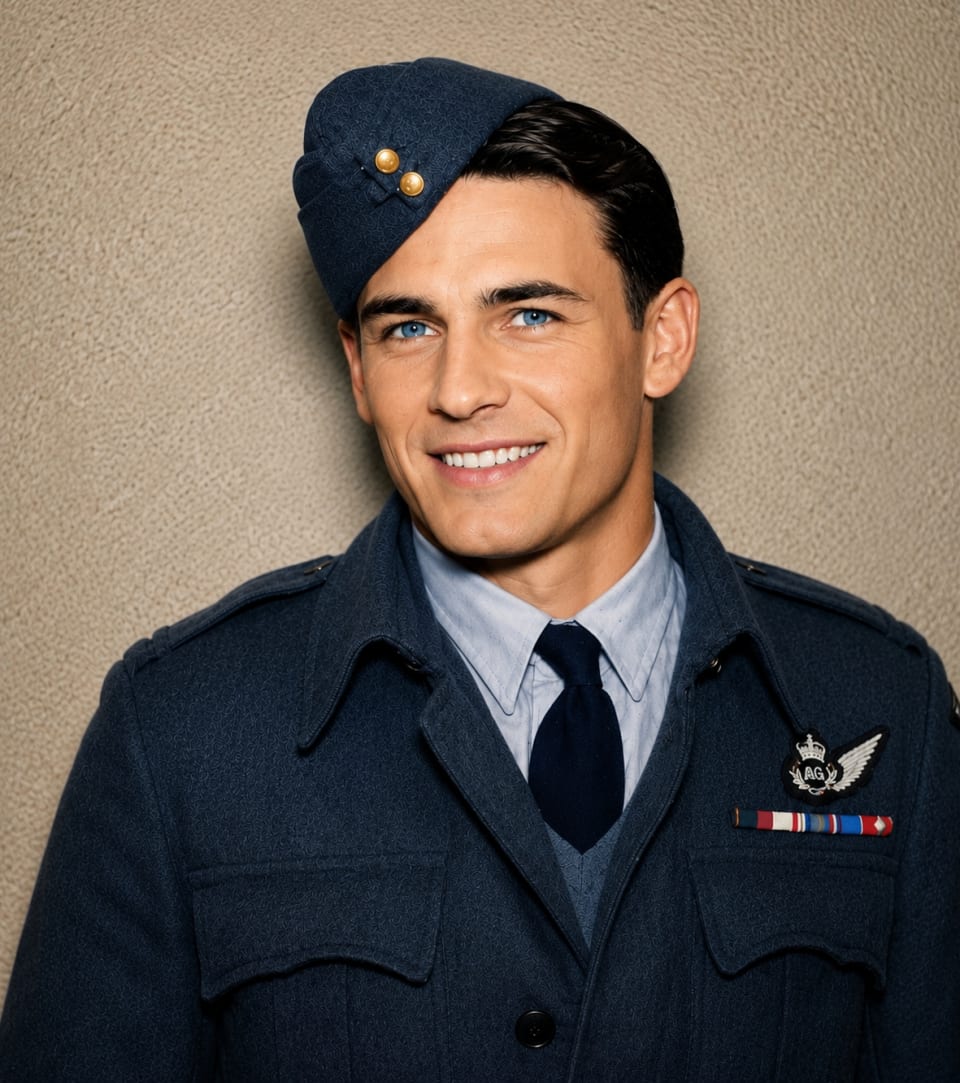
Flight Sergeant , Royal Canadian Air Force
Support & adopt this hero ↓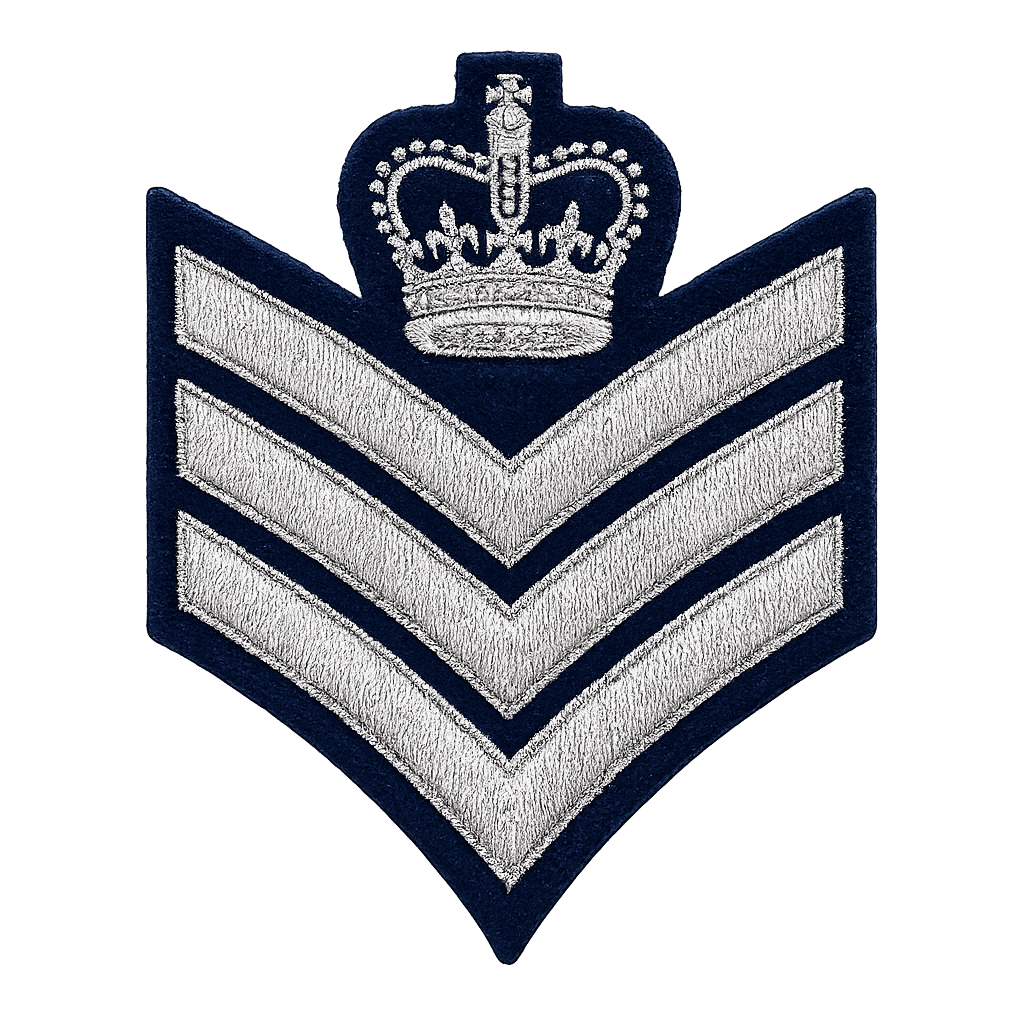
RCAF Wireless Air Gunner in the Burma Campaign
At only 17 years of age, Tony Pitt exchanged the harbour streets of wartime Halifax for a wireless set, an aircraft gun turret, and a journey that would carry him across the world. As a Royal Canadian Air Force wireless air gunner with No. 203 Squadron RAF, he served aboard long-range aircraft conducting dangerous maritime operations over the Indian Ocean and the waters of Southeast Asia.
Robert Anthony John Peter “Tony” Pitt was born in Sussex, England, in 1925 and immigrated to Canada with his family in 1929. His father worked in the Canadian National Railways hotel system and later managed Ottawa’s Château Laurier before the family moved to Halifax in 1936. By the beginning of the Second World War, Halifax had become one of Canada’s most important military and naval centres. Pitt remembered damaged ships entering the harbour, troop movements, casualty reports, and the constant presence of the war in everyday life.
His father joined the Canadian Army after war began, while Tony left school and found employment in the advertising department of a tobacco company. Having previously served in the Sea Cadets, he was already familiar with discipline and military routine. In the spring of 1943, after persuading his mother to give the required permission, he enlisted in the Royal Canadian Air Force. He was called to the Eastern Manning Depot at Lachine, Quebec, in early June. Veterans Affairs Canada records his wartime rank as Flight Sergeant and his aircrew occupation as Wireless Air Gunner.
Like many young RCAF volunteers, Pitt initially hoped to become a fighter pilot. The Air Crew Selection Officer had other plans. The service needed wireless air gunners, men capable of operating radio equipment, transmitting and receiving Morse code, maintaining communications, and manning defensive guns when an aircraft came under attack.
Pitt was sent to Queen’s University in Kingston for pre-aircrew educational training before beginning technical instruction at No. 4 Wireless School in Guelph. His training included radio procedures, signals, Morse code, aircraft communications, and airborne wireless practice. At St. Catharines, he trained aboard Tiger Moths and Yales, then moved to No. 4 Bombing and Gunnery School at Fingal, Ontario. There he learned turret operation, deflection shooting, air-to-air and air-to-ground firing, weapons maintenance, and the use of .303 machine guns aboard Bolingbroke aircraft.
After completing his Canadian training, Pitt was posted first to Britain and then to India. He eventually joined No. 203 Squadron RAF, which had converted to Consolidated Liberators for long-range coastal reconnaissance, anti-submarine patrols, and attacks against enemy shipping. Operating from Ceylon, now Sri Lanka, the squadron ranged across the Bay of Bengal, the Indian Ocean, the coast of Sumatra, and the Netherlands East Indies.
These were not the heavily publicized bomber operations over Europe. They were long, exhausting missions over vast stretches of ocean, where crews faced enemy fighters, shipboard gunfire, mechanical failure, tropical weather, and the constant possibility of being forced down far from rescue. A wireless air gunner had to remain alert for hours, maintaining communications while also being ready to operate the aircraft’s defensive weapons.
In his postwar recollections, Pitt described one of his most dangerous missions off northern Sumatra. His crew attacked a Japanese coastal supply vessel of the type known to Allied airmen as a “Sugar Dog.” During repeated low-level passes, the Liberator came under machine-gun fire and was struck in its starboard outer engine. The crew shut down the damaged engine, feathered the propeller, and broke off the attack. Unable to return directly to its base, the aircraft continued for approximately four and a half hours on three engines before landing at China Bay near Trincomalee.
Surviving records independently confirm that No. 203 Squadron Liberators attacked Sugar Dog vessels off northern Sumatra in July 1945 and encountered accurate machine-gun fire. Pitt’s personal flying logbook or the squadron Operations Record Book would still be required to link him conclusively to the specific aircraft described in his recollection.
Pitt remained in the Far East until Japan surrendered in August 1945. He later recalled celebrating the end of the war with Allied airmen on the Cocos Islands before beginning the long journey home. After returning through Britain, he crossed the Atlantic and arrived back in Halifax, where his mother and sister were waiting for him.
His service supports entitlement to the Canadian Volunteer Service Medal with Overseas Clasp and the War Medal 1939–1945. His documented operational aircrew role with No. 203 Squadron also strongly supports the 1939–1945 Star and Burma Star, although his personal medal entitlement card has not yet been located. The Burma Star required one qualifying operational sortie by aircrew in the designated campaign area, while the 1939–1945 Star required two months of active operational aircrew service.
Years later, Pitt spoke about his wartime experiences with humour, modesty, and affection for the men with whom he had served. He did not present himself as an ace or famous commander. His story instead represents the thousands of young Canadian airmen who trained under the British Commonwealth Air Training Plan, crossed oceans, joined multinational crews, and carried out hazardous operations in distant theatres that received far less public attention than the air war over Europe.
Tony Pitt’s legacy rests in that quiet record of duty. He was a teenager who entered the RCAF during a global war, mastered the demanding skills of a wireless air gunner, faced enemy fire far from Canada, and returned home carrying memories that remained vivid for the rest of his life. His testimony preserves an important Canadian connection to the air war in Southeast Asia and ensures that the service of No. 203 Squadron’s Commonwealth aircrews is not forgotten.
Become the named supporter for this profile and edit the tribute biography and portrait (Owner account required). Proceeds help keep the archive online.
$25 USD / year — annual sponsorship renewal. Keeps the page online and, where enabled, the family anniversary remembrance emails active.