★
Loading archive…
Loading archive…
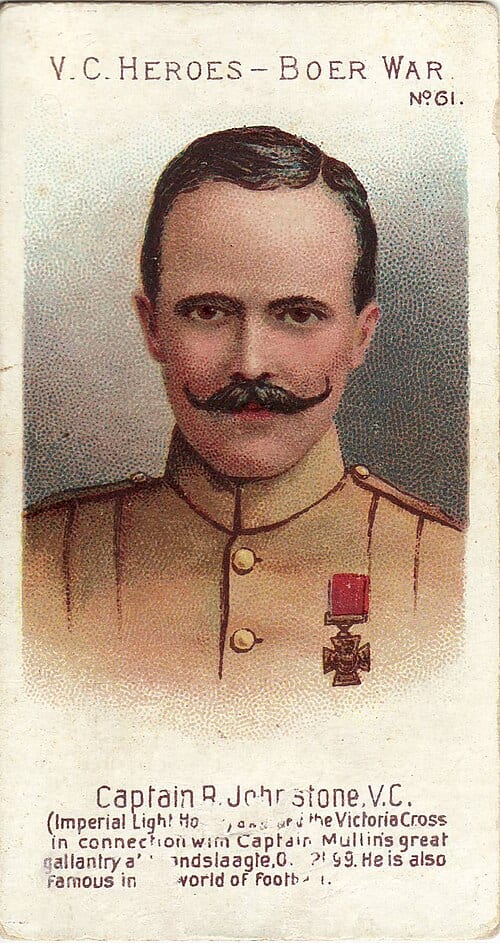
Major, British Army
Support & adopt this hero ↓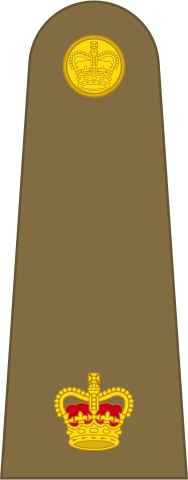
The Irish Rugby International Who Became a Hero at Elandslaagte When the British advance at Elandslaagte was brought to a standstill by devastating close-range rifle fire, Captain Robert Johnston refused to let the attack collapse. Under a hail of enemy bullets, he and fellow officer Captain Charles Herbert Mullins surged forward, rallied their men and helped restore the momentum that made a decisive flanking movement possible. Their extraordinary courage earned both officers the Victoria Cross, Britain's highest award for valour. Yet Johnston's remarkable story extends far beyond the battlefield. He was also an Irish rugby international, a member of the legendary 1896 British & Irish Lions touring side, and a public servant whose career carried him from South Africa to Ireland.
Robert Johnston was born on 13 August 1872 at Laputa, County Donegal, Ireland, the son of Robert Johnston, a Queen's Counsel. Educated at King William's College on the Isle of Man, he developed an early interest in military service and joined the 5th Battalion, Royal Inniskilling Fusiliers, serving between 1890 and 1894. Alongside his military interests, Johnston distinguished himself on the rugby field, becoming one of the notable Irish sporting figures of his generation.
Johnston's sporting achievements were remarkable in their own right. In 1893, he represented Ireland in two international rugby matches, establishing himself as a talented forward. His reputation earned him selection for the 1896 British & Irish Lions tour of South Africa. He played in three of the four Test matches against South Africa and finished the tour with a try against Western Province. Rather than immediately returning to Britain and Ireland, Johnston remained in South Africa, where he continued playing rugby for Transvaal. His sporting career would soon be overshadowed by events that demanded an entirely different kind of courage.
With the outbreak of the Second Boer War in 1899, Johnston joined the Imperial Light Horse, a mounted unit recruited largely from the British and colonial community in South Africa. Serving as a captain, he became involved in the hard fighting that marked the early stages of the campaign. On 21 October 1899, at the Battle of Elandslaagte, he performed the act of extraordinary bravery that would secure his place in military history.
During the battle, the attacking force encountered exceptionally heavy Boer rifle fire at point-blank range. The advance faltered, and the situation threatened to undermine the planned assault. Recognising the danger, Johnston and Captain Charles Herbert Mullins rushed forward through the intense fire and rallied the men. Their personal example restored the momentum of the attack and enabled the flanking movement that ultimately decided the engagement. Mullins was wounded during the action, but both officers had demonstrated exceptional courage and leadership under fire.
For his conspicuous gallantry at Elandslaagte, Robert Johnston was awarded the Victoria Cross. His award was officially gazetted on 12 February 1901, bringing national recognition to the Irish officer whose courage had helped turn a critical moment into a battlefield success. Johnston's Victoria Cross remains a lasting testament to his determination, personal leadership and willingness to face overwhelming danger alongside the men under his influence.
His service in South Africa continued beyond Elandslaagte. Johnston was also involved in the fighting surrounding the Siege of Ladysmith, during which he was dangerously wounded. He received the Queen's South Africa Medal and the King's South Africa Medal for his campaign service. Following the war, he remained in South Africa and moved into administrative responsibilities. In 1902, he became Commandant of a concentration camp at Middelburg. The following year, he was appointed District Commissioner in the Eastern Transvaal, continuing his involvement in the administration of the region during the post-war period.
In 1911, Johnston returned to Ireland and entered the Irish prison service. His public responsibilities continued during the First World War, when he served as Commandant of the prisoner-of-war camp at Oldcastle from 1914 to 1915. He was subsequently appointed Governor of His Majesty's Convict Prison at Maryborough, before returning to Oldcastle in 1916. In 1918, he was appointed a Resident Magistrate in Ireland, marking another significant chapter in a career that had moved from military command to public administration.
Robert Johnston's life brought together two very different worlds. He had represented Ireland and the British & Irish Lions on the rugby field, served with distinction in the Imperial Light Horse during the Second Boer War, and earned the Victoria Cross for extraordinary bravery at Elandslaagte. In later life, he devoted himself to public service in Ireland, carrying the experience and discipline of his earlier years into administrative and judicial responsibilities.
Major Robert Johnston died in Kilkenny, Ireland, on 24 March 1950, aged 77. He was buried at St Mary's Churchyard in Inistioge, County Kilkenny. His story remains one of the most distinctive among Irish recipients of the Victoria Cross. Remembered as an international rugby player, a British & Irish Lion and a courageous officer of the Imperial Light Horse, Johnston stands as an enduring example of how sporting distinction, military leadership and personal bravery can become part of one extraordinary life.
Become the named supporter for this profile and edit the tribute biography and portrait (Owner account required). Proceeds help keep the archive online.
$25 USD / year — annual sponsorship renewal. Keeps the page online and, where enabled, the family anniversary remembrance emails active.