★
Loading archive…
Loading archive…

Crawled through enemy fire to save men and rally his platoon
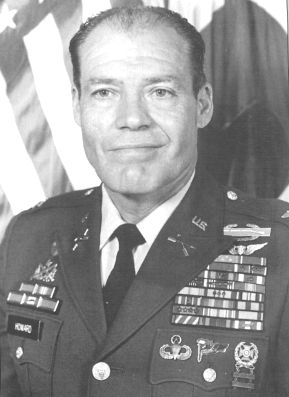
A grenade had wounded Sergeant First Class Robert Lewis Howard and destroyed his weapon. His American-Vietnamese platoon was under attack by a much larger enemy force, and his platoon leader lay seriously wounded in the open. Howard could not stand, but he crawled toward the officer. What followed on December 30, 1968, would earn him the Medal of Honor.
Born on July 11, 1939, in Opelika, Alabama, Howard enlisted in the United States Army at seventeen in 1956. He served with airborne units before joining the Green Berets. During five tours in the Vietnam War, much of his service was spent with the clandestine Military Assistance Command, Vietnam, Studies and Observations Group (MACV-SOG), whose dangerous reconnaissance missions took small teams into enemy-controlled territory.
His courage had already been tested. On November 21, 1967, while advising a joint American and South Vietnamese patrol near the Laotian border, Howard helped secure an enemy supply cache. When machine-gun positions pinned down his team, he moved toward the bunkers under fire, destroyed one position with a grenade and ultimately silenced another with a light antitank weapon. The mission succeeded, and his actions earned the Distinguished Service Cross.
From November 12 to 20, 1968, another mission brought repeated ambushes. Howard covered his men's landing under fire, directed their defense and helped evacuate casualties. When an incoming rescue helicopter was shot down and caught fire, he ran toward the wreckage despite being wounded and rescued a trapped pilot. For his sustained gallantry, he received the Silver Star.
Only weeks later came the battle that defined his legacy. After the grenade blast on December 30, Howard dragged his wounded leader toward safety. While he administered aid, enemy fire struck an ammunition pouch on the officer's equipment, setting off the ammunition inside. Howard returned to the isolated platoon, rallied its defenders and crawled between positions to treat wounded men and direct fire. For three and a half hours, the surrounded force resisted repeated attacks with support from aircraft. Howard supervised the evacuation and left the landing zone only after his men were aboard.
President Richard Nixon presented him with the Medal of Honor on March 2, 1971. Howard had been nominated for that distinction three times for separate actions. Wounded fourteen times during his combat service, he received eight Purple Hearts. His other decorations included the Bronze Star Medal, Legion of Merit and Defense Superior Service Medal, reflecting both combat bravery and distinguished leadership.
Commissioned as an officer in 1969, Howard continued serving as a soldier, commander and mentor, retiring as a colonel in 1992 after thirty-six years in uniform. He then worked for the Department of Veterans Affairs. He died on December 23, 2009, and was buried at Arlington National Cemetery. His legacy rests not only in the medals he earned, but in his repeated determination to bring other soldiers home.
Become the named supporter for this profile and edit the tribute biography and portrait (Owner account required). Proceeds help keep the archive online.
$25 USD / year — annual sponsorship renewal. Keeps the page online and, where enabled, the family anniversary remembrance emails active.