★
Loading archive…
Loading archive…

Rear-Admiral, Royal Navy
Support & adopt this hero ↓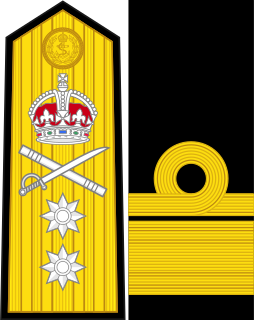
A shattered destroyer. A badly wounded captain. An Arctic convoy facing overwhelming enemy fire. On 31 December 1942, Royal Navy officer Robert St Vincent Sherbrooke made a decision that would earn him the Victoria Cross and secure his place among Britain's greatest naval heroes.
Rear-Admiral Robert St Vincent Sherbrooke, VC, CB, DSO (8 January 1901 – 13 June 1972), was a distinguished British naval commander whose extraordinary courage during the Second World War helped save a vital Allied convoy from destruction. Born in Oxton, Nottinghamshire, he entered the Royal Navy in 1917, serving aboard HMS Canada during the First World War. His early service marked the beginning of a remarkable 37-year naval career that would take him from junior officer to Rear-Admiral.
Sherbrooke first demonstrated his exceptional combat leadership during the Second Battle of Narvik on 13 April 1940. Commanding the destroyer HMS Cossack in the Norwegian Campaign, he fought German warships in fierce conditions as his vessel sustained serious damage and ran aground. His conduct earned him the Distinguished Service Order (DSO), announced in *The London Gazette* on 28 June 1940 for "daring, resource and devotion to duty" during the battle. It was an early demonstration of the determination that would define his wartime reputation.
But his greatest test came on 31 December 1942, during the Battle of the Barents Sea. As captain of HMS Onslow and senior officer commanding the destroyer escort of Arctic Convoy JW 51B, Sherbrooke confronted a vastly superior German surface force, including the heavy cruiser Admiral Hipper and pocket battleship Lützow. The enemy sought to destroy the merchant ships carrying essential supplies to the Soviet Union. Sherbrooke repeatedly led his destroyers towards the attackers, threatening torpedo strikes and forcing the German warships away from the convoy.
Then disaster struck. HMS Onslow came under devastating fire, and Sherbrooke suffered severe facial injuries that temporarily robbed him of sight in one eye. Yet he refused to abandon his command. Despite his wounds, he continued directing the destroyers until he was satisfied that another officer had assumed control. Even after leaving the bridge for medical attention, he insisted on receiving reports until the convoy was safe.
His extraordinary leadership prevented the loss of any merchant ship in the convoy. Awarded the Victoria Cross (VC), Britain's highest decoration for gallantry in the presence of the enemy, Sherbrooke was honoured in The London Gazette on 12 January 1943. His official citation praised "his courage, his fortitude and his cool and prompt decisions" and credited his leadership with bringing the convoy safely to its destination. King George VI personally presented him with the Victoria Cross at Buckingham Palace on 29 June 1943.
After recovering from his injuries, Sherbrooke continued serving the Royal Navy, later commanding the cruiser HMS Aurora and rising to Rear-Admiral in July 1951. His distinguished service was further recognised when he was appointed a Companion of the Order of the Bath (CB) in Queen Elizabeth II's Coronation Honours, announced on 1 June 1953. His other honours reflected service across two world wars and included the British War and Victory Medals, the 1939–45 Star, Atlantic Star, Defence Medal, War Medal 1939–1945, Naval General Service Medal with Palestine 1945–48 clasp, the 1937 and 1953 Coronation Medals, and Norway's King Haakon VII's Cross of Liberty.
Retiring from the Royal Navy on 4 March 1954, Sherbrooke left behind a career defined by duty, courage and leadership under extraordinary pressure. He died on 13 June 1972, aged 71, and was laid to rest at St Peter and St Paul Churchyard in Oxton, Nottinghamshire.
Robert St Vincent Sherbrooke's legacy is not simply that he won the Victoria Cross. It is that, when his ship was battered, his eyesight impaired and his men faced overwhelming danger, he placed the lives of others above his own safety. His actions in the frozen waters of the Barents Sea remain an enduring example of courage and command at sea.
Become the named supporter for this profile and edit the tribute biography and portrait (Owner account required). Proceeds help keep the archive online.
$25 USD / year — annual sponsorship renewal. Keeps the page online and, where enabled, the family anniversary remembrance emails active.