★
Loading archive…
Loading archive…
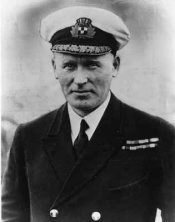
A German U-boat believed it had destroyed its target. Moments later, the seemingly helpless vessel unleashed a devastating counterattack. On 7 June 1917, Lieutenant Ronald Neil Stuart helped turn that deadly deception into one of the Royal Navy's most remarkable victories of the First World War. His courage aboard HMS Pargust earned him the Victoria Cross, Britain's highest award for gallantry in the face of the enemy.
Born on 26 August 1886 in Liverpool, England, Ronald Neil Stuart came from generations of seafarers. He began his maritime career as an apprentice in 1902 and joined the Royal Naval Reserve in 1914. During the First World War, his experience made him invaluable aboard Q-ships, heavily armed vessels disguised as ordinary merchant ships to lure German submarines into attacking. On 17 February 1917, while serving under Commander Gordon Campbell aboard HMS Farnborough, Stuart helped destroy the German submarine U-83 despite his own ship being torpedoed. For his distinguished conduct during this action, he received the Distinguished Service Order, officially announced in the London Gazette on 23 March 1917.
But his greatest test was still to come.
On 7 June 1917, HMS Pargust was torpedoed by the German submarine UC-29 off the Irish coast. With her engine room flooded and serious damage threatening her survival, the Q-ship appeared helpless. A carefully staged evacuation convinced the submarine commander that the vessel was abandoning ship. As UC-29 approached, Pargust suddenly revealed her concealed guns and opened fire, ultimately sinking the submarine. The Admiralty's official account later praised the extraordinary courage, discipline and confidence displayed by the crew. Under Rule 13 of the Victoria Cross Royal Warrant, the officers selected Stuart and the ship's company selected Seaman William Williams to receive the Victoria Cross. Their awards were announced on 20 July 1917, although the complete circumstances remained secret until November 1918.
Stuart's bravery extended beyond destroying enemy submarines. Later in 1917, while commanding HMS Tamarisk, he answered the distress of the American destroyer USS Cassin, which had been torpedoed off Ireland on 15 October. Despite dangerous seas and severe weather, Tamarisk stood by the crippled warship and attempted to tow her to safety. Stuart's assistance earned him the United States Navy Cross, officially recorded in the London Gazette in September 1919. He was also Mentioned in Despatches in March 1919 for his services in operations against enemy submarines.
His wartime service was further recognised by the 1914–15 Star, British War Medal and Victory Medal. In 1929, he received the Decoration for Officers of the Royal Naval Reserve for his long and distinguished service. He was also a recipient of the King George VI Coronation Medal in 1937 and the Queen Elizabeth II Coronation Medal in 1953.
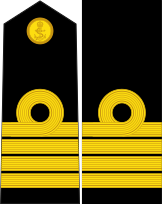
After the war, Stuart continued an exceptional maritime career with Canadian Pacific, eventually commanding the celebrated ocean liner RMS Empress of Britain and becoming commodore of the company's fleet. He attained the rank of Captain in the Royal Naval Reserve in 1935 and later served as a naval aide-de-camp to King George VI. He retired from Canadian Pacific in 1951 and died on 8 February 1954 in Charing, Kent, aged 67.
Today, Captain Ronald Neil Stuart's original Victoria Cross, Distinguished Service Order, United States Navy Cross and accompanying medals are preserved at the National Maritime Museum in Greenwich. His extraordinary story remains a testament to a rare kind of courage: the ability to maintain discipline when destruction seems certain, to outwit a formidable enemy, and to risk everything to save fellow sailors.
Become the named supporter for this profile and edit the tribute biography and portrait (Owner account required). Proceeds help keep the archive online.
$25 USD / year — annual sponsorship renewal. Keeps the page online and, where enabled, the family anniversary remembrance emails active.