★
Loading archive…
Loading archive…
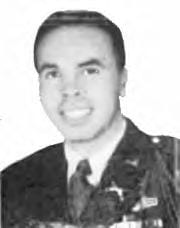
First Lieutenant, U.S. Army
Support & adopt this hero ↓
German machine guns had trapped an American rifle company of nearly 130 men in a deadly ambush. With enemy bullets sweeping across an exposed hillside, one soldier crawled forward alone, determined to save his comrades. That soldier was Rudolph Bianco Davila, a World War II hero whose extraordinary courage would eventually earn him the Medal of Honor, 56 years after the battle.
Born on April 27, 1916, in El Paso, Texas, to a Spanish father and Filipino mother, Rudolph B. Davila grew up in the Watts neighborhood of Los Angeles, California. During the Great Depression, he worked to support his family before entering the United States Army. By 1944, he was serving as a Staff Sergeant and machine-gun platoon leader with Company H, 7th Infantry Regiment, 3rd Infantry Division, fighting German forces in the Italian Campaign.
On May 28, 1944, near Artena, Italy, during the Allied breakout from the Anzio beachhead, Davila faced the defining moment of his military career. When German machine-gun positions pinned down an advancing American rifle company, he crawled approximately 50 yards through intense enemy fire, positioned a machine gun himself, and opened fire. Bullets struck his weapon's tripod and passed between his legs, but Davila remained exposed to observe his targets and direct his fellow gunners.
Even after suffering a painful leg wound, he refused to withdraw. He continued fighting from the turret of a burned-out tank, then advanced toward an enemy-held house, attacking its defenders with a grenade and rifle fire. Climbing into the damaged attic, he destroyed additional enemy machine-gun positions despite the building crumbling around him. His official Medal of Honor citation describes how his actions forced German troops to abandon their prepared positions, allowing the endangered American infantrymen to continue their advance.
For this remarkable bravery, Davila initially received the Distinguished Service Cross, the United States Army's second-highest decoration for valor. His wartime honours also included the Bronze Star Medal and Purple Heart, while his campaign and service medals reflected his contribution during World War II. Following the battle, he received a battlefield commission and eventually attained the rank of First Lieutenant. His combat career ended later in 1944 after an enemy tank shell severely wounded his right shoulder in France.
Yet Davila's story did not end on the battlefield. After years of medical treatment, he pursued higher education and became a history teacher and school counselor in California, dedicating much of his civilian life to educating younger generations.
More than five decades after his extraordinary actions in Italy, a congressional review of overlooked World War II heroism resulted in his Distinguished Service Cross being upgraded to the Medal of Honor. On June 21, 2000, President Bill Clinton presented Davila with America's highest military decoration at the White House, finally recognizing the courage he had demonstrated in 1944.
Rudolph B. Davila died on January 26, 2002, in Vista, California, at the age of 85. He was laid to rest at Arlington National Cemetery, among the nation's most honored military heroes.
His legacy is more than a story of battlefield courage. It is a reminder that true heroism is measured not by recognition received, but by the lives protected, the sacrifices endured, and the willingness to act when others need help most. Rudolph B. Davila did not wait for history to recognize him. He simply refused to abandon his fellow soldiers.
Become the named supporter for this profile and edit the tribute biography and portrait (Owner account required). Proceeds help keep the archive online.
$25 USD / year — annual sponsorship renewal. Keeps the page online and, where enabled, the family anniversary remembrance emails active.