★
Loading archive…
Loading archive…

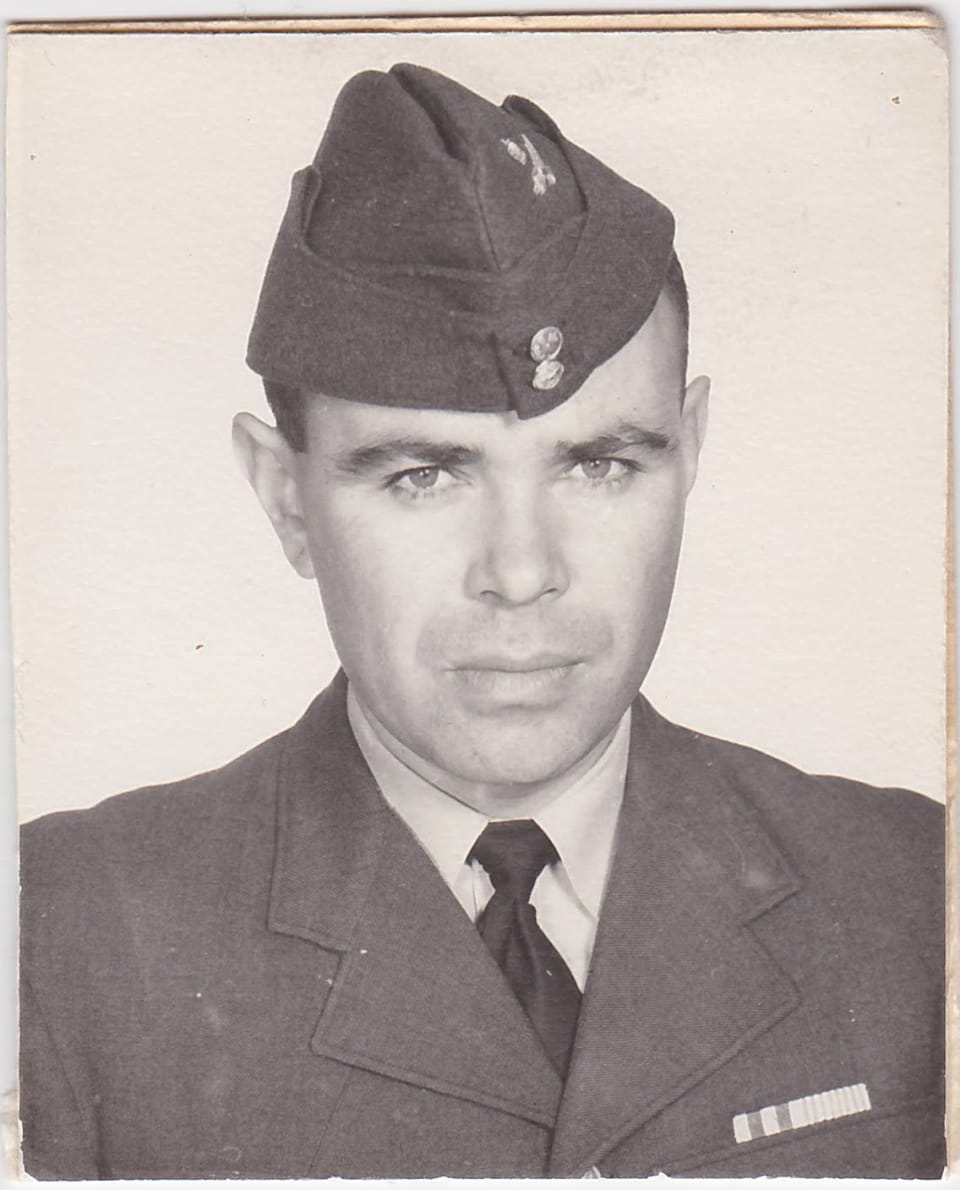
Russ Moses survived the Mohawk Institute, served under enemy fire aboard HMCS Iroquois during the Korean War, spent another decade in the Royal Canadian Air Force, and later helped Indigenous people tell their own story to millions of visitors at Expo 67. His life connected some of the most difficult and transformative chapters in modern Canadian history.
Russell Copeland “Russ” Moses was born on 8 August 1932 and was a member of the Delaware band of Six Nations of the Grand River Territory in Ontario. As a child, he attended the Mohawk Institute Indian Residential School in Brantford from 1942 to 1947, where he and other Indigenous children endured harsh conditions and treatment that would remain part of his story for the rest of his life. Decades later, his own written account of the institution would become an important contribution to the historical record of the residential school system.
But Moses refused to allow the Mohawk Institute to determine the limits of his future.
At the age of eighteen, he joined the Royal Canadian Navy in 1950, beginning a military career that would eventually span fifteen years and two branches of the Canadian Armed Forces. During an early training voyage aboard HMCS Ontario, he travelled around the world. Soon afterward, the Korean War took him from training and adventure into active operations.
In 1952, Russ Moses deployed to Korea aboard HMCS Iroquois, a Tribal-class destroyer operating with United Nations naval forces.
Then came 2 October 1952.
While operating off the Korean coast, Iroquois exchanged fire with a North Korean coastal battery. The Canadian destroyer was struck by enemy fire and suffered 13 casualties. Three Canadian sailors were killed and ten were wounded. Moses was aboard the ship during the action. National Defence specifically records him as one of the Six Nations servicemen serving aboard Iroquois when the ship was hit.
For Moses, the Korean War was not simply a line on a service record. He had experienced combat at sea and witnessed the cost of it firsthand. Veterans Affairs Canada records that he remained proud of his Korean War service throughout his life.
His Korean service entitled him to the Canadian Korea Medal, the Canadian Volunteer Service Medal for Korea, and the United Nations Service Medal for Korea. Veterans Affairs Canada lists these as the three principal Canadian and United Nations medals for qualifying Korean War service, worn in that sequence. The United Nations medal carries the permanent KOREA bar on the full-size medal. No Mention in Despatches emblem has been verified for Moses, so his Canadian Korea Medal ribbon is correctly represented without an oak leaf.
Moses left the Royal Canadian Navy in 1955, but his life in uniform was not over.
After briefly returning to Six Nations, where he met and married Helen Monture, he enlisted in the Royal Canadian Air Force. Over the next ten years, Moses served as a safety equipment technician, maintaining equipment used by RCAF pilots and search-and-rescue personnel. His postings included Hamilton, Vancouver and St. Hubert, Quebec. National Defence records his military career as five years in the Royal Canadian Navy followed by ten years in the Royal Canadian Air Force.
That fifteen-year career also supported his entitlement to the Canadian Forces' Decoration, CD, awarded for twelve years of qualifying military service with a good record of conduct. A clasp requires an additional ten years of qualifying service, so Moses's documented fifteen years do not support a clasp or silver rosette on his CD ribbon.
Yet some of the most important work of Russ Moses's life began only after he took off the uniform.
In 1965, Moses declined a proposed posting to Lahr, Germany, and entered the federal public service. That transition placed him at the centre of a changing conversation about Indigenous peoples and their relationship with Canada.
One of his first important contributions was deeply personal. Moses was asked to record his memories of residential school. The result was a short but direct account of his years at the Mohawk Institute. Written long before residential schools became a major subject of national public discussion, the memoir documented conditions through the eyes of someone who had experienced them as a child. It was later preserved and published as The Russ Moses Residential School Memoir.
Then, in Canada's Centennial year, Moses stepped onto a much larger stage.
He became Deputy Commissioner General of the Indians of Canada Pavilion at Expo 67 in Montreal. The pavilion challenged conventional portrayals of Indigenous peoples and created an opportunity for Indigenous perspectives to be presented before enormous Canadian and international audiences. Veterans Affairs Canada identifies the pavilion as a major achievement of Moses's public-service career, while his son John Moses has described it through the Canadian War Museum as a watershed in Indigenous self-representation.
His preserved medal group also includes the Canadian Centennial Medal, 1967, an honour created to mark Canada's centennial and awarded to Canadians recommended for valuable service to the country. The medal is physically present in the family-preserved group associated with Moses. The Governor General confirms that the Centennial Medal recognized Canadians who had provided valuable service to Canada.
Taken together, his documented and family-preserved honours form a five-medal Canadian and United Nations group: the Canadian Korea Medal, Canadian Volunteer Service Medal for Korea, United Nations Service Medal (Korea), Canadian Centennial Medal, and Canadian Forces' Decoration. The Canadian Order of Precedence places these honours in that same sequence.
There is another medal associated with Moses's Korean service. The family collection includes a South Korean Syngman Rhee War Service Medal, also known as the Republic of Korea War Service Medal. It is historically associated with Korean War service, but Canadian honours policy specifically identifies the South Korean award as not approved for wear in the Canadian system because Canadian recognition had already been provided for the same service. For that reason, it does not form part of Moses's official Canadian ribbon rack.
Moses's contribution after Expo 67 continued through public service and Indigenous advocacy. His career unfolded during a period when Indigenous people were increasingly challenging institutions that had long spoken about them while excluding their own voices. His personal experience gave that work an unusual depth. He had known Canada as a child inside a residential school, as a sailor under fire in Korea, as an RCAF corporal during the Cold War, and finally as an Indigenous public servant helping shape how First Nations people represented themselves to the country and the world.
That is what makes the story of Corporal Russ Moses so compelling. His service did not end when he left the military, and his survival did not end when he left the Mohawk Institute. Again and again, he moved from institutions that had shaped his life into positions where he could help shape the future.
Russ Moses died on 22 May 2013, aged eighty. His son John has continued to preserve and share his father's military history, residential school testimony and contribution to Indigenous heritage. The University of Calgary Press publication of Moses's memoir and the Canadian War Museum's documentation of the family's history have helped ensure that his experiences remain part of Canada's historical record.
Russ Moses was a Mohawk Institute survivor, a Korean War naval veteran, a Royal Canadian Air Force veteran, a recipient of the Canadian Forces' Decoration, and a leader in the Indians of Canada Pavilion at Expo 67. More importantly, his life demonstrates how one person could pass through war, institutional injustice and profound social change, then use those experiences to help create a stronger Indigenous voice in Canada.
Become the named supporter for this profile and edit the tribute biography and portrait (Owner account required). Proceeds help keep the archive online.
$25 USD / year — annual sponsorship renewal. Keeps the page online and, where enabled, the family anniversary remembrance emails active.