★
Loading archive…
Loading archive…
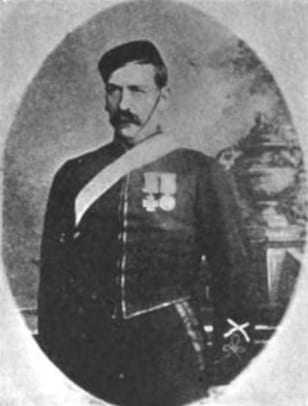
Private (or equivalent), British Army
Support & adopt this hero ↓
Samuel Morley VC: The Soldier Who Refused to Abandon a Wounded Officer
When his horse was shot from beneath him and a wounded officer lay surrounded by enemy soldiers, Private Samuel Morley did not retreat. He rushed forward on foot, fighting alongside another soldier to protect a helpless comrade. That act of extraordinary courage during the Indian Mutiny would ultimately earn Morley the Victoria Cross, Britain's highest award for gallantry in the face of the enemy.
Born in 1829 at Radcliffe-on-Trent, Nottinghamshire, Samuel Morley was the son of Francis and Mary Morley. Before joining the British Army, he worked as a farm labourer. On 25 January 1855, he enlisted in the 8th Hussars and was sent to the Crimea later that year. In October 1856, he transferred to the 2nd Battalion, Military Train, subsequently serving in India during the Indian Mutiny of 1857 and 1858.
Morley's defining moment came on 15 April 1858 near Azamgarh, India. During the pursuit of Kunwar Singh's forces, Lieutenant Hamilton of the 3rd Sikh Cavalry was unhorsed and surrounded by enemy soldiers who began attacking him with swords. Despite having lost his own horse, Morley immediately rushed to Hamilton's defence. Morley, fighting alongside Farrier Michael Murphy, helped drive off the attackers and protect the wounded officer until assistance arrived. His intervention prevented Hamilton from being killed on the spot.
Morley's recognition, however, did not come immediately. Although Murphy received the Victoria Cross for the same action, Morley was initially overlooked. After returning to England, Morley challenged the omission during an inspection at Aldershot in May 1860. General Lord Paget ordered an inquiry, and the evidence supported Morley's claim. His award was officially announced in the London Gazette on 7 August 1860, No. 22411, page 2934. On 9 November 1860, Queen Victoria personally presented him with the Victoria Cross at Home Park, Windsor. His Indian Mutiny campaign service is also represented by the Indian Mutiny Medal, bearing the clasps Relief of Lucknow and Lucknow.
Morley continued his military career after his celebrated act, transferring to the 16th Lancers in 1862 before returning to the Military Train in 1864. He was finally discharged on 7 March 1870, having completed 14 years and 249 days of service. Returning to Nottinghamshire, he found civilian employment at the Nottingham Gas Works and settled into family life.
Samuel Morley died in Nottingham on 16 June 1888. He was laid to rest in Nottingham General Cemetery, where an inscribed headstone was erected through public subscription in recognition of his bravery and service. His Victoria Cross and campaign medals were subsequently entrusted to the Royal Corps of Transport and are preserved within the heritage of the Royal Logistic Corps.
Samuel Morley's story is a reminder that courage is not measured by rank, recognition or personal safety. When a fellow soldier faced almost certain death, Morley chose to stand and fight. His actions at Azamgarh secured his place among the recipients of the Victoria Cross and ensured that his bravery would be remembered long after his military service ended.
Become the named supporter for this profile and edit the tribute biography and portrait (Owner account required). Proceeds help keep the archive online.
$25 USD / year — annual sponsorship renewal. Keeps the page online and, where enabled, the family anniversary remembrance emails active.