★
Loading archive…
Loading archive…
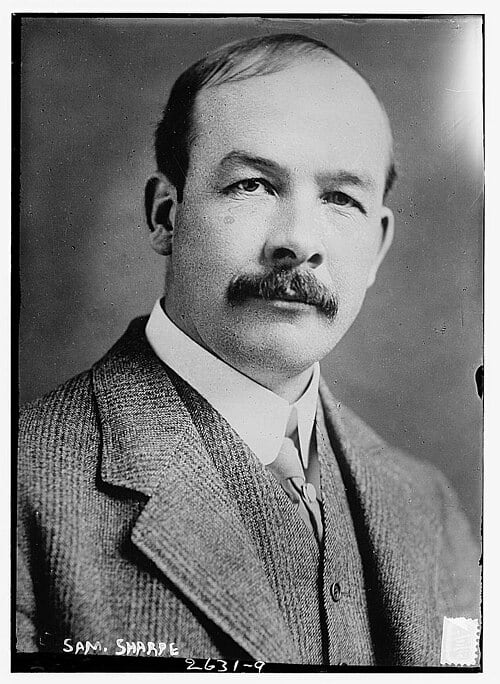
Lt Colonel, Canadian Army
Support & adopt this hero ↓
Samuel Simpson Sharpe was born at Zephyr, Ontario, on March 13, 1873. Educated in Uxbridge, at the University of Toronto and at Osgoode Hall, he established himself as a lawyer in Uxbridge and served for ten years as the town solicitor. He was elected to the House of Commons for Ontario North in 1908 and subsequently re-elected in 1911 and 1917. A near-contemporary Canadian biography confirms his education, legal career and ten years as Uxbridge town solicitor, while the House of Commons formally records his elections in 1908, 1911 and 1917.
Sharpe also maintained a long association with the Canadian militia. He joined the 34th Ontario Regiment at the age of sixteen and rose through its officer ranks to major. When the First World War began, he was already an experienced militia officer and a sitting Member of Parliament. Veterans Affairs Canada confirms his early entry into the regiment and rise to major.
In November 1915, Sharpe began raising and took command of the newly forming 116th Battalion, Canadian Expeditionary Force. The battalion recruited throughout Ontario County, drawing many of its soldiers from the communities Sharpe represented in Parliament. It embarked from Halifax for Britain on July 24, 1916, aboard SS Olympic, arriving in England with 36 officers and 948 other ranks. The battalion was formally authorized on December 22, 1915.
The 116th Battalion reached France on February 11, 1917 and joined the 9th Canadian Infantry Brigade of the 3rd Canadian Division. Under Sharpe’s command, the battalion served during operations at Vimy Ridge, Avion, Hill 70 and Passchendaele. The House of Commons later formally recognized that Sharpe had fought with his battalion in each of these operations.
The experience placed an exceptional emotional burden upon him. Sharpe knew many of the men he had recruited and, in some cases, their families. His surviving correspondence and later historical analysis demonstrate his increasing distress over the suffering he had witnessed and the loss of men from his battalion and community. The Canadian War Museum preserves his correspondence, while scholarly analysis of his case identifies his reaction to wartime trauma as central to his later breakdown.
Sharpe was Mentioned in Despatches in November 1917. He was subsequently appointed a Companion of the Distinguished Service Order in the 1918 New Year Honours. The official honours listing names Lieutenant-Colonel Samuel Simpson Sharpe among the Canadian recipients of the DSO but provides no individual narrative citation. The House of Commons later described the decoration as having been awarded for his gallant leadership.
While still serving overseas, Sharpe was re-elected in the federal election of December 1917. He was the only sitting Member of Parliament re-elected in that election while fighting on active service at the front, a distinction explicitly recognized by the House of Commons in 2018.
His condition deteriorated during the winter of 1917–18. In March 1918, he was admitted to hospital in England suffering from “general debility.” Contemporary accounts also employed terms such as nervous shock, nervous affliction and insomnia. Modern historians have interpreted his symptoms within the context of severe wartime psychological trauma and conditions then described as shell shock. They are often compared with what is now understood as post-traumatic stress disorder, although a retrospective clinical diagnosis cannot be made with certainty. Veterans Affairs Canada confirms hospitalization for general debility and later nervous shock, while Matthew Barrett’s scholarly study examines Sharpe’s breakdown specifically in the context of First World War shell shock and war trauma.
Sharpe was invalided to Canada in May 1918. While travelling home, his condition required his admission to the Royal Victoria Hospital in Montreal. On May 25, 1918, he died by suicide after jumping from a hospital window. He was 45 years old. He was buried in Uxbridge Cemetery and is commemorated on page 499 of Canada’s First World War Book of Remembrance. Veterans Affairs Canada records his birth on March 13, 1873, death on May 25, 1918, burial at Uxbridge and commemoration in the Book of Remembrance.
Stigma surrounding suicide and the limited contemporary understanding of psychological injuries contributed to Sharpe’s disappearance from national memory. Later historical scholarship has shown that the interpretation and commemoration of his breakdown and death were complicated by contemporary attitudes toward mental illness, masculinity, military service and suicide. In later years, veterans, parliamentarians, historians and residents of Uxbridge worked to restore his story.
On May 24, 2018, the House of Commons unanimously adopted a motion recognizing Sharpe’s parliamentary and military service and calling for his commemoration. A bronze relief by Canadian artist Tyler Briley was installed in the foyer outside the House of Commons later that year. It honours Sharpe while also recognizing Canadian veterans who have suffered psychological injuries arising from military service. The House motion specifically called for the plaque's installation, and Veterans Affairs Canada records that it was erected in 2018.
Sharpe’s confirmed wearable honours are the Distinguished Service Order, British War Medal and Victory Medal with the bronze oak-leaf emblem for Mention in Despatches. Veterans Affairs Canada specifically records his DSO, British War Medal and Victory Medal, while Canadian medal guidance confirms that a Mention in Despatches is represented on the Victory Medal ribbon by an oak-leaf emblem. His life is remembered as an example of public service, battlefield leadership and the potentially fatal consequences of severe psychological wounds in an era when such injuries were imperfectly understood and treated.
Become the named supporter for this profile and edit the tribute biography and portrait (Owner account required). Proceeds help keep the archive online.
$25 USD / year — annual sponsorship renewal. Keeps the page online and, where enabled, the family anniversary remembrance emails active.