★
Loading archive…
Loading archive…

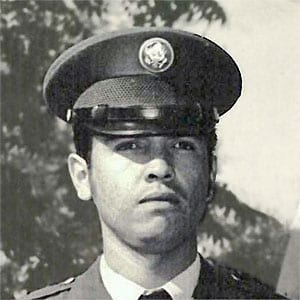
Four enemy bunkers. A battlefield swept by machine-gun fire. Wounded American soldiers trapped under relentless enemy fire. On May 21, 1969, one young American soldier risked everything to protect his comrades. His courage would eventually earn him the Medal of Honor, but nearly 45 years would pass before the nation formally recognized his extraordinary actions.
Santiago Jesus Erevia, a Mexican American soldier from Texas, served in the United States Army during the Vietnam War. Raised in difficult financial circumstances, he worked in cotton fields before enlisting in 1968. Assigned to Company C, 1st Battalion, 501st Infantry Regiment, 101st Airborne Division (Airmobile), he served as a radio telephone operator. His fellow soldiers knew him as a quiet, reserved man who rarely sought attention. On the battlefield near Tam Ky, however, he demonstrated remarkable determination.
During Operation Lamar Plain on May 21, 1969, Erevia's company encountered heavily fortified North Vietnamese positions. As American troops came under intense fire, he was ordered to assist wounded comrades while other members of his platoon continued their advance. Four enemy bunkers threatened his position, placing both the casualties and the company command post in grave danger.
Instead of seeking safety, Erevia moved between wounded soldiers under direct enemy fire, collecting ammunition and weapons. Armed with M16 rifles and grenades, he advanced against the bunkers. He destroyed three enemy positions with grenades before exhausting his supply. Undeterred, he continued toward the fourth bunker, attacking at close range until the remaining enemy position was silenced. His actions protected wounded comrades and helped his company overcome a dangerous battlefield situation.
Erevia initially received the Distinguished Service Cross for his bravery. His military record also included the Bronze Star Medal, Purple Heart, Air Medal, Army Commendation Medal and National Defense Service Medal. His Vietnam service was recognized by the Vietnam Service Medal with five campaign stars, represented by one silver service star. His foreign decorations included the Republic of Vietnam Gallantry Cross with Gold Star, the Republic of Vietnam Civil Actions Honor Medal, First Class, and the Republic of Vietnam Campaign Medal with the 1960 device. His Combat Infantryman Badge further reflected his ground-combat service.
For decades, the highest recognition of Erevia's heroism remained unresolved. A congressionally mandated review examined historical military awards for possible discrimination and identified soldiers whose courageous actions merited the Medal of Honor. On March 18, 2014, President Barack Obama presented Erevia with the Medal of Honor at the White House, recognizing his extraordinary actions near Tam Ky almost 45 years earlier.
His dedication to service continued long after Vietnam. Following his departure from active duty in 1970, Erevia joined the Texas National Guard in 1972 and served for another 17 years, eventually retiring as a sergeant. In civilian life, he worked for the United States Postal Service for 32 years, building a career defined by quiet responsibility and public service.
Santiago J. Erevia died on March 22, 2016. His legacy is not simply the story of four destroyed bunkers or a long-delayed Medal of Honor. It is the story of a soldier who placed the lives of wounded comrades above his own safety, an American whose courage remained extraordinary even when recognition came decades later. His name stands among the remarkable heroes of the Vietnam War, reminding future generations that true sacrifice and service must never be forgotten.
Become the named supporter for this profile and edit the tribute biography and portrait (Owner account required). Proceeds help keep the archive online.
$25 USD / year — annual sponsorship renewal. Keeps the page online and, where enabled, the family anniversary remembrance emails active.