★
Loading archive…
Loading archive…
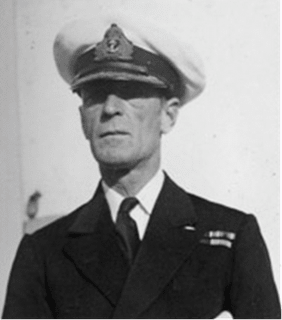
Admiral of the Fleet, Royal Navy
Support & adopt this hero ↓
Philip Louis Vian’s naval career carried him from the last years of the pre-dreadnought era to the command of destroyers, cruiser forces, amphibious fleets and aircraft carriers before he retired as an Admiral of the Fleet. Born in London on 15 June 1894, he entered the Royal Navy as a cadet on 15 May 1907 and trained at Osborne and Dartmouth. His surviving officer service record is held by The National Archives as ADM 196/56/158. After completing his training, he became a midshipman on 15 January 1912 and joined the battleship HMS Lord Nelson. Discovery National Archives During the First World War, Vian served from October 1914 to September 1915 in the cruiser HMS Argonaut, patrolling East African waters, before obtaining a posting to the destroyer HMS Morning Star. He was present at the Battle of Jutland on 31 May 1916, although Morning Star played no active part in the fighting. He subsequently served as First Lieutenant of the destroyers HMS Ossory and HMS Sorceress before undertaking specialist gunnery training. In October 1919 he gained a First Class certificate in Gunnery at HMS Excellent, establishing the professional speciality that shaped much of his interwar career. Unit Histories Vian was then loaned to the Royal Australian Navy and served as gunnery officer of HMAS Australia. Further gunnery appointments followed in battleships and cruisers of the Atlantic and Mediterranean Fleets, together with service in China aboard HMS Kent and staff work at the Admiralty. On 31 March 1933 he received his first destroyer command, HMS Active, while also serving as a divisional leader in the 3rd Destroyer Flotilla. He later commanded HMS Douglas and the 19th Destroyer Flotilla during the period of the Abyssinian crisis, before becoming Flag Captain in HMS Arethusa and Chief Staff Officer to the Rear-Admiral commanding the 3rd Cruiser Squadron. Unit Histories When the Second World War began, Vian was Captain (D) of the 11th Destroyer Flotilla, initially in HMS Mackay. This is the important correction to the earlier biography. On 1 January 1940 he transferred to command of the 4th Destroyer Flotilla, serving successively in HMS Afridi and HMS Cossack. On 16 February 1940, with his broad pendant in Cossack, he pursued the German supply ship Altmark into Jøssingfjord in neutral Norwegian waters. His boarding party liberated about 300 British merchant seamen who had been captured by the German pocket battleship Admiral Graf Spee. The Distinguished Service Order followed on 12 April 1940, with the official citation praising his “outstanding ability, determination and resource” and his handling of Cossack in the confined waters of the fjord. Unit Histories Vian’s aggressive handling of destroyers continued through 1940 and 1941. His attack on a German convoy off Egerö in October 1940 resulted in the award of a first Bar to his DSO on 3 December. During the pursuit of the battleship Bismarck in May 1941, his destroyers were detached from convoy escort duties and joined the hunt. Vian maintained contact with Bismarck through the night and repeatedly threatened the German battleship with torpedo attacks before the main British force closed the following morning. He received a second Bar to his DSO on 14 October 1941. The Gazette Promoted to rear-admiral on 8 July 1941, Vian soon assumed command of Force A with his flag in HMS Nigeria. Official Royal Navy war diary entries identify his formation by that designation during the Spitsbergen operations, including Operation Gauntlet. The force supported the evacuation of Norwegian and Soviet civilians and the destruction of coal stocks and installations that might otherwise have fallen into German hands. During the return operations, Vian’s cruisers also intercepted German shipping and the German training ship Bremse was sunk. The designation “Force K” found in some later secondary accounts should therefore not be used for this passage when reconstructing his contemporary command from official records. Royal Navy In October 1941 Vian took command of the 15th Cruiser Squadron in the Mediterranean Fleet, where Malta convoy operations brought him one of the defining actions of his career. At the Second Battle of Sirte on 22 March 1942, his light cruisers and destroyers faced an Italian force built around the battleship Littorio, the heavy cruisers Gorizia and Trento, the light cruiser Giovanni delle Bande Nere, and accompanying destroyers. Vian used smoke, repeated advances from concealment and the threat of destroyer torpedo attacks to prevent the stronger Italian force from reaching the convoy during the surface action. The convoy later suffered severe losses from Axis air attack, but Vian’s handling of the naval engagement brought immediate official recognition. On 31 March 1942 he was appointed an additional Knight Commander of the Order of the British Empire for what the Gazette described as a brilliant action against strong enemy forces. Royal Navy Returning to operations in 1943, Vian commanded naval forces during the invasion of Sicily and subsequently Force V, also designated Task Force 88, whose escort carriers provided fighter cover during the Allied landings at Salerno. In November 1943 he returned to Britain to command Force J during preparations for the Normandy invasion. From January 1944 he served as Naval Commander of the Eastern Task Force for Operation Neptune. On D-Day his command controlled the naval forces supporting the British and Canadian landings on Gold, Juno and Sword beaches. For his services connected with Normandy he was appointed Companion of the Order of the Bath in June 1944 and promoted to Knight Commander of the Order of the Bath the following month. Unit Histories In November 1944 Vian became Flag Officer Commanding Aircraft Carriers in the newly formed British Pacific Fleet, and in February 1945 assumed command of the 1st Aircraft Carrier Squadron. His carriers struck Japanese oil installations in Sumatra during the operations leading into the Pacific campaign and later operated with the United States Fifth Fleet as Task Force 57. During the Okinawa campaign they repeatedly attacked Japanese airfields in the Sakishima Islands in order to suppress air operations against the invasion forces. Vian was promoted to vice-admiral on 8 May 1945. His wartime record also included five Mentions in Despatches, all dating from the Second World War, in 1940, 1943, 1943, 1944 and 1945. Unit Histories After the war Vian became a Lord Commissioner of the Admiralty and Fifth Sea Lord, with responsibility for naval aviation, and in January 1950 became Commander-in-Chief, Home Fleet. He was appointed a Knight Grand Cross of the Order of the Bath in the 1952 New Year Honours. On 1 June 1952 he was promoted to Admiral of the Fleet and retired from active service on the same date, rather than retiring later in the year. Unit Histories In retirement Vian became a director of the Midland Bank and of the North British and Mercantile Insurance Company. He published his memoirs, Action This Day, in 1960. The previous claim that he served as Lord High Steward at the Coronation of Queen Elizabeth II in 1953 should be deleted. That office was held by Admiral of the Fleet Viscount Cunningham of Hyndhope, whose surviving papers at Royal Museums Greenwich specifically include documents relating to his appointment as Lord High Steward for the Coronation. Vian died at his home at Ashford Hill, Hampshire, on 27 May 1968.
Become the named supporter for this profile and edit the tribute biography and portrait (Owner account required). Proceeds help keep the archive online.
$25 USD / year — annual sponsorship renewal. Keeps the page online and, where enabled, the family anniversary remembrance emails active.