★
Loading archive…
Loading archive…

He charged the bunker then got back for his men left behind.
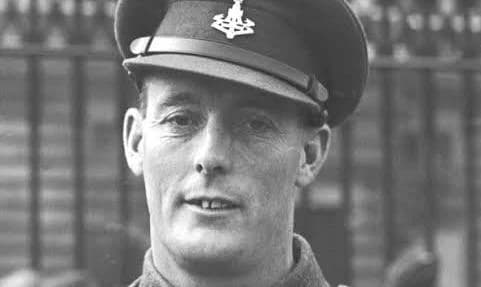
Stanley Elton Hollis was born in Middlesbrough on 21 September 1912. His family later ran a fish-and-chip shop at Robin Hood's Bay. He left school young, then joined the Merchant Navy in 1929 and trained for navigation work on routes to Africa. Blackwater fever ended that career. Back in England he worked as a lorry driver, married Alice and became the father of two children.
Hollis joined the Green Howards as a Territorial before the Second World War. Serving with the 6th Battalion, he went to France in April 1940 as a despatch rider and escaped through Dunkirk. Promoted to sergeant, he subsequently fought in North Africa and Sicily. By the time his battalion returned to Britain to prepare for Normandy, he was an experienced infantry leader who had already been wounded.
On 6 June 1944 he landed on Gold Beach as a company sergeant-major. Even before reaching shore, a hot gun barrel badly burned his hand. Inland, near the Mont Fleury battery, a German pillbox threatened the battalion's movement. Hollis charged with his Sten gun, climbed onto the position and attacked with a grenade. He took prisoners and then followed the connecting trench to another emplacement, helping clear a danger behind the advancing troops.
Later at Crépon, he attempted to engage a German field gun with a PIAT. The attack failed and enemy fire forced him back. Discovering that two of his men remained trapped, he took a Bren gun and went forward again, drawing fire while they escaped. His Victoria Cross citation links these separate actions and credits his repeated intervention with winning the company's objectives and preventing heavier casualties (London Gazette, August 1944, issue 36658; citation transcription: https://greenhowards.org.uk/stanley-hollis/).
Hollis was the only man awarded a Victoria Cross for actions on D-Day itself. George VI presented it at Buckingham Palace on 10 October 1944. He continued serving during the Normandy campaign and suffered further wounds before the war ended.
Civilian life brought fresh difficulties. Finding work sufficient to support his family was a struggle until he trained as a publican. His later life centred on his family, his pubs and interests including horse and pigeon racing. He disliked the publicity attached to his decoration, although he returned to the battlefields and remained closely associated with his regiment. Hollis died on 8 February 1972, aged fifty-nine. His medals are preserved by the Green Howards Museum.
Become the named supporter for this profile and edit the tribute biography and portrait (Owner account required). Proceeds help keep the archive online.
$25 USD / year — annual sponsorship renewal. Keeps the page online and, where enabled, the family anniversary remembrance emails active.