★
Loading archive…
Loading archive…
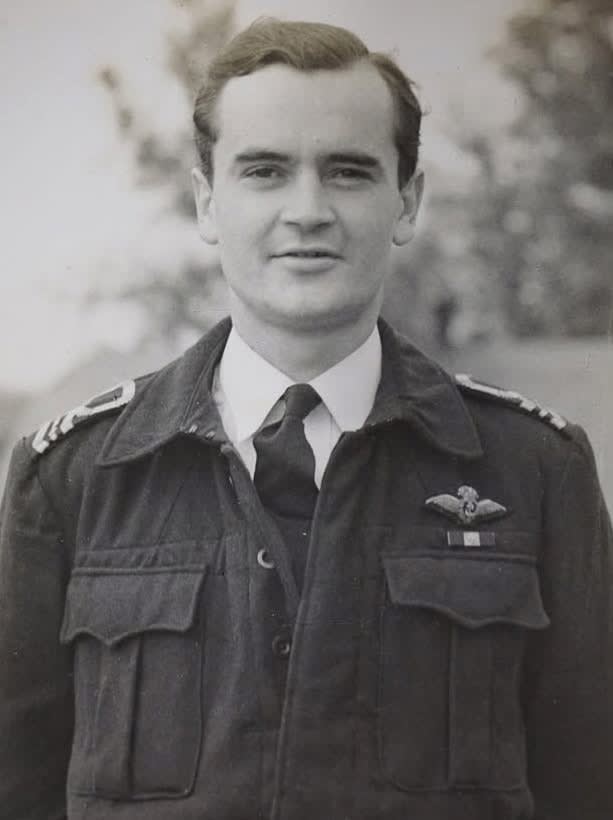
Commander, Royal Navy
Support & adopt this hero ↓
# Commander Stanley Gordon Orr, DSC and Two Bars, AFC: Fleet Air Arm Fighter Ace
Rejected by the Royal Air Force because of his eyesight, Stanley Gordon Orr simply tried another door. The Royal Navy accepted him, and the young engineer who had once worked on experimental bombers went on to become one of the Fleet Air Arm's most accomplished fighter pilots. He fought over Norway, Dunkirk and Malta, flew from aircraft carriers in the Mediterranean and Arctic, helped strike at the German battleship *Tirpitz*, survived poliomyelitis, became a pioneering naval test pilot, and later returned to combat during the Korean War. By the end of his career, Orr had been awarded the Distinguished Service Cross and Two Bars, the Air Force Cross, and a Mention in Despatches , placing him among the most highly decorated British naval aviators of his generation.
Stanley Gordon Orr was born in London, England, on 28 September 1916. The son of a stockbroker, he attended Regent Street Polytechnic before becoming an apprentice with the Humber Motor Company. He later worked for Vale Engineering and, in 1936, joined the experimental department of Handley Page. There he contributed to work associated with the prototype Hampden and Halifax bombers, gaining practical experience with aircraft at a time when European tensions were moving steadily toward war.
Orr wanted to fly. He first applied for a Royal Air Force short-service commission, but failed the eyesight examination. Rather than abandon the idea, he applied to the Fleet Air Arm. According to later accounts, he underwent essentially the same medical examination in the same building, this time under a different doctor, and passed. He joined the Royal Naval Volunteer Reserve and began the demanding process of becoming a naval aviator.
In February 1940, Orr joined 759 Naval Air Squadron at Eastleigh for operational training on Blackburn Skuas and Sea Gladiators. After completing deck-landing instruction aboard HMS *Argus*, he was posted to 806 Naval Air Squadron at Hatston in the Orkney Islands. Flying Blackburn Skuas and Rocs, the squadron attacked German shipping and coastal targets during the Norwegian campaign before moving south to provide fighter cover during Operation Dynamo , the evacuation of Allied troops from Dunkirk.
The next stage of Orr's career would establish his reputation.
Re-equipped with the Fairey Fulmar, 806 Squadron embarked in HMS Illustrious and entered the Mediterranean in 1940. Orr quickly proved himself an aggressive and determined fighter pilot. During the months that followed, he was credited with a growing number of individual and shared victories against German and Italian aircraft. On 11 November 1940, he flew fighter cover during the Fleet Air Arm's celebrated attack on the Italian fleet at Taranto , one of the most important carrier air strikes of the early war.
Then came one of the most dramatic days of his flying career.
On 10 January 1941 , while HMS *Illustrious* was supporting a convoy operation to Malta, Orr and fellow 806 Squadron pilot Sub-Lieutenant Graham Hogg intercepted Italian Savoia-Marchetti SM.79 torpedo bombers and shot one down. Soon afterward, German Junkers Ju 87 dive-bombers attacked the carrier in overwhelming strength. Orr had exhausted much of his ammunition, but instead of withdrawing he climbed back into the battle, manoeuvring through intense naval anti-aircraft fire in an effort to disrupt the attacking Stukas. *Illustrious* was hit repeatedly and badly damaged, forcing the surviving Fulmars to operate from Malta.
From RAF Hal Far , Orr became part of the desperate defence of the island. Flying almost daily against German and Italian aircraft, he continued to add to his combat record. Malta was one of the most dangerous air battlefields of the war, and the experience helped establish Orr as one of the Fleet Air Arm's leading fighter pilots.
His courage and operational success were formally recognised when the Distinguished Service Cross was announced in the *London Gazette* on 8 April 1941 . Orr was listed as Sub-Lieutenant (A) Stanley Gordon Orr, RNVR, serving in HMS *Illustrious*. The official notice did not include a detailed personal narrative citation, but the award came directly from his intense Mediterranean combat service with 806 Naval Air Squadron.
Only a few months later, Orr received further recognition.
His first Bar to the Distinguished Service Cross was announced in the *London Gazette* on 1 July 1941 . The Admiralty notice covered a group of officers and men whose service had sustained the Royal Navy's operations under extreme pressure. The collective citation praised their:
> “Outstanding zeal, patience and cheerfulness” and their “whole-hearted devotion to duty.”
Orr was named in the notice as Sub-Lieutenant (A) Stanley Gordon Orr, D.S.C., R.N.V.R.
By this stage, Orr had already fought over Norway, Dunkirk, the Mediterranean and Malta. He later served aboard HMS *Formidable*, flew fighter cover during the Battle of Cape Matapan , and took part in operations over the eastern Mediterranean and Syria. After an exhausting period of combat flying, he returned to Britain in August 1941 and became an instructor at RNAS Yeovilton.
His next appointment took him far from Europe.
In August 1942, Orr travelled to the United States to command the newly formed 896 Naval Air Squadron , equipped with Grumman Martlets. The squadron embarked in HMS *Victorious*, which was being deployed to reinforce American carrier forces in the Pacific. Orr reached Pearl Harbor, but before he could take part in the squadron's operational deployment he contracted poliomyelitis .
For many pilots, that would have ended a flying career.
Orr survived. Contemporary accounts state that he spent approximately ten weeks in an iron lung before recovering sufficiently to return to Britain. Remarkably, within months he was back in operational aviation.
In August 1943, he took command of 804 Naval Air Squadron , flying Grumman Hellcats from the escort carrier HMS *Emperor*. The squadron protected convoys, attacked German shipping and flew offensive missions along the Norwegian coast.
On 3 April 1944 , Orr took part in Operation Tungsten , the Fleet Air Arm's major strike against the German battleship *Tirpitz* in Kaafjord, Norway. Orr led the Hellcat element of the second strike force. With no German fighters appearing to contest the raid, the Hellcats attacked and suppressed anti-aircraft positions while Fairey Barracudas made their bombing runs against the battleship.
Orr's second Bar to the Distinguished Service Cross was announced on 30 May 1944 . The *London Gazette* did not publish a detailed individual narrative citation, but operational histories consistently associate the award with his leadership and flying during the Norwegian operations, particularly the attack on *Tirpitz*. The second Bar made Orr a holder of the DSC and Two Bars , a highly distinguished level of repeated gallantry recognition.
His combat career was not yet finished.
On 14 May 1944 , Orr led aircraft from 800 and 804 Naval Air Squadrons against German seaplanes near Vikten Island. He shared in the destruction of enemy aircraft during the action, including Heinkel He 115 and Blohm & Voss BV 138 seaplanes.
Published sources differ over Orr's final wartime victory total. Traditional Fleet Air Arm accounts and contemporary obituaries credit him with 17 enemy aircraft destroyed , including individual and shared victories. Some later reconstructions produce a lower total because shared victories and aircraft destroyed on or near the water are counted differently. Whatever system is used, Orr was unquestionably one of the Royal Navy's highest-scoring fighter pilots of the Second World War .
Orr was also Mentioned in Despatches for his wartime service. The surviving secondary histories connect the distinction with his operations from HMS *Emperor* during the Norwegian campaign. A precise individual narrative citation has not been located, so the Mention in Despatches should be understood as official recognition of his outstanding operational service rather than being attributed with certainty to one particular sortie.
By September 1944, Orr had moved from frontline combat to instruction and experimental aviation. He became chief flying instructor at RNAS Henstridge and later attended the Empire Test Pilots' School at Boscombe Down . His combination of combat experience and technical knowledge made him particularly valuable as naval aviation entered the jet age.
As a Royal Navy test pilot, Orr flew an extraordinary variety of aircraft. His work included carrier trials with new jet types and the development of techniques for operating aircraft with tricycle undercarriages from carriers. He was among the naval aviators helping to bridge the enormous technological gap between the piston-engined fighters of the Second World War and the rapidly developing jet aircraft of the postwar era.
For this work, Orr received the Air Force Cross in the 1948 New Year Honours . The *London Gazette* officially listed Stanley Gordon Orr, DSC, among the Royal Navy recipients of the AFC. As was common with many peacetime Air Force Cross awards, no detailed individual citation was published. Later accounts consistently associate the decoration with his demanding and pioneering work as a naval test pilot.
Even after everything he had experienced in the Second World War, Orr returned to combat.
During the Korean War , he served as Lieutenant-Commander (Flying) aboard HMS Ocean and flew ground-attack missions against targets on Korea's west coast. His Korean service added another major conflict to a career that had already included some of the most important naval air operations of the Second World War.
Orr later commanded the Naval Test Squadron and served with the Inter-Service Hovercraft Trials Unit at Lee-on-Solent . By the time he reached the rank of commander, he had flown more than 100 different types of aircraft , an extraordinary reflection of both his skill as a pilot and the rapidly changing technology of naval aviation during his lifetime.
After retiring from the Royal Navy in 1966 , Orr remained involved in advanced marine engineering. He joined Vospers and worked in the development and trials of fast patrol craft and hovercraft before later representing several engineering companies commercially.
His wife, Myra , whom he had married in 1940, died in 1999. Commander Stanley Gordon Orr died at Fareham, Hampshire, on 11 August 2003 , aged 86. He was survived by their two sons.
Stanley Gordon Orr's career is remarkable not because of one battle or one decoration, but because of its extraordinary range. He fought from the opening years of the Second World War, defended Malta, flew in the Mediterranean and Arctic, helped attack *Tirpitz*, survived a disease that could easily have ended his life, became a pioneering naval test pilot, and then returned to war in Korea.
From the Fairey Fulmar to the first generations of naval jets, Orr witnessed and helped shape one of the fastest periods of technological change in aviation history. His Distinguished Service Cross and Two Bars, Air Force Cross, and Mention in Despatches reflected courage in combat, leadership under pressure and exceptional skill in the air.
The RAF had once rejected Stanley Gordon Orr because of his eyesight. The Royal Navy gave him his opportunity, and he turned it into one of the most remarkable careers in the history of the Fleet Air Arm .
Become the named supporter for this profile and edit the tribute biography and portrait (Owner account required). Proceeds help keep the archive online.
$25 USD / year — annual sponsorship renewal. Keeps the page online and, where enabled, the family anniversary remembrance emails active.