★
Loading archive…
Loading archive…

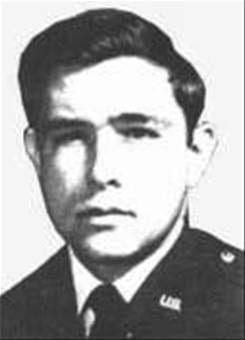
Captain Steven Logan Bennett had a parachute that could save his life. The Marine officer flying behind him did not. In the final moments of a crippled aircraft over Vietnam, Bennett faced an extraordinary choice: escape alone or attempt a landing that might save them both. His decision cost him his life, saved another man's, and earned him the Medal of Honor, America's highest military decoration for valor.
Born on 22 April 1946 in Palestine, Texas, Steven L. Bennett grew up in Lafayette, Louisiana. He graduated from the University of Southwestern Louisiana and was commissioned into the United States Air Force on 12 August 1968 through the Air Force ROTC program. After completing pilot training, Bennett qualified on the B-52 Stratofortress and flew combat missions during a Southeast Asian deployment in 1970. In April 1972, he returned to Vietnam as a forward air controller with the 20th Tactical Air Support Squadron at Da Nang Air Base, flying the OV-10 Bronco.
On 29 June 1972, Captain Bennett and U.S. Marine Corps Captain Michael B. Brown were conducting an artillery-adjustment mission near Quang Tri during North Vietnam's Easter Offensive. A small South Vietnamese Marine force was threatened by a much larger concentration of North Vietnamese troops. Bennett requested air support, but no aircraft were available. Artillery support was equally dangerous because enemy soldiers were too close to friendly positions. With lives hanging in the balance, Bennett decided to attack using his OV-10's machine guns.
Flying into intense enemy defenses, Bennett completed four strafing passes, forcing the attacking troops to retreat. During his fifth attack, a shoulder-fired surface-to-air missile struck the aircraft, severely damaging the left engine and landing gear and starting a fire. With the crippled Bronco unable to return safely to an airfield, Bennett prepared to eject. Then Brown revealed that the missile explosion had destroyed his parachute.
Bennett's own parachute remained intact. He could attempt to escape, but doing so would abandon Brown inside the damaged aircraft. Knowing that no OV-10 pilot had survived a water landing, Bennett chose to ditch in the Gulf of Tonkin. The aircraft struck the sea, overturned, and crushed the forward cockpit. Brown escaped and was rescued, but Bennett became trapped and died at just 26 years old.
His official Medal of Honor citation recognized his extraordinary heroism, disregard for personal safety, and determination to preserve his fellow officer's life. Historical award listings also attribute four Air Medals, two Purple Hearts, and an Air Force Commendation Medal to Bennett, although the individual orders for these additional awards still require archival verification. His units received important citations, including the Presidential Unit Citation associated with the 20th Tactical Air Support Squadron's distinguished service in 1972. Bennett was also posthumously recognized with the Cheney Award for his extraordinary aviation heroism.
On 8 August 1974, Vice President Gerald R. Ford presented Bennett's posthumous Medal of Honor to his widow, Linda, at Blair House, in the presence of their young daughter, Angela. Bennett was buried at Lafayette Memorial Park in Louisiana. His legacy was later honoured through the naming of the military transport ship MV Capt. Steven L. Bennett.
Steven Logan Bennett's final mission was more than an act of battlefield courage. It was the deliberate decision of a young American pilot to place another man's survival above his own. His story remains one of the most moving examples of sacrifice, loyalty, and extraordinary heroism in United States Air Force history.
Become the named supporter for this profile and edit the tribute biography and portrait (Owner account required). Proceeds help keep the archive online.
$25 USD / year — annual sponsorship renewal. Keeps the page online and, where enabled, the family anniversary remembrance emails active.