★
Loading archive…
Loading archive…
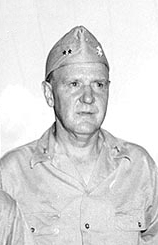
Vice admiral, U.S. Navy
Support & adopt this hero ↓
Vice Admiral Theodore Stark “Ping” Wilkinson Jr. was one of the United States Navy’s most accomplished officers of the first half of the twentieth century. His career stretched from personal gallantry in the fighting at Veracruz in 1914 to senior command of major amphibious operations across the Pacific during the Second World War.
Wilkinson was born at Annapolis, Maryland, on 22 December 1888. He entered the United States Naval Academy in 1905 and graduated first in the class of 1909. After completing the sea service then required before commissioning, he became an ensign in 1911. His early assignments included service aboard battleships and duty with the Bureau of Ordnance before he joined USS *Florida*.
During the United States intervention at Veracruz, Mexico, Wilkinson commanded the Second Company from USS *Florida*. On 21 and 22 April 1914, he remained at the head of his company during the fighting and distinguished himself by the skill and courage with which he led his men. His conspicuous conduct during the engagements earned him the Medal of Honor.
During the First World War, Wilkinson served with the Bureau of Ordnance and contributed to the development and administration of naval weapons. His career continued through a succession of sea and shore appointments, including destroyer commands, service with the Bureau of Navigation and the General Board, and work connected with international naval arms discussions. He was promoted to captain in 1937 and later served as chief of staff to the Commander, Scouting Force.
In 1941 Wilkinson commanded the battleship USS *Mississippi* before being appointed Director of Naval Intelligence. Promoted to rear admiral in 1942, he subsequently commanded Battleship Division Two and served as Deputy Commander of the South Pacific Area and South Pacific Force. In 1943 he assumed command of the Third Amphibious Force and became a central figure in the Allied advance through the Pacific.
Under Wilkinson’s leadership, amphibious forces took part in operations at New Georgia, Vella Lavella, the Treasury Islands and Bougainville. He later directed operations against Peleliu and Angaur and the occupation of Ulithi. Promoted to vice admiral in 1944, he commanded major amphibious forces during the return to the Philippines, including the landings at Leyte and Lingayen Gulf.
For his exceptionally meritorious wartime service, Wilkinson received the Navy Distinguished Service Medal three times. On his ribbon bar, the second and third awards are represented by two gold stars. In 1945 he was also appointed a **Companion of the Order of the Bath (CB)** in recognition of his distinguished wartime service.
After the Second World War, Wilkinson returned to Washington and served as a member of the Joint Strategic Survey Committee of the Joint Chiefs of Staff. He died on 21 February 1946 at Norfolk, Virginia, following an automobile accident in which his vehicle went from a ferry into the water.
Vice Admiral Theodore Stark Wilkinson Jr. left an unusually distinguished record of naval service. As a young ensign at Veracruz, his courage and leadership earned the Medal of Honor. Three decades later, his skill in planning and directing amphibious warfare helped carry Allied forces across the Pacific toward victory. His decorations, including the Medal of Honor, three awards of the Navy Distinguished Service Medal and appointment as a Companion of the Order of the Bath, reflected both personal gallantry and exceptional achievement in high command.
Become the named supporter for this profile and edit the tribute biography and portrait (Owner account required). Proceeds help keep the archive online.
$25 USD / year — annual sponsorship renewal. Keeps the page online and, where enabled, the family anniversary remembrance emails active.