★
Loading archive…
Loading archive…

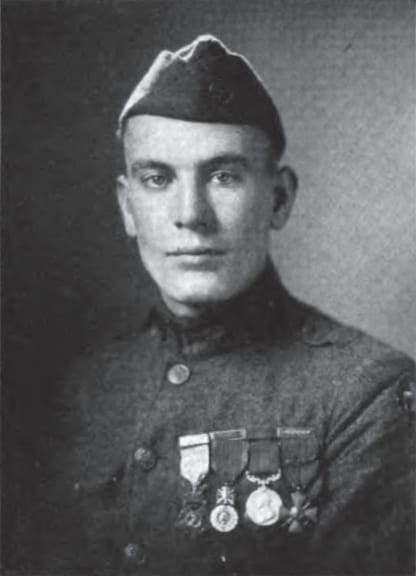
One enemy machine gun had stopped an American advance. One corporal stepped forward alone to silence it. On July 4, 1918, amid the thunder of artillery and relentless gunfire at the Battle of Hamel in France, Thomas A. Pope made a decision that would earn him the Medal of Honor and secure his place among the most remarkable American heroes of World War I.
Born on December 15, 1894, in Chicago, Illinois, Thomas A. Pope enlisted in the Illinois National Guard in 1917. He eventually served as a corporal in Company E, 131st Infantry Regiment, 33rd Division, American Expeditionary Forces. During the Battle of Hamel, his company fought alongside Australian soldiers in a historic Allied operation that demonstrated the effectiveness of coordinated infantry, artillery and tank warfare.
On Independence Day, July 4, 1918, Pope confronted the moment that would define his military career. According to his official Medal of Honor citation, his company was advancing behind tanks when devastating German machine-gun fire brought the movement to a halt. Rather than remain under cover, Pope advanced alone toward the enemy position. Armed with his rifle and bayonet, he charged the machine-gun nest, killed several of its defenders and stood astride the captured weapon, preventing the surviving Germans from escaping or resuming fire until American reinforcements arrived and took them prisoner.
His extraordinary courage was formally recognized through War Department General Orders No. 44, dated April 2, 1919. The Medal of Honor citation immortalized his solitary assault, describing how he overcame the machine-gun crew and held the position until help arrived. What compelled one soldier to confront an entrenched enemy position without waiting for support? For Pope, the immediate danger facing his comrades demanded action.
The British account of the engagement adds another remarkable dimension. His Distinguished Conduct Medal citation describes an operation to recapture an advanced Allied post seized during a German counterattack. Pope rushed the hostile machine gun single-handedly, bayoneted members of its crew and held the remaining defenders at bay until reinforcements secured the position. Recognizing this exceptional battlefield gallantry, Britain awarded him the Distinguished Conduct Medal.
His bravery also earned recognition from France through the prestigious Médaille militaire and Croix de Guerre 1914–1918. These French decorations, together with his British Distinguished Conduct Medal, reflected the international significance of his actions at Hamel. His wartime service also qualified him for the United States World War I Victory Medal.
Yet Pope's combat career was remarkably brief. Shortly after the battle, he reportedly suffered the effects of enemy poison gas and was hospitalized. His time in frontline combat was limited, but his actions had already secured an extraordinary military legacy. On April 22, 1919, General John J. Pershing personally presented Pope with the Medal of Honor at Ettelbruck, Luxembourg.
After returning to civilian life, Pope remained associated with his fellow veterans and military remembrance. His wartime gallantry continued to be commemorated by American and Australian veterans.
Thomas A. Pope died on June 14, 1989, at the age of 94. He was laid to rest with military honors at Arlington National Cemetery, Virginia.
His legacy reaches beyond the medals he wore. At Hamel, in a moment when hesitation could have cost more lives, one American corporal chose to advance alone. His story remains a powerful testament to courage, sacrifice and the extraordinary difference one soldier can make.
Become the named supporter for this profile and edit the tribute biography and portrait (Owner account required). Proceeds help keep the archive online.
$25 USD / year — annual sponsorship renewal. Keeps the page online and, where enabled, the family anniversary remembrance emails active.