★
Loading archive…
Loading archive…
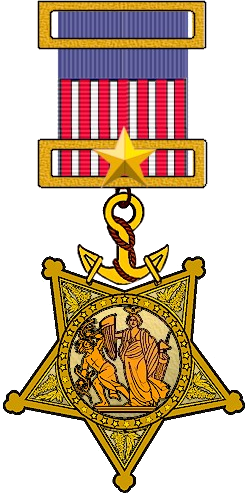
Ordinary Seaman, U.S. Navy
Support & adopt this hero ↓
He Stayed Under Fire to Save a Wounded Officer
Thomas Connor was born in Ireland in 1842. He later emigrated to the United States and entered the United States Navy from Maryland during the American Civil War. By the closing stages of the conflict, he was serving as an Ordinary Seaman aboard USS Minnesota, a powerful steam frigate that had already experienced some of the most significant naval operations of the war.
Connor’s defining moment came during the Union campaign against Fort Fisher, North Carolina. The Confederate stronghold guarded the approaches to Wilmington, one of the South’s most important remaining ports for blockade-running commerce. By early 1865, reducing Fort Fisher had become a major Union objective. A successful attack would help close Wilmington to Confederate shipping and further isolate the Confederacy during the final months of the war.
On January 15, 1865, Union forces launched their decisive assault against Fort Fisher. In addition to the Army attack, sailors and Marines from the Federal fleet were organized into a large naval landing force. Connor went ashore as part of the assaulting party from USS Minnesota.
The naval force faced a dangerous advance across exposed ground toward the fortifications. Connor moved forward with his comrades and charged toward the palisades protecting the Confederate position. As the attack came under intense defensive fire, the naval assault began to break down. More than two-thirds of the men around Connor turned back and withdrew.
Connor did not follow them.
A wounded officer remained in the exposed area, and Connor chose to stay with him despite the danger. Confederate fire was being concentrated on the group, making any attempt to remain in position hazardous. Rather than abandoning the injured officer, Connor stayed on the battlefield while the fighting continued.
He remained with the wounded man until darkness provided enough protection to attempt an evacuation. Connor then assisted in carrying the officer from the field. His conduct transformed what might otherwise have been recorded simply as another failed portion of the naval assault into an individual example of courage, loyalty, and determination under direct enemy fire.
The wider Union operation succeeded. Fort Fisher fell, removing the principal defense protecting Wilmington from naval attack and effectively closing the Confederacy’s last major Atlantic port to blockade runners. The victory came only months before the collapse of the Confederate war effort, and Connor’s actions took place during one of the final major combined Army-Navy operations of the Civil War.
For his conduct at Fort Fisher, Thomas Connor was awarded the Medal of Honor. His award was recorded under General Order No. 59 on June 22, 1865. The official recognition identified him as an Ordinary Seaman aboard USS Minnesota and emphasized his advance to the palisades, his refusal to abandon a wounded officer after most of the attacking sailors had retreated, and his eventual assistance in carrying the injured man from the battlefield.
The Medal of Honor was still a young decoration when Connor received it. Created during the Civil War, it became the nation’s highest military recognition for extraordinary courage. Connor’s award belonged to the early naval tradition of the decoration, when sailors were recognized for exceptional conduct during ship-to-ship combat, bombardments, blockade operations, dangerous expeditions, and assaults carried out ashore.
Connor’s Civil War naval service also falls within the service later commemorated by the Navy Civil War Campaign Medal. The Navy Department established the medal in 1908 to recognize qualifying officers and enlisted personnel who had served in the naval forces during the Civil War between April 15, 1861, and April 9, 1865. No service stars were authorized for individual Civil War engagements on this medal. Connor’s documented service aboard USS Minnesota during the Fort Fisher campaign fell within the recognized period of Civil War naval service.
Unlike many decorated servicemen whose postwar careers can be reconstructed in considerable detail, the surviving authoritative record of Connor’s later life is limited. Even the date of his death is not securely established in the major official Medal of Honor records. Rather than allowing uncertain biographical details to obscure what is known, his historical legacy rests primarily on the actions that were formally documented during the battle.
Thomas Connor entered history not because he commanded a ship or held senior rank, but because of a decision made by an Ordinary Seaman at a moment when the assault around him was collapsing. As men withdrew under heavy fire, he remained beside a wounded officer, endured the danger until darkness, and then helped carry the injured man to safety.
That act at Fort Fisher on January 15, 1865, earned Thomas Connor the Medal of Honor and secured his place among the sailors whose courage defined the combat service of the United States Navy during the American Civil War.
Become the named supporter for this profile and edit the tribute biography and portrait (Owner account required). Proceeds help keep the archive online.
$25 USD / year — annual sponsorship renewal. Keeps the page online and, where enabled, the family anniversary remembrance emails active.