★
Loading archive…
Loading archive…

He Faced Seven Armed Soldiers Alone
Thomas Cosgrove was born in Ireland and later made his home in Massachusetts, where he established himself in Lexington before the American Civil War. In civilian life he worked as a farmer, a far different existence from the battlefield experience that would eventually place his name among the recipients of the Medal of Honor.
When the Civil War called thousands of men into Union service, Cosgrove joined the United States Army and served as a Private in Company F of the 40th Massachusetts Infantry. The regiment entered active campaigning in the eastern theater and eventually became involved in the operations against Richmond and Petersburg, where Union forces repeatedly confronted heavily defended Confederate positions.
By May 1864, the 40th Massachusetts Infantry was participating in operations south of Richmond as part of the Bermuda Hundred Campaign. Union forces sought to threaten the Confederate capital and its vital transportation network while Confederate troops attempted to contain the advance. One of the major areas of fighting was Drewry's Bluff, a strategically important position protecting the approaches to Richmond.
On May 15, 1864, during the fighting at Drewry's Bluff, Cosgrove performed the extraordinary action that would define his military legacy. While operating near the Confederate positions, he discovered seven armed Confederate soldiers concealed in a cellar. He was alone when he confronted them.
Rather than withdraw and summon additional troops, Cosgrove took control of the situation himself. He demanded that the seven armed Confederates surrender. Faced with the Union private's weapon and determination, the men complied. Cosgrove disarmed them individually and then marched all seven back as prisoners of war.
The action was remarkable because of the imbalance involved. Cosgrove was a single enlisted soldier confronting seven armed opponents. His official Medal of Honor record required no elaborate description or later embellishment: he individually demanded and received their surrender, disarmed them, and brought them in as prisoners. The incident demonstrated personal courage, initiative, and remarkable composure in a situation that could easily have ended very differently.
Cosgrove continued serving through the closing period of the Civil War. By the spring of 1865, Union armies were closing around Richmond and Petersburg and Confederate resistance in Virginia was nearing collapse. During operations connected with the Union advance into Richmond, Cosgrove was also associated with the recovery of a Union banner that had previously fallen into Confederate hands. His wartime experiences therefore extended beyond the single episode for which he would eventually receive the nation's highest military decoration.
When the war ended, Cosgrove returned to Massachusetts and resumed civilian life. He settled again in Lexington and worked as a farmer. Like many veterans of the conflict, he maintained connections with other former soldiers and became part of the community of Civil War veterans whose organizations preserved the memories of wartime service.
For more than three decades after Drewry's Bluff, Cosgrove's extraordinary action remained without the country's highest formal recognition. That changed in 1896. On November 7 of that year, he was awarded the Medal of Honor for his conduct at Drewry's Bluff on May 15, 1864.
The Medal of Honor citation focused specifically on his confrontation with the seven Confederate soldiers. It recognized that Cosgrove, acting individually, demanded their surrender, disarmed them, and marched them away as prisoners of war. The award transformed an incident from the chaos of the 1864 campaign into the defining episode of his recorded military career.
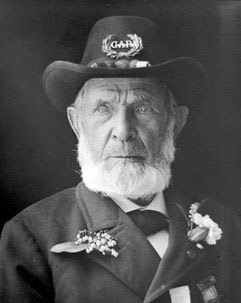
Cosgrove remained closely connected with the veteran community in Lexington during his later years. He was associated with the Grand Army of the Republic, the influential organization of Union veterans that provided fellowship, preserved Civil War memory, and honored the service of former soldiers. Local residents also remembered him not simply as a decorated veteran but as a familiar member of the community who had returned from war to a quieter life.
Even decades after the Civil War, Cosgrove retained a strong identification with his military past. Newspaper interviews recorded memories of his wartime experiences, helping preserve details that otherwise might have disappeared with the passing of the Civil War generation. His story became particularly important in Lexington, where his Medal of Honor service gave the community a direct connection to one of the nation's highest military distinctions.
Thomas Cosgrove died on March 27, 1912, in East Lexington, Massachusetts. He was buried in Munroe Cemetery in Lexington, where his grave became a place of remembrance for later generations honoring local veterans.
His legacy rests most securely on what happened at Drewry's Bluff. He was a Private, not a senior officer commanding troops from a position of authority. Confronted with seven armed enemy soldiers, he acted alone, compelled their surrender, removed their weapons, and marched them back as prisoners. More than thirty years later, the United States formally recognized that extraordinary act by awarding him the Medal of Honor.
Cosgrove's life connected the experience of an Irish immigrant, a Massachusetts farmer, a Union infantryman, and a Medal of Honor recipient. His story demonstrates how a single moment of decisive action by an ordinary soldier could survive the confusion of battle and become part of the permanent record of American military valor.
Become the named supporter for this profile and edit the tribute biography and portrait (Owner account required). Proceeds help keep the archive online.
$25 USD / year — annual sponsorship renewal. Keeps the page online and, where enabled, the family anniversary remembrance emails active.