★
Loading archive…
Loading archive…

When a boat began filling with water in the dangerous surf off Little Andaman Island, Private Thomas Murphy and four fellow soldiers faced a desperate choice: retreat or risk their lives again to save their stranded comrades. They chose to return. Their courage helped save seventeen men and earned Murphy one of Britain's highest honours, the Victoria Cross.
Thomas Murphy served as a Private in the 2nd Battalion, 24th Regiment of Foot, later known as the South Wales Borderers. His defining act of bravery took place on 7 May 1867 during an expedition to Little Andaman Island in the Bay of Bengal. The expedition had been dispatched to investigate the disappearance of the commander and seven crew members of the ship Assam Valley, who had gone ashore and were feared dead.
When members of the expedition became stranded on the island, Murphy joined Assistant Surgeon Campbell Millis Douglas and fellow Privates James Cooper, David Bell and William Griffiths in manning a boat to reach them through the dangerous surf. Their first attempt nearly ended in disaster when the boat became half-filled with water, forcing them to withdraw. Undeterred, the five rescuers attempted the crossing again. Their second journey successfully brought five men through the surf to safety. They then made a third trip, rescuing the remaining members of the stranded party. In total, seventeen officers and men were saved.
The official citation praised the four privates for their remarkable composure and determination, emphasising that even the slightest hesitation or loss of courage while rowing through the roughest surf could have resulted in grave consequences. Their collective bravery was formally recognised when Murphy and his four comrades were awarded the Victoria Cross. The announcement appeared in the London Gazette on 17 December 1867, issue 23333, page 6878. Murphy received his Victoria Cross at Rangoon on 16 April 1868, presented by Major-General Faunce.
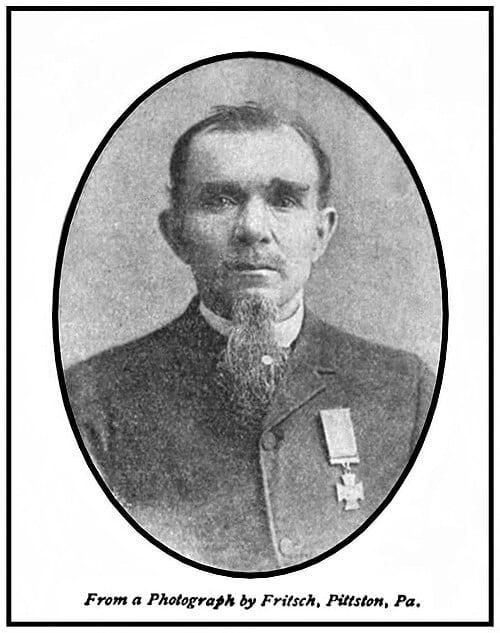
Later historical and genealogical research has identified Thomas Murphy as Thomas Cosgrove, an Irish-born soldier from Dublin who reportedly enlisted under his mother's maiden name, Murphy. Following his military service, he emigrated to the United States and settled in the Pittston area of Pennsylvania, where he worked as a coal miner. He lived there for approximately thirty years and died on 22 March 1900 at Luzerne, Pennsylvania. He was buried on 24 March at St John the Evangelist Cemetery near Pittston, although the exact location of his grave remains unknown because historical cemetery records were destroyed in a fire.
The story of Thomas Murphy VC is a reminder that extraordinary courage is not confined to the battlefield. Faced with treacherous waters and the lives of his comrades at stake, he repeatedly placed himself in danger to bring others to safety. His Victoria Cross stands as a lasting recognition of his bravery, determination and devotion to his fellow soldiers.
Become the named supporter for this profile and edit the tribute biography and portrait (Owner account required). Proceeds help keep the archive online.
$25 USD / year — annual sponsorship renewal. Keeps the page online and, where enabled, the family anniversary remembrance emails active.