★
Loading archive…
Loading archive…
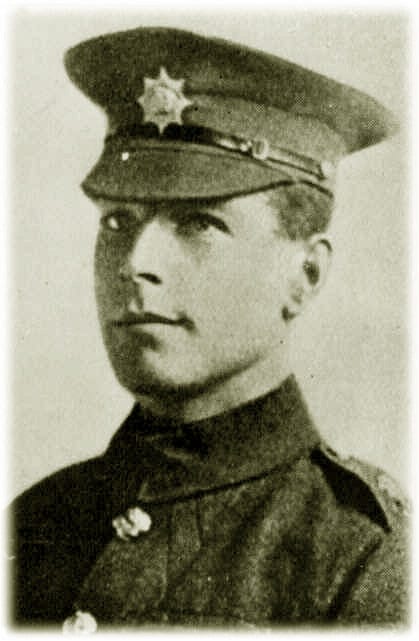
Lance Corporal, British Army
Support & adopt this hero ↓
On 27 September 1918, as German machine-gun fire threatened to halt the Allied advance at the Canal du Nord in France, a young Coldstream Guardsman volunteered to face the enemy guns at close quarters. Lance Corporal Thomas Norman Jackson crossed the canal under intense fire, helped capture two machine guns and enabled British troops to continue their advance. He would not survive the day, but his extraordinary courage secured his place among the most distinguished heroes of the First World War and earned him the Victoria Cross.
Thomas Norman Jackson was born on 11 February 1897 in Swinton, Yorkshire, England, the eldest son of Thomas Edwin Jackson and Emma Jackson, née Vickers. Before joining the British Army, he worked for Ward & Sons, a mineral-water manufacturer, and later as an engine cleaner at the Great Central Railway locomotive depot in Mexborough. He enlisted in the Coldstream Guards at Mexborough on 22 November 1915 and was mobilised in December 1916. After joining the 1st Battalion in France on 16 October 1917, he experienced the fighting of the Western Front, including the Battle of Cambrai in November 1917. His courage and service brought him promotion to Acting Lance Corporal on 11 June 1918.
Jackson's defining moment came during the Battle of the Canal du Nord near Graincourt on 27 September 1918. When an enemy machine-gun position prevented the British companies from advancing, Captain Cyril Hubert Frisby called for volunteers to accompany him in an assault across the canal. Jackson went forward with two comrades, crossed the canal under intense enemy fire, and helped capture the position. Two machine guns were taken, allowing the attacking companies to resume their advance. His bravery did not end there. Later that morning, when his platoon was ordered to clear a German trench, Jackson was again the first to enter. After performing further acts of outstanding service, he was killed in action. He was just twenty-one years old.
Jackson's Victoria Cross citation recognised his most conspicuous bravery and self-sacrifice, highlighting his initiative, courage and devotion to duty throughout the day's fighting. His official citation praised his valour and the inspiring example he set for his comrades. His Victoria Cross was published in the Second Supplement to The London Gazette, issue 31034, page 14040. His First World War service was also recognised through the British War Medal 1914–1920 and the Victory Medal 1914–1919.
Lance Corporal Thomas Norman Jackson was buried at Sanders Keep Military Cemetery, Graincourt-les-Havrincourt, France. His Victoria Cross is preserved by the Guards Museum at Wellington Barracks, London. His memory also remains closely connected to the railway community where he had worked before the war. After his omission from the Great Central Railway War Memorial was brought to attention, his name was added in 2016. From the locomotive depot at Mexborough to the battlefields of northern France, Jackson's story is a reminder of extraordinary courage demonstrated by an ordinary young man who placed duty and the lives of his comrades above his own.
Become the named supporter for this profile and edit the tribute biography and portrait (Owner account required). Proceeds help keep the archive online.
$25 USD / year — annual sponsorship renewal. Keeps the page online and, where enabled, the family anniversary remembrance emails active.