★
Loading archive…
Loading archive…

Nine times he crossed no man’s land to save the wounded men.
Thomas Young was born at Boldon, County Durham, on 28 January 1895. His original surname is recorded in variant forms as Morrell or Murrell. After his father’s death and his mother’s remarriage, he became known as Thomas Young. He attended school at High Spen and entered the coal industry before the First World War.
He enlisted in the Durham Light Infantry in 1914 and went to France with the 9th Battalion in April 1915. His service included the fighting around Ypres and the Somme. A thigh wound at High Wood in September 1916 interrupted his time at the front; after treatment and recovery he returned to France in 1917. By the spring of 1918 he was serving as a stretcher-bearer, a role that repeatedly took him beyond the protection of his battalion’s positions.
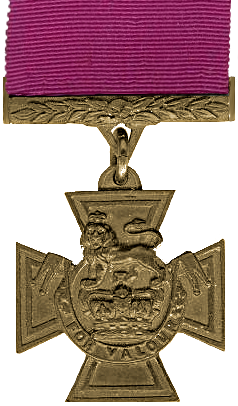
During the German offensive of March 1918, Young worked near Bucquoy between 25 and 31 March. His Victoria Cross citation describes repeated journeys across ground exposed to rifle and machine-gun fire. He reached wounded men, dressed their injuries and carried them back without assistance. Where conditions prevented immediate evacuation, he remained with the casualties until he could move them. The citation sums up the result: “he rescued and saved nine lives in this manner” (The London Gazette, 4 June 1918; citation reproduced by the Durham Light Infantry collection and https://www.newmp.org.uk/person/t-young-1914-18-1966/).
King George V invested him with the Victoria Cross at Buckingham Palace on 29 June 1918. The following day he received a large public welcome at Saltwell Park. Such celebrations made him a local figure, but his subsequent life remained closely tied to the Durham mining communities from which he had enlisted.
Young returned to colliery employment and also worked as a baths attendant as his health deteriorated. He served again briefly in the Army after the war, married Rachel Welsh and raised a family. During the Second World War he undertook further home service. Financial hardship was a persistent feature of his later years; his Victoria Cross was pawned, and the regiment eventually secured the medal for preservation.
He died in October 1966 and was buried at St Patrick’s Church, High Spen. The Durham Light Infantry’s collections preserve his medal group and personal story, linking a stretcher-bearer’s repeated rescues with the long working life, ill health and material difficulties that followed the public acclaim of 1918.
Become the named supporter for this profile and edit the tribute biography and portrait (Owner account required). Proceeds help keep the archive online.
$25 USD / year — annual sponsorship renewal. Keeps the page online and, where enabled, the family anniversary remembrance emails active.