★
Loading archive…
Loading archive…
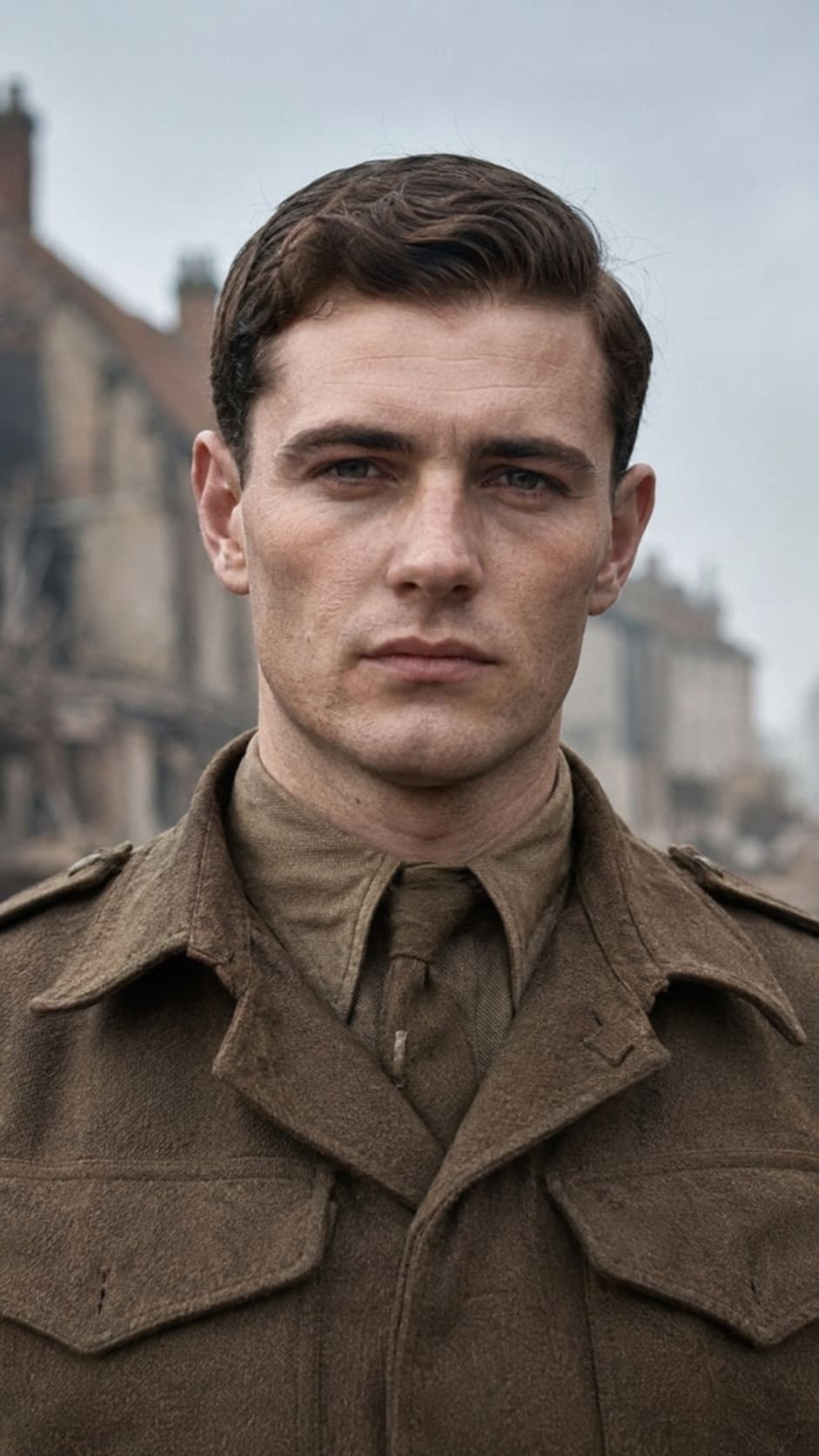
Few British soldiers escaped from years of enemy captivity and then volunteered to parachute straight back behind German lines. Colonel Sir Ronald Thomas Stewart "Tommy" Macpherson, CBE, MC and Two Bars, TD, DL did exactly that. A Cameron Highlander, Commando, prisoner of war, serial escapee, Operation Jedburgh officer and leader of Resistance fighters, Macpherson fought across North Africa, occupied France and northern Italy during the Second World War. His combination of physical courage, audacity and calculated bluff made him one of the most remarkable British special operations officers of his generation.
Ronald Thomas Stewart Macpherson was born in Edinburgh, Scotland, on 4 October 1920, the youngest of seven children of Sir Thomas Stewart Macpherson and Helen Macpherson. His family had deep roots in the Highlands around Newtonmore and Clan Macpherson. He attended Edinburgh Academy preparatory school, Cargilfield and Fettes College, where he overcame serious childhood osteomyelitis and developed into an outstanding athlete. He won a scholarship to Trinity College, Oxford, but war intervened before he could take up his university studies. While still a schoolboy, he was commissioned from the Officers' Training Corps into the Queen's Own Cameron Highlanders in 1939.
Conventional soldiering did not hold him for long. Macpherson volunteered for the newly formed Commandos and joined No. 11 (Scottish) Commando, serving in the Middle East in 1941. He became adjutant and acting second-in-command during the period surrounding the planned raid associated with Lieutenant Colonel Geoffrey Keyes and the attempt to strike at what British intelligence believed to be Erwin Rommel's headquarters. Macpherson was sent on reconnaissance connected with the operation, landed from a submarine on the Libyan coast and, after the planned extraction failed, was captured on 4 November 1941.
Captivity did not end Macpherson's war. For nearly two years he repeatedly tried to escape from Italian and German custody. Transfers, recaptures and failed attempts culminated in his imprisonment at Stalag XX-A at Toruń in German-occupied Poland. In October 1943 he escaped again and, with fellow prisoners, travelled through occupied territory toward the Baltic. They eventually reached Sweden, and Macpherson returned to Scotland on 4 November 1943, exactly two years after his capture. The King approved the award of the Military Cross to Lieutenant, temporary Captain, Ronald Thomas Stewart-Macpherson of the Queen's Own Cameron Highlanders, and the award was published in the London Gazette on 17 February 1944. Contemporary biographical accounts identify his successful escape and evasion as the achievement behind the award.
His return to Britain was not the end of his clandestine service. Macpherson was selected for Operation Jedburgh, the Allied program that inserted specially trained three-man teams into occupied Europe to organize, arm and coordinate local resistance movements. Promoted temporary major and placed in command of Jedburgh Team Quinine, he parachuted into the Auvergne region of France on the night of 8 June 1944, only two days after D-Day. Imperial War Museums records identify Macpherson as the leader of Team Quinine and confirm the team's 8 June insertion.
Macpherson deliberately brought something unusual with him into occupied France: his Highland identity. Beneath his parachuting equipment he wore Cameron Highlander battledress, including a kilt. It was theatrical, but it served a purpose. A conspicuous British officer could give scattered Resistance fighters a visible focus of authority and demonstrate that the Allies had arrived among them. Working with the French Maquis, Macpherson helped organize sabotage, ambushes and attacks on railways, bridges and roads. His forces interfered with German communications and movements at a critical stage of the campaign following the Normandy landings. The exploits later produced the famous popular image of Macpherson as the "Kilted Killer", although the nickname belongs more to his legend than to formal military documentation.
Perhaps no episode illustrates Macpherson's reputation for bluff more powerfully than his involvement in the negotiations surrounding Major-General Botho Elster's retreating German column in September 1944. Macpherson crossed German-held territory to take part in negotiations and threatened devastating Allied artillery and air attack if resistance continued. Elster's force, numbering roughly 20,000 men, ultimately surrendered to the United States Army. Macpherson's role was significant, but the historical record also shows important contributions by American Lieutenant Samuel Magill, French Resistance leaders and other Allied personnel. The surrender should therefore not be presented as the achievement of one man alone.
For his operations in France, Macpherson received a Bar to his Military Cross. The London Gazette formally recorded the Bar on 21 June 1945, listing Major, temporary, Ronald Thomas Stewart-Macpherson, MC, of the Queen's Own Cameron Highlanders. His wartime service then carried him to northeastern Italy, where he worked with the anti-German Osoppo partisan movement. Despite being wounded, he helped coordinate partisan groups and led attacks on German communications and railway installations, including operations around Udine and the approaches to Tarvisio. For this Italian service he received a Second Bar to the Military Cross, gazetted on 2 August 1945. He had therefore received the Military Cross three times, represented officially as the Military Cross and Two Bars.
Macpherson's service with the Resistance also brought major foreign recognition. France appointed him a Chevalier of the Légion d'honneur and awarded him the Croix de Guerre 1939-1945. Contemporary accounts describe the Croix de Guerre as bearing two palms and a star, representing three citations. The available sources establish the two palms and the existence of a star, although the precise grade of that star has not yet been confirmed from the original French citation documents. Italy awarded Macpherson the Medaglia d'Argento al Valor Militare, the Silver Medal for Military Valour, for his service alongside Italian resistance forces. Some contemporary biographical accounts also refer to an Italian "Resistance Medal", but its precise official identity and British authority for wear have not yet been securely established, so it is best treated separately from his verified published entitlement.
Peace did not end Macpherson's military career. He continued serving in the Territorial Army, and from 1947 to 1952 he was attached to 21 Special Air Service Regiment (Artists). This is the proper place in his career to describe his SAS association. He later transferred to the Gordon Highlanders and commanded the 1st Battalion, London Scottish from 1961 to 1964 before reaching the rank of colonel. His Territorial Decoration was officially recorded in 1950, and later Army records continued to style him MC, TD.
Macpherson's record of service continued to be recognized long after the fighting ended. In the 1968 New Year Honours, he was appointed a Commander of the Order of the British Empire, Military Division. The London Gazette identifies him as Colonel Ronald Thomas Stewart Macpherson, MC, TD, service number 90855, and places his CBE specifically in the Military Division. He also became a Deputy Lieutenant of Greater London and served as High Sheriff of Greater London. In the 1992 New Year Honours he was made a Knight Bachelor, and Queen Elizabeth II personally conferred his knighthood at Buckingham Palace on 17 March 1992.
Macpherson also built a substantial postwar business and public-service career, but the experiences of 1941 to 1945 remained central to his public reputation. He eventually told the story in his autobiography, Behind Enemy Lines, written with Richard Bath. The book preserved the memories of a young Highland officer who had fought as a Commando, endured captivity, escaped across occupied Europe, parachuted back into France and then carried the war into the mountains and towns of northern Italy.
Colonel Sir Tommy Macpherson died at Newtonmore on 6 November 2014, aged 94. His story survives not simply because of its extraordinary escapes and battlefield legends, but because his official record supports something remarkable in its own right: the Military Cross and Two Bars, the Territorial Decoration, a military CBE, major French and Italian honours, and a lifetime of service that eventually brought a knighthood. His wartime artefacts and memory remain closely associated with the Clan Macpherson Museum at Newtonmore, fittingly returning the story of the "Kilted Killer" to the Highland community from which he came.
Award citations and principal verification sources Military Cross: London Gazette, 17 February 1944, naming Lieutenant, temporary Captain, Ronald Thomas Stewart-Macpherson, service number 90855, Queen's Own Cameron Highlanders. First Bar to the Military Cross: London Gazette, 21 June 1945, naming Major, temporary, Ronald Thomas Stewart-Macpherson, MC. Second Bar to the Military Cross: London Gazette, 2 August 1945, explicitly recording the Second Bar to the Military Cross. Territorial Decoration: London Gazette material of 20 June 1950 records R. T. Stewart-Macpherson, MC, service number 90855, under the Camerons in the Territorial Army honours material. CBE, Military Division: London Gazette, 1 January 1968, lists Colonel Ronald Thomas Stewart Macpherson, MC, TD, as an Ordinary Commander of the Military Division of the Order of the British Empire. Légion d'honneur, Croix de Guerre and Italian Medaglia d'Argento: contemporary and institutional biographical accounts confirm the French and Italian awards; the Achilles Club obituary specifically records the Légion d'honneur, Croix de Guerre with two palms, Medaglia d'Argento and reported Resistance Medal. Other contemporary accounts describe the Croix de Guerre as carrying two palms and a star. Knight Bachelor: the London Gazette records Queen Elizabeth II conferring Macpherson's knighthood at Buckingham Palace on 17 March 1992. Operation Jedburgh, Team Quinine: Imperial War Museums identifies Macpherson as Team Quinine's leader and confirms that the team parachuted into the Auvergne region on 8 June 1944.
Become the named supporter for this profile and edit the tribute biography and portrait (Owner account required). Proceeds help keep the archive online.
$25 USD / year — annual sponsorship renewal. Keeps the page online and, where enabled, the family anniversary remembrance emails active.