★
Loading archive…
Loading archive…

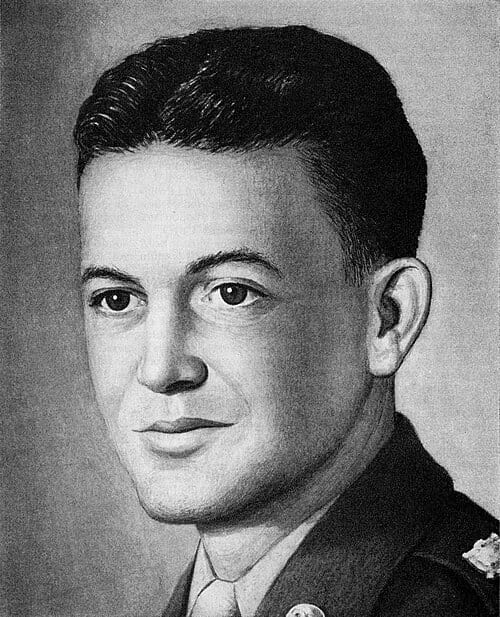
Paralyzed by fire, he stayed behind so his men could escape.
Travis Earl Watkins was born in Waldo, Arkansas, on 5 September 1920 and grew up in Texas. He attended school in Troup and entered the United States Army in 1939. During the Second World War he fought in the Pacific, including Guadalcanal, and received the Bronze Star. Continued Army service made him an experienced noncommissioned officer before the Korean War began.
He married Madie Sue Barnett in April 1948. By 1950 he was a master sergeant with Company H, 9th Infantry Regiment, 2nd Infantry Division. The North Korean offensive brought his regiment into the defence of the Pusan Perimeter, where units faced repeated attacks and the possibility of isolation.
Between 31 August and 3 September 1950, near Yongsan, Watkins led approximately thirty men cut off from their parent unit. His Medal of Honor citation describes him organizing a defensive perimeter, moving between positions and repeatedly obtaining ammunition despite enemy fire. He killed enemy soldiers at close range and recovered their weapons and ammunition for use by his own men.
During another assault he was struck by machine-gun fire and paralyzed below the waist. He nevertheless continued directing the defence. When the position could no longer be held and the men were running out of supplies, he ordered the survivors to make their way back to friendly lines. The citation records his refusal to be carried because he believed that moving him would endanger the others. He remained behind and died on 3 September (Congressional Medal of Honor Society, https://www.cmohs.org/recipients/travis-e-watkins).
Watkins received the Medal of Honor posthumously in 1951. His remains were returned to Texas and buried at Gladewater Memorial Park. His death left his wife and children to carry his memory into the postwar years.
The Navy later named a large military sealift vessel USNS Watkins in his honour, connecting his infantry service with a ship intended to transport equipment for future deployments. Texas also awarded him its Legislative Medal of Honor posthumously in 2017. Arkansas and Texas historical accounts preserve the earlier parts of his life alongside the final stand, showing that his leadership in Korea drew on a military career that had already included another war and more than a decade in uniform.
Become the named supporter for this profile and edit the tribute biography and portrait (Owner account required). Proceeds help keep the archive online.
$25 USD / year — annual sponsorship renewal. Keeps the page online and, where enabled, the family anniversary remembrance emails active.