★
Loading archive…
Loading archive…
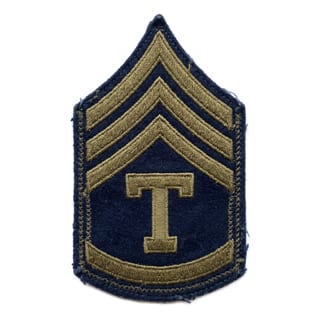
He crawled onward with mines to block advancing enemy tanks.
Truman Kimbro came from the Cottonwood community in Madison County, Texas. A Texas historical marker locates his childhood in the Cottonwood community and records his attendance at school in nearby Center. Before military service he worked in the area; a later memorial account associates him with dairy employment. He entered the Army through Houston shortly before the United States entered the Second World War.
Kimbro served with Company C, 2nd Engineer Combat Battalion, 2nd Infantry Division. He reached Europe in autumn 1943 and participated in the Normandy campaign before advancing across France and into the fighting on the German frontier. His work as a combat engineer combined the practical tasks of movement and demolition with the hazards of front-line service. By December 1944 his division was fighting in Belgium when the German Ardennes offensive threatened to break through American positions.
On 19 December, near Rocherath, his squad was ordered to mine an important crossroads. Kimbro went forward as a scout and found the junction occupied by an enemy tank and approximately twenty infantrymen. His Medal of Honor citation describes repeated attempts to reach the objective under heavy fire. Realizing that taking the whole squad forward would expose them unnecessarily, he placed the others under cover and continued alone with the mines.
Although seriously wounded, he kept crawling until he reached the road and laid the explosives. He was killed while attempting to withdraw. The citation credits the resulting mine barrier with delaying German armour and protecting withdrawing American columns. His action fulfilled the engineering task even though he did not survive to return to his squad.
The Medal of Honor was awarded posthumously. His grave is in Henri-Chapelle American Cemetery, Belgium. The location places him among other American servicemen killed during the campaigns in northwestern Europe, rather than in a family burial ground in Texas.
His home county commemorated him with a historical marker, preserving his connection to Cottonwood and Center as well as the circumstances of his death. The Navy later assigned his name to USNS Sgt. Truman Kimbro, extending that remembrance beyond his engineer battalion. The surviving record describes a young Texan whose final task was practical and specific: placing mines at a crossroads before enemy armour could use it against men moving back to safety.
Medal of Honor citation
On 19 December 1944, as a scout, he led a squad assigned to the mission of mining a vital crossroads near Rocherath, Belgium. At the first attempt to reach the objective, he discovered it was occupied by an enemy tank and at least 20 infantrymen. Driven back by withering fire, Technician 4th Grade Kimbro made 2 more attempts to lead his squad to the crossroads but all approaches were covered by intense enemy fire. Although warned by our own infantrymen of the great danger involved, he left his squad in a protected place and, laden with mines, crawled alone toward the crossroads. When nearing his objective he was severely wounded, but he continued to drag himself forward and laid his mines across the road. As he tried to crawl from the objective his body was riddled with rifle and machine-gun fire. The mines laid by his act of indomitable courage delayed the advance of enemy armor and prevented the rear of our withdrawing columns from being attacked by the enemy.
Become the named supporter for this profile and edit the tribute biography and portrait (Owner account required). Proceeds help keep the archive online.
$25 USD / year — annual sponsorship renewal. Keeps the page online and, where enabled, the family anniversary remembrance emails active.