★
Loading archive…
Loading archive…

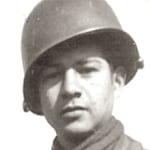
When enemy fire pinned down his company on Old Baldy, Korea, on 1 August 1952, Corporal Victor H. Espinoza chose to advance alone. His extraordinary courage and determination transformed a stalled infantry assault into a decisive attack that helped secure a vital enemy strongpoint. His actions would eventually earn him America's highest military decoration, the Medal of Honor.
Serving with Company A, 23rd Infantry Regiment, 2nd Infantry Division, Espinoza led a daring one-man assault against heavily fortified North Korean positions. Armed with a rifle and grenades, he silenced an enemy machine gun and its crew before advancing across exposed terrain to destroy a mortar position and two bunkers. When his rifle ammunition ran out, he continued fighting with grenades supplied by a fellow soldier, using enemy grenades to attack occupied trenches. He then pursued retreating defenders toward a concealed tunnel. Obtaining explosives, he entered and destroyed the tunnel, eliminating the enemy position. His Medal of Honor citation credited his extraordinary actions with securing the strongpoint and inflicting at least fourteen enemy deaths and eleven wounded.
Espinoza's heroism was initially recognized with the Distinguished Service Cross under Department of the Army General Orders No. 37, dated 29 April 1953. Its citation praised his fearless assault, destruction of enemy fortifications, and determination under overwhelming fire. Following a congressionally directed review of military records of Hispanic-American and Jewish-American servicemen, his award was upgraded to the Medal of Honor. On 18 March 2014, nearly three decades after his death, President Barack Obama presented the Medal of Honor posthumously in recognition of the same extraordinary action. The official Medal of Honor citation reaffirmed his gallantry and selflessness above and beyond the call of duty.
Espinoza joined the United States Army in November 1950 and served in the Korean War, ultimately attaining the rank of Master Sergeant before leaving military service in September 1952. His other recognized service honours include the National Defense Service Medal, Korean Service Medal with one Bronze Service Star, United Nations Service Medal (Korea), and Republic of Korea War Service Medal. He also earned the Combat Infantryman Badge.
After leaving the Army, Espinoza returned to civilian life in Texas, eventually settling back in El Paso. He died on 17 April 1986 and was laid to rest at Fort Bliss National Cemetery with full military honours.
The story of Victor H. Espinoza is one of extraordinary courage, perseverance, and long-overdue recognition. His actions on Old Baldy remain a powerful example of infantry heroism in the Korean War and a lasting testament to a soldier whose bravery inspired his comrades and secured a position against overwhelming odds.
Medal of Honor citation
Corporal Victor H. Espinoza distinguished himself by acts of gallantry and intrepidity above and beyond the call of duty while serving as an Acting Rifleman in Company A, 23d Infantry Regiment, 2d Infantry Division during combat operations against an armed enemy in Chorwon, Korea on August 1, 1952. On that day, Corporal Espinoza and his unit were responsible for securing and holding a vital enemy hill. As the friendly unit neared its objective, it was subjected to a devastating volume of enemy fire, slowing its progress. Corporal Espinoza, unhesitatingly and being fully aware of the hazards involved, left his place of comparative safety and made a deliberate one man assault on the enemy with his rifle and grenades, destroying a machinegun and killing its crew. Corporal Espinoza continued across the fire-swept terrain to an exposed vantage point where he attacked an enemy mortar position and two bunkers with grenades and rifle fire, knocking out the enemy mortar position and destroying both bunkers and killing their occupants. Upon reaching the crest, and after running out of rifle ammunition, he called for more grenades. A comrade who was behind him threw some Chinese grenades to him. Immediately upon catching them, he pulled the pins and hurled them into the occupied trenches, killing and wounding more of the enemy with their own weapons. Continuing on through a tunnel, Corporal Espinoza made a daring charge, inflicting at least seven more casualties upon the enemy who were fast retreating into the tunnel. Corporal Espinoza was quickly in pursuit, but the hostile fire from the opening prevented him from overtaking the retreating enemy. As a result, Corporal Espinoza destroyed the tunnel with TNT, called for more grenades from his company, and hurled them at the enemy troops until they were out of reach. Corporal Espinoza’s incredible display of valor secured the vital strong point and took a heavy toll on the enemy, resulting in at least fourteen dead and eleven wounded. Corporal Espinoza’s extraordinary heroism and selflessness above and beyond the call of duty are in keeping with the highest traditions of military service and reflect great credit upon himself, his unit and the United States Army.
Become the named supporter for this profile and edit the tribute biography and portrait (Owner account required). Proceeds help keep the archive online.
$25 USD / year — annual sponsorship renewal. Keeps the page online and, where enabled, the family anniversary remembrance emails active.