★
Loading archive…
Loading archive…
He Fought His Gun Through Mobile Bay’s Fury
Willard Moon Smith was born in 1840 in western New York. When the American Civil War divided the nation, he entered the United States Marine Corps and became one of the Marines who served aboard Union warships during the conflict. His military career would eventually place him at the center of one of the most important naval battles of the war and earn him the Medal of Honor.
In August 1862, Smith enlisted in the Marine Corps at the Brooklyn Navy Yard. He entered the service with his friend Miles M. Oviatt, another young man from the Olean area of New York. Their paths would remain closely connected, and both men would later be recognized for gallantry during the same historic engagement.
Smith eventually joined the Marine detachment aboard U.S.S. Brooklyn, a powerful Union steam sloop-of-war. Marines serving aboard naval vessels performed a variety of duties, including maintaining security, providing disciplined small-arms support, and manning guns during combat. By the summer of 1864, Brooklyn had become part of Rear Admiral David G. Farragut’s fleet preparing to attack Mobile Bay, Alabama.
Mobile Bay was one of the Confederacy’s most important remaining Gulf Coast positions. The entrance was protected by Fort Morgan and Fort Gaines, Confederate gunboats, underwater mines then commonly called torpedoes, and the heavily armored Confederate ram Tennessee. For the Union Navy, forcing a passage into the bay meant confronting all of these defenses in a confined and dangerous approach.
On August 5, 1864, Farragut’s fleet advanced toward the entrance to Mobile Bay. U.S.S. Brooklyn occupied an important position in the attacking column. As the Union ships approached the Confederate defenses, they came under intense fire from the forts and naval vessels.
Corporal Smith was at his battle station aboard Brooklyn and fought one of the ship’s guns. The engagement quickly became violent. Enemy fire struck the Union vessels repeatedly, and Brooklyn suffered damage and casualties as the battle continued.
Despite the danger around him, Smith remained at his gun.
For approximately two hours, he continued fighting with what his Medal of Honor citation later described as skill and courage. His service took place while Brooklyn and the other Union ships were confronting Confederate forts and gunboats as well as Tennessee, the formidable ironclad ram that became the central naval threat inside the bay.
The battle reached its climax when the Union fleet concentrated against Tennessee. The Confederate ironclad was heavily armored and capable of resisting ordinary naval gunfire, forcing Union vessels to attack aggressively. Farragut’s ships repeatedly engaged the ram until it was finally compelled to surrender.
Smith remained involved throughout this demanding phase of the fight. His official recognition emphasized that he continued operating his gun even as enemy fire fell around the ship and casualties mounted. His actions were not based on a single brief moment but on sustained performance during the prolonged engagement.
His friend Miles Oviatt was also serving at the guns during the Battle of Mobile Bay. Both Marines distinguished themselves during the action, and both would receive the Medal of Honor for their conduct. Their shared recognition preserved an unusual connection between two men who had entered the Marine Corps together and later fought side by side in one of the Civil War’s defining naval battles.
The Union victory at Mobile Bay had major strategic significance. Farragut’s fleet successfully passed the Confederate defenses, defeated the naval force inside the bay, and neutralized the threat posed by Tennessee. The operation further restricted Confederate access to the Gulf Coast and became one of the most celebrated naval victories of the war.
For Smith, August 5, 1864 became the defining day of his military career.
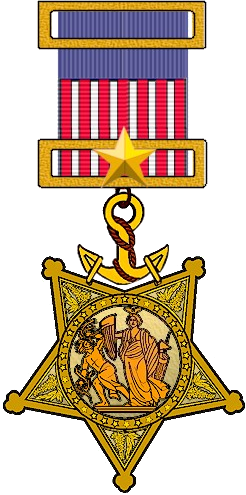
His gallantry aboard U.S.S. Brooklyn was formally recognized in General Order No. 45, dated December 31, 1864. He received the Medal of Honor for his conduct during the Battle of Mobile Bay. The award specifically recognized the skill and courage with which he fought his gun throughout the fierce engagement.
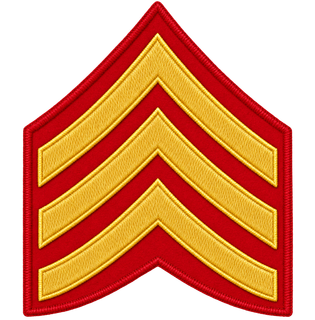
Smith held the rank of corporal during the action. His Medal of Honor therefore commemorated the service of an enlisted Marine performing his assigned combat duty under sustained enemy fire. He was not commanding the fleet or directing the larger operation. His distinction came from remaining effective at his gun while the ship around him was taking damage and men aboard were being wounded or killed.
After the Civil War, Smith lived for more than five decades beyond the battle that had brought him national recognition. He remained part of the generation whose wartime service had helped preserve the Union and reshape the United States.
Willard Moon Smith died on March 26, 1918. He was buried at Elm Lawn Cemetery in the Buffalo, New York, area.
His legacy remains inseparable from U.S.S. Brooklyn and the Battle of Mobile Bay. On August 5, 1864, amid Confederate artillery fire, naval combat, and the struggle against the ironclad Tennessee, Corporal Smith stayed at his gun and continued fighting throughout the engagement.
The Medal of Honor permanently preserved that service. His story stands as an example of the vital role played by enlisted Marines aboard Union warships and of courage expressed through sustained duty under fire. At Mobile Bay, Willard Moon Smith did not leave his station when the battle became most dangerous—he kept his gun in action until the Union fleet had secured one of its greatest naval victories of the Civil War.
Become the named supporter for this profile and edit the tribute biography and portrait (Owner account required). Proceeds help keep the archive online.
$25 USD / year — annual sponsorship renewal. Keeps the page online and, where enabled, the family anniversary remembrance emails active.