★
Loading archive…
Loading archive…
Colonel, U.S. Army
Support & adopt this hero ↓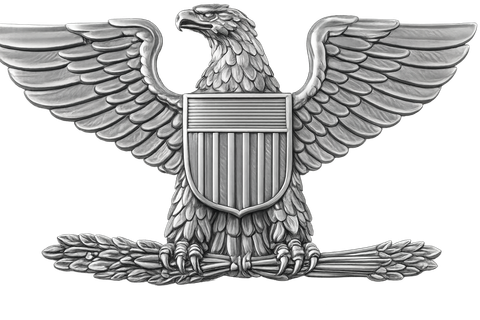
Shots swept the ravine as he led the men on a skirmish line.
William Grafton Austin was born in Galveston, Texas, on 6 January 1868 and grew up in Savannah, Georgia. He enlisted in New York in 1887 and joined the 7th United States Cavalry. By 1890 he was a sergeant in E Troop, an experienced enlisted leader when the regiment moved into the Pine Ridge country.
On 29 December 1890 the cavalry attempted to disarm a Lakota camp at Wounded Knee Creek, South Dakota. Shooting spread through the camp and surrounding ground. The episode became the Wounded Knee Massacre, in which Lakota women and children were among the dead. Austin's decoration concerned his conduct during the fighting around a ravine; it does not explain or justify the wider killing.
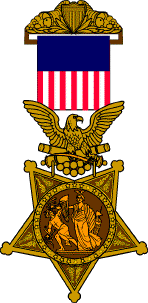
His Medal of Honor citation credits him with assisting the skirmishers, directing their fire and trying to drive the people sheltering in the ravine from their positions. Its description, “assisted men on the skirmish line,” identifies leadership under fire as the basis of the award (Congressional Medal of Honor Society, official citation: https://www.cmohs.org/recipients/william-g-austin). Supporting officers' recommendations described his exposure while positioning and encouraging his men. His medal was sent to Fort Riley in June 1891.
After his enlistment Austin returned to Savannah and entered the cotton business. He continued soldiering in the Georgia volunteers. During the Spanish-American War he commanded a company of the 2nd Georgia Infantry, serving in Florida rather than an overseas campaign. His civilian responsibilities included leadership of Savannah's police and work in the developing automobile business.
The First World War brought him back into federal service. Commissioned in the Quartermaster organisation, he commanded the 302nd Stevedore Regiment in France as a colonel. Its men performed the essential port labour on which the American army's supplies depended. His later military service thus differed sharply from the mounted frontier service of his youth.
Austin spent his retirement in California. He died at Los Altos on 15 July 1929, aged sixty-one, and was cremated at Cypress Lawn. His career linked an enlisted cavalryman's service, municipal employment and the wartime organisation of military labour.
Become the named supporter for this profile and edit the tribute biography and portrait (Owner account required). Proceeds help keep the archive online.
$25 USD / year — annual sponsorship renewal. Keeps the page online and, where enabled, the family anniversary remembrance emails active.