★
Loading archive…
Loading archive…
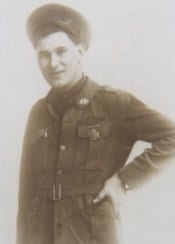
Corporal, Australian Army
Support & adopt this hero ↓
With his arm shattered, he went out again to rescue the men.
John William Alexander Jackson was born on 13 September 1897 at Gunbar, near Hay, New South Wales. A farm worker before enlistment, he joined the 17th Battalion of the Australian Imperial Force in February 1915. He was only seventeen. Training in Egypt preceded Gallipoli, where his battalion landed in August. Dysentery forced his evacuation, but he rejoined the unit before it moved to France in 1916.
The battalion entered the trenches near Armentières, where raids and patrols prepared the Australians for larger operations. Jackson volunteered for a raid against German positions near Bois Grenier on the night of 25–26 June 1916. After entering the trenches, the raiders withdrew five minutes later. German artillery caught them as they crossed the open ground towards their own line.
Jackson returned safely with a prisoner, handed him over, and immediately went back to help a wounded man. He then went out again. While he and a sergeant carried another casualty, a shell shattered Jackson's right arm and knocked the sergeant unconscious. Jackson reached the Australian trenches, obtained assistance and returned once more to search for the two men.
His Victoria Cross citation follows these repeated journeys through shellfire and praises his “splendid example of pluck and determination.” Its closing assessment recognises courage already established beyond this single night (official citation reproduced by the Australian War Memorial: https://www.awm.gov.au/media/press-releases/private-william-jackson-vc-media-background). He became the youngest AIF Victoria Cross recipient of the First World War and the first Australian awarded it for service on the Western Front.
His damaged arm was amputated. After hospital treatment in England he returned to Australia in 1917 and was discharged that September. The Distinguished Conduct Medal initially granted for the same action had been cancelled when the award was raised to the Victoria Cross.
Jackson worked with horses and animal skins, kept a hotel at Figtree, and later held clerical jobs in Sydney. He married Ivy Morris in 1932 and had a daughter. During the Second World War he served in Australia with Eastern Command Provost Company and later the 2nd Australian Labour Company. His highest substantive rank was Corporal, and he also held acting Sergeant rank during his provost service. In 1953 he moved to Melbourne and worked at the Town Hall.
He attended the Victoria Cross centenary in London in 1956. Three years later, on 4 August 1959, he died at Heidelberg, Melbourne, and was cremated. The Australian War Memorial reported the donation of his Victoria Cross in 2016; the precise custody and loan history of the complete group requires further reconciliation.
Become the named supporter for this profile and edit the tribute biography and portrait (Owner account required). Proceeds help keep the archive online.
$25 USD / year — annual sponsorship renewal. Keeps the page online and, where enabled, the family anniversary remembrance emails active.