★
Loading archive…
Loading archive…
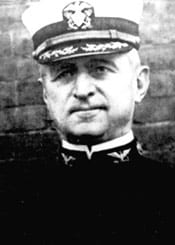
Captain, U.S. Navy
Support & adopt this hero ↓
Wounded under enemy fire, yet still directing his men through the streets of Veracruz, Captain William Rees Rush demonstrated what extraordinary leadership looks like when lives depend on every decision. On April 21 and 22, 1914, this seasoned United States Navy officer commanded a naval brigade during one of the most dangerous episodes of the American intervention in Mexico. His courage under fire would earn him the Medal of Honor, the nation's highest military decoration.
Born on September 19, 1857, in Philadelphia, Pennsylvania, William Rees Rush graduated from the United States Naval Academy in 1877. His distinguished naval career spanned more than four decades, taking him from the gun decks of American warships to major fleet commands. During the Spanish-American War, he served as a turret division commander aboard USS Brooklyn, flagship of Rear Admiral Winfield Scott Schley's Flying Squadron, and participated in the decisive Battle of Santiago de Cuba on July 3, 1898. He subsequently commanded USS Marietta, served in the Philippines, and held important assignments aboard several major American warships.
But the defining moment of Rush's career came at Veracruz, Mexico. While commanding the battleship USS Florida, he was appointed to lead the naval brigade ashore on April 21, 1914. His sailors encountered determined resistance, and Rush was wounded during the initial fighting. Despite his injury, he continued directing operations from exposed positions, remaining under fire throughout the two-day engagement.
His Medal of Honor citation, published in War Department General Orders No. 177 on December 4, 1915, praised his "conspicuous courage, coolness and skill" while commanding the brigade. It emphasized that he repeatedly placed himself at points of great danger to direct his officers and men, and that the success of the operation depended substantially on his leadership. Rush had demonstrated not simply personal bravery, but the extraordinary responsibility of commanding others when hesitation could cost lives.
His service did not end with the fighting in Mexico. Appointed commandant of the Boston Navy Yard in November 1914, Rush retired in 1916 but returned to active duty following America's entry into World War I. His contribution to the nation's wartime naval effort earned him the Navy Cross. Its citation recognized his "exceptionally meritorious service in a duty of great responsibility" as commandant of the Boston Navy Yard, acknowledging the importance of his leadership far from the battlefield. The Navy Distinguished Service Medal is also recorded among his honours, although its separate original citation remains to be established.
Relieved of active duty on July 25, 1919, Rush eventually settled in Italy, where he died in 1940. He was buried at Arlington National Cemetery. His legacy endured when the United States Navy named the destroyer USS William R. Rush (DD-714) in his honour.
From the naval guns of Santiago to the dangerous streets of Veracruz and the demanding responsibilities of World War I, Captain William Rees Rush exemplified a lifetime of military service. His story reminds us that genuine courage is not measured only by facing danger, but by accepting responsibility for others when the consequences are greatest.
Become the named supporter for this profile and edit the tribute biography and portrait (Owner account required). Proceeds help keep the archive online.
$25 USD / year — annual sponsorship renewal. Keeps the page online and, where enabled, the family anniversary remembrance emails active.