★
Loading archive…
Loading archive…

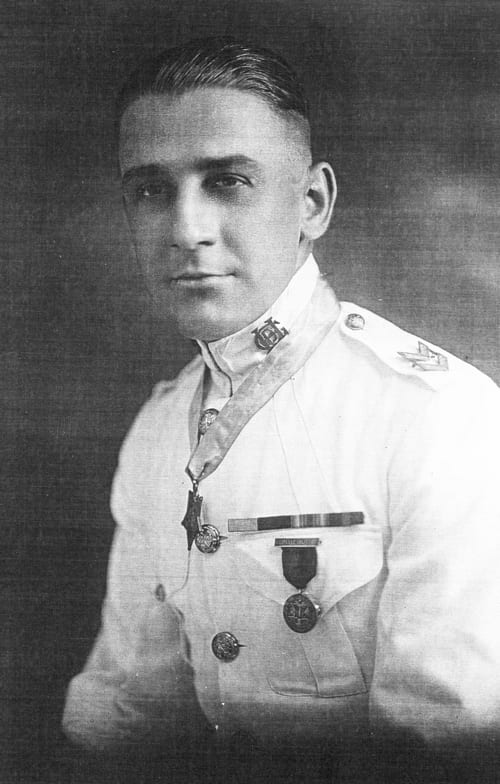
What kind of courage does it take to walk into the heart of a hostile force knowing that one mistake could cost the lives of everyone under your command? For U.S. Marine Sergeant William Robert Button, that question became reality on a dangerous night in Haiti in 1919.
Born in St. Louis, Missouri, on December 3, 1895, William Robert Button joined the United States Marine Corps and became part of the American military presence in Haiti. By October 1919, he was serving as a corporal while also holding the rank of first lieutenant in the Gendarmerie d'Haiti. His most famous action came near Grande Riviere on the night of October 31 to November 1, 1919, during the Haitian Campaign of 1919 to 1920.
Button and a small detachment of Gendarmerie operated against the forces of Charlemagne Péralte, the leading figure of the Caco resistance. The mission demanded deception, judgment and extraordinary personal courage. Button helped lead the operation that resulted in Péralte's death and the killing, capture or dispersal of approximately 1,200 of his followers.
The official Medal of Honor citation recognized Button for extraordinary heroism, conspicuous gallantry and intrepidity in actual conflict with the enemy. It specifically praised his excellent judgment and leadership, his willingness to expose himself to extreme personal danger, and the risks involved in protecting the Gendarmerie detachments under his command. General Order No. 536 approved the award on June 10, 1920, and Major General Commandant John A. Lejeune presented the Medal of Honor to Button in Washington, D.C., on July 1, 1920.
But Button's story did not end with the Medal of Honor ceremony. After a short furlough in St. Louis, he returned to Haiti and continued serving with the Gendarmerie. His service was recognized through the Marine Corps Expeditionary Medal, the Haitian Campaign Medal for the 1919 to 1920 campaign, and the World War I Victory Medal. Contemporary evidence also records that Button received Haiti's Médaille Militaire, adding an important foreign dimension to his already remarkable service record.
Button ultimately rose to the rank of sergeant, but his life was tragically short. He died in Haiti in April 1921 at the age of 25 after contracting pernicious malaria. His remains were returned to St. Louis, where he was buried at Valhalla Cemetery. The Marines who had served alongside him in Haiti later helped establish a bronze memorial tablet at his grave and arranged for flowers to be placed there each Memorial Day.
William Robert Button's legacy reaches beyond the Medal of Honor itself. His story represents a young Marine who accepted extraordinary responsibility in a dangerous foreign campaign, led men under extreme conditions, and repeatedly placed himself in danger to accomplish his mission. His name was later honored by the United States Navy when a Military Sealift Command vessel was named USNS Sgt. William R. Button.
At only 25 years old, William Robert Button had already left a permanent mark on the history of the United States Marine Corps. His Medal of Honor citation preserves the official record of his courage, while his service in Haiti remains a striking chapter in the history of the Marine Corps during the Banana Wars.
Become the named supporter for this profile and edit the tribute biography and portrait (Owner account required). Proceeds help keep the archive online.
$25 USD / year — annual sponsorship renewal. Keeps the page online and, where enabled, the family anniversary remembrance emails active.