★
Loading archive…
Loading archive…

Lt Colonel, Australian Army
Support & adopt this hero ↓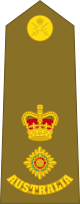
He retook the trench and held it through recurrent assaults.
William John Symons was born at Eaglehawk near Bendigo in July 1889. After his father died, the family moved to Brunswick, where he worked as a commercial traveller. Eight years in the militia gave him military experience before he enlisted in the Australian Imperial Force in August 1914. Posted to the 7th Battalion, he was promoted colour-sergeant almost immediately and sailed for Egypt that October.
He landed on Gallipoli on 25 April 1915 and was commissioned the following day. By August he was a lieutenant. At Lone Pine, the battalion fought to hold captured Ottoman trenches. Early on 9 August, successive officers defending an isolated sap had been killed or wounded, and part of the position was lost. Symons was ordered to recover it.
He led a counterattack and retook the trench, but fire from three directions made the exposed portion untenable. He pulled back a short distance to cover, built a barricade and maintained the defence. When attackers set the overhead timber and brushwood alight, he extinguished the flames and rebuilt the obstruction. The official citation concludes that his "coolness and determination finally compelled the enemy to discontinue their attacks" (official transcription: https://www.gov.uk/government/case-studies/ww1-australian-vc-recipient-william-john-symons). His Victoria Cross recognized the recovery and prolonged defence of the position.
A hand wound and subsequent illness brought him to hospital. After leave in Australia he returned overseas in 1916 as a captain with the 37th Battalion. His Western Front service included a raid in early 1917, severe gassing at Messines, and further fighting in 1918. He married Isobel Hockley in England that August, then returned to Australia with other VC recipients to support recruiting.
Civilian life was repeatedly disrupted by poor health. He tried sales work and business, moved permanently to Britain with his family, and eventually found success in engineering and construction. During the Second World War he commanded the 12th Leicestershire Home Guard from 1941 to 1944.
His condition deteriorated after a car accident and years of illness. He entered nursing care in January 1948 and died in London on 24 June. Financial pressure later forced his wife to sell his decorations; they were donated to the Australian War Memorial in 1967. A Brunswick testimonial preserved by the family also eventually entered the Memorial's collection.
Become the named supporter for this profile and edit the tribute biography and portrait (Owner account required). Proceeds help keep the archive online.
$25 USD / year — annual sponsorship renewal. Keeps the page online and, where enabled, the family anniversary remembrance emails active.