★
Loading archive…
Loading archive…

Captain, U.S. Army
Support & adopt this hero ↓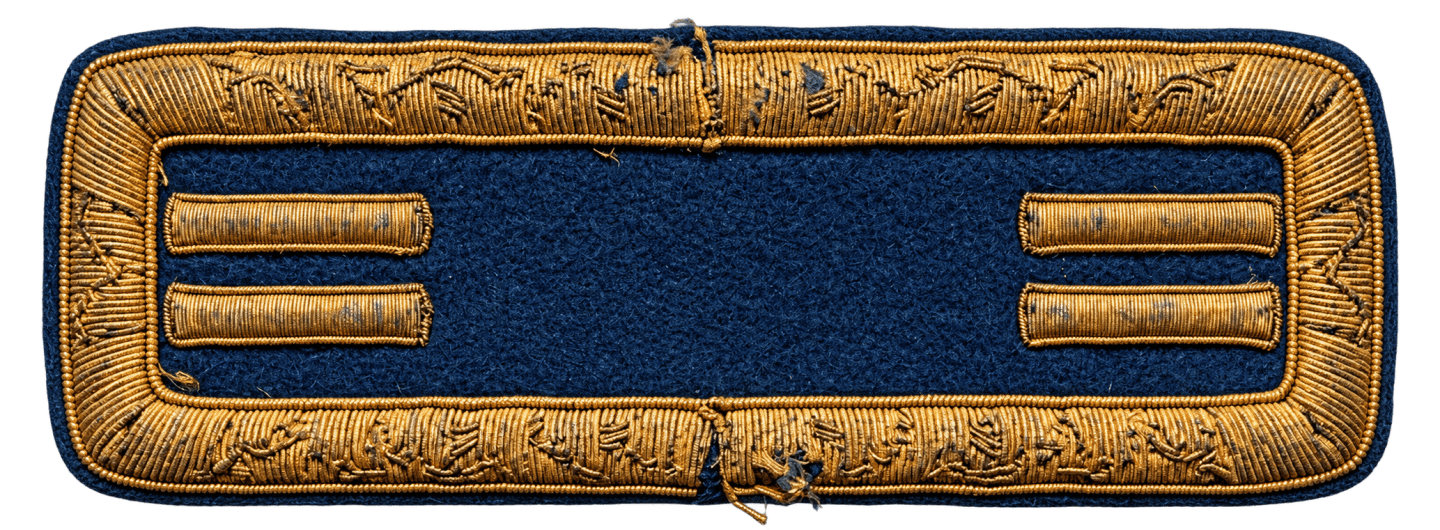
William Wirt Winegar was born on October 20, 1844, in Springport, Cayuga County, New York. He came of age during the national crisis of the American Civil War and entered the service of the United States Army while still a young man. His military career eventually brought him into one of the Union Army's most experienced mounted organizations, the 19th New York Cavalry, better known as the 1st New York Dragoons. Winegar would rise to commissioned officer rank and earn the Medal of Honor for an extraordinary act of courage during the final campaign against General Robert E. Lee's Army of Northern Virginia. Congressional Medal of Honor Society The regiment in which Winegar served had an unusual history. It was originally organized as the 130th New York Infantry and later converted to mounted service. After its conversion it became the 19th New York Cavalry and was subsequently known as the 1st New York Dragoons. As dragoons, the soldiers were trained to operate both mounted and dismounted, allowing them to perform cavalry reconnaissance and pursuit while also fighting effectively on foot when terrain or battlefield circumstances required it. New York State Military Museum records show that the regiment developed a strong reputation for discipline and efficiency and eventually participated in dozens of battles and skirmishes during the war. NY Military Museum Winegar served in Company B. By the closing period of the war he had become a commissioned officer and held the rank of First Lieutenant. His regiment served with the cavalry forces of the Army of the Potomac and later under Major General Philip Sheridan, participating in some of the most demanding mounted operations of 1864 and 1865. The 1st New York Dragoons fought in the Overland Campaign, Sheridan's cavalry operations, the Shenandoah Valley campaign, and ultimately the final Appomattox Campaign. NY Military Museum By the spring of 1865, Confederate military power around Richmond and Petersburg was rapidly deteriorating. Lieutenant General Ulysses S. Grant was determined to cut the remaining railroads and roads supporting Lee's army, while Major General Philip Sheridan led Union cavalry toward the Confederate right flank. The resulting operations brought Union forces to the strategically important crossroads known as Five Forks, Virginia. The Battle of Five Forks, fought on April 1, 1865, became one of the decisive engagements of the war. Confederate troops under Major General George Pickett defended the area because the roads around Five Forks helped protect access to the South Side Railroad, one of Lee's most important remaining supply routes. Sheridan's cavalry, supported by Union infantry, attacked the Confederate position with the intention of breaking the line and making the defenses of Petersburg impossible to maintain. It was during this battle that First Lieutenant William Wirt Winegar performed the action for which he received the Medal of Honor. Winegar was advancing ahead of his company and alone when he unexpectedly found himself surrounded by Confederate soldiers. The situation was extremely dangerous. A lone cavalry officer isolated in front of his own troops could easily have been shot, captured, or overwhelmed before assistance arrived. Rather than immediately attempting to escape, Winegar took the initiative. He confronted a nearby Confederate flag bearer and demanded the surrender of the group surrounding him. The Confederate soldiers did not immediately comply. Winegar then fired a single effective shot. The sudden and determined action had a powerful psychological effect on the opposing soldiers. The Confederate group surrendered. They also surrendered their battle flag. Winegar's Medal of Honor citation specifically emphasizes this remarkable sequence: alone and surrounded, he challenged the enemy flag bearer, demanded surrender, fired one shot, and caused the Confederate group to give itself up together with its colors. U.S. Army The capture of an enemy battle flag carried enormous significance during the Civil War. Regimental colors were not merely decorative symbols. They served as visual rallying points that enabled soldiers to locate their formation amid smoke, noise, broken lines, and battlefield confusion. Color guards therefore defended them fiercely, and losing a flag to an opposing force was regarded as a serious humiliation. For Winegar to force the surrender of enemy soldiers together with their flag was consequently both a tactical success and a powerful symbolic achievement. His action was also notable because it depended heavily on personal confidence and battlefield initiative. Winegar did not have the protection of a large formation when the confrontation began. He was isolated ahead of his company, surrounded by hostile soldiers, and forced to make an immediate decision. Instead of allowing the enemy to control the situation, he behaved as though he possessed the advantage. That decisiveness reversed the psychological balance of the encounter. His opponents surrendered to the man they had initially surrounded. The larger Battle of Five Forks ended in a decisive Union victory. Confederate defenses were shattered, thousands of Confederate soldiers were captured, and Lee's position at Petersburg became increasingly impossible to maintain. On the following day, April 2, 1865, Union forces broke through the Petersburg defensive lines. Richmond and Petersburg were evacuated, and Lee's army began its final retreat westward. Only eight days after Winegar's action, Lee surrendered the Army of Northern Virginia at Appomattox Court House on April 9, 1865. Winegar therefore performed his Medal of Honor action during one of the final and most consequential phases of the entire Civil War. Recognition came remarkably quickly. On May 3, 1865, barely a month after Five Forks, William Wirt Winegar was presented the Medal of Honor. His verified Medal of Honor identity records him as First Lieutenant, Company B, 19th New York Cavalry (1st New York Dragoons). The award was made during his lifetime and was therefore not posthumous. Congressional Medal of Honor Society For this project's historical ribbon system, his decoration should be represented as: Medal of Honor 1862–1895 Army — No device There is no verified V device, star, clasp, or other attachment associated with Winegar's Medal of Honor. Winegar's military record also preserves an important distinction in rank. During the Five Forks action he was a First Lieutenant, but he later received the honorary rank of Brevet Captain for his wartime service. Both the Congressional Medal of Honor Society and the National Medal of Honor Museum identify Brevet Captain as his highest verified rank. Congressional Medal of Honor Society Therefore his final profile must preserve: Rank at Medal of Honor Action: First Lieutenant and Highest Verified Rank: Brevet Captain A brevet promotion during the Civil War was generally an honorary advancement recognizing gallant or meritorious service. It did not always carry the same permanent command authority or pay as a substantive promotion, but it represented formal military recognition of an officer's performance. The 1st New York Dragoons remained in service through the end of the war. The regiment participated in the final campaign and was eventually mustered out on June 30, 1865, at Cloud's Mills, Virginia. New York State Military Museum records describe it as one of the heavily engaged cavalry formations of the war, having participated in approximately 65 battles and skirmishes during its service. NY Military Museum Winegar then returned to civilian life after having entered military service as a very young man and emerged as a decorated officer. The surviving authoritative Medal of Honor sources preserve much more information about his military achievements than about his postwar occupation. For this reason, uncertain claims concerning his later employment or other civilian activities should not be added to the final profile unless supported by stronger recipient-specific records. What is securely documented is that Winegar lived for more than half a century after the Civil War. He died on September 3, 1916, in Bath, New York, at the age of seventy-one. He was buried at Nondaga Cemetery in Bath, New York, where his grave preserves the memory of his Civil War service and Medal of Honor status. Congressional Medal of Honor Society William Wirt Winegar's story is particularly memorable because his heroism at Five Forks did not involve commanding hundreds of soldiers or enduring a prolonged siege. His defining moment happened suddenly and at extremely close range. He rode or advanced ahead of his company. He became isolated. Enemy soldiers surrounded him. Yet instead of surrendering himself, Winegar demanded that they surrender to him. One decisive shot transformed the encounter. The Confederate group gave up, and Winegar secured their battle flag. That moment captured the qualities for which cavalry officers were often valued during the Civil War: initiative, confidence, speed of judgment, and willingness to accept enormous personal risk. The Medal of Honor recognized precisely those qualities. William Wirt Winegar therefore remains remembered as a Union cavalry officer who, during the final days of the struggle against Lee's army, turned an apparently hopeless situation into a remarkable victory through sheer determination and presence of mind.
Become the named supporter for this profile and edit the tribute biography and portrait (Owner account required). Proceeds help keep the archive online.
$25 USD / year — annual sponsorship renewal. Keeps the page online and, where enabled, the family anniversary remembrance emails active.