★
Loading archive…
Loading archive…
First Lieutenant, U.S. Army
Support & adopt this hero ↓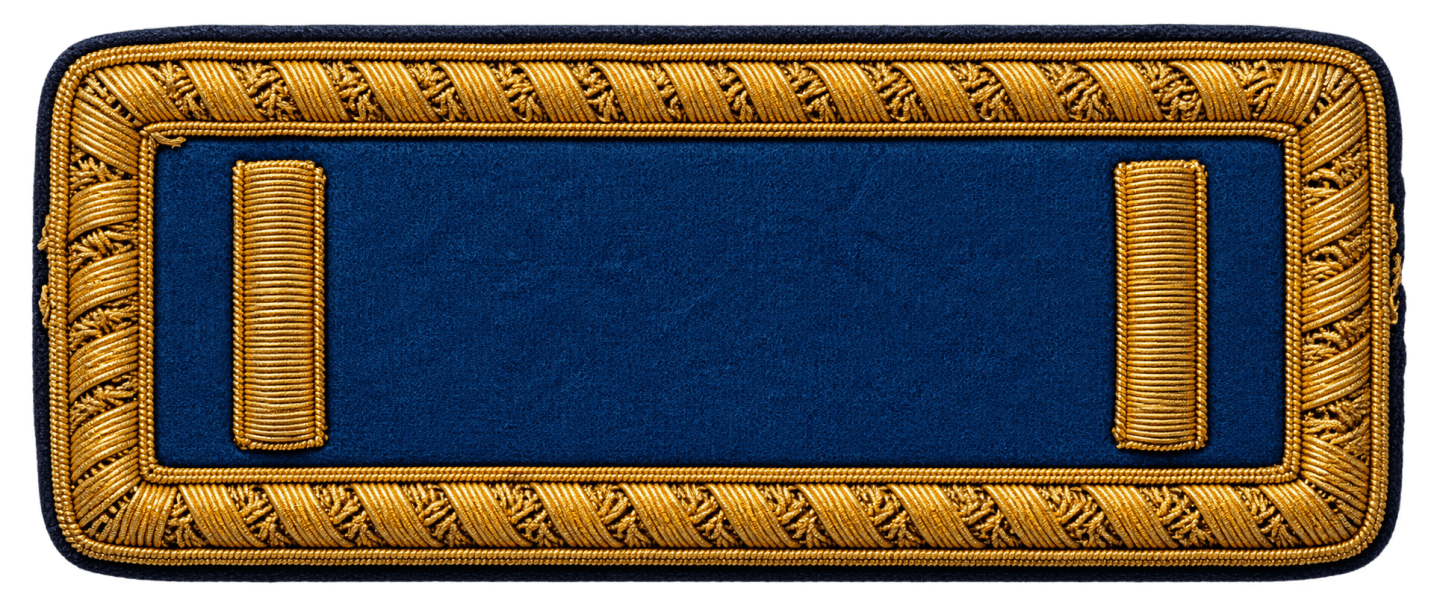
William Westerhold was born on January 21, 1836, in Binde, Prussia, in what is now Germany. He later emigrated to the United States and settled in New York. Like many German-born immigrants of his generation, Westerhold became directly involved in the struggle to preserve the Union when the American Civil War began. His military career would take him from the enlisted ranks of a New York infantry regiment to a commissioned officer, with an act of extraordinary courage at Spotsylvania ultimately earning him the Medal of Honor. In October 1861, Westerhold entered the United States Army from New York City and joined Company G, 52nd New York Infantry. The regiment contained a substantial number of German-American soldiers and served as part of the Army of the Potomac. Westerhold began his wartime career as an enlisted soldier and, through experience and advancement, had reached the rank of Sergeant by the spring of 1864. The 52nd New York Infantry served through some of the most demanding campaigns in the eastern theater. As part of the Army of the Potomac, the regiment was associated with major operations in Virginia, Maryland, and Pennsylvania. By 1864 its surviving soldiers were experienced veterans accustomed to prolonged campaigning and close infantry combat. Westerhold's defining moment came during Lieutenant General Ulysses S. Grant's Overland Campaign, when Union forces attempted to maintain constant pressure on General Robert E. Lee's Army of Northern Virginia. After the brutal fighting in the Wilderness in early May 1864, the two armies moved toward Spotsylvania Court House, Virginia. There the Confederates constructed a formidable line of earthworks, including a large projecting section known as the Mule Shoe Salient. Grant decided to attack the position in force, hoping to break Lee's defensive line and force the Confederate army into retreat. On the morning of May 12, 1864, Union troops of the II Corps launched one of the largest assaults of the campaign against the Mule Shoe. The attack initially achieved a dramatic breakthrough. Federal soldiers surged across the Confederate works, capturing men, guns, and battle flags before Confederate reinforcements arrived. What followed became some of the most savage close-range fighting of the entire Civil War. For many hours, Union and Confederate soldiers fought around the position later known as the Bloody Angle. The opposing lines were sometimes separated only by the earthworks themselves. Soldiers fired rifles at extremely close range, thrust bayonets across the barricades, and fought amid heavy rain, mud, smoke, shattered timber, and enormous casualties. It was during this fighting that Sergeant William Westerhold performed the action that secured his place in American military history. Westerhold captured the battle flag of the 23rd Virginia Infantry, a Confederate regiment engaged in the defense of the position. Medal of Honor records specifically identify the captured colors as those of the 23rd Virginia Infantry, Confederate States Army; later award records also describe the capture as including the flag's bearer. Capturing an enemy battle flag during the Civil War was an exceptionally dangerous achievement. Regimental colors were positioned near the center of a unit and were protected by color guards because they served both practical and symbolic purposes. In the smoke and confusion of combat, soldiers used their colors to identify the location of their regiment and maintain formation. Losing a flag to the enemy was consequently regarded as a serious humiliation, while capturing one was considered evidence of extraordinary battlefield courage. To seize the colors, Westerhold had to reach the immediate vicinity of the Confederate color guard during intense close combat. The action placed him directly among enemy soldiers at one of the most violent points of the Battle of Spotsylvania Court House. His success demonstrated the personal courage expected of a front-line infantry sergeant and gave the Union troops a tangible symbol of victory in the midst of a chaotic struggle. The official Medal of Honor citation was remarkably concise. It recognized Westerhold for the capture of the flag of the 23rd Virginia Infantry. The brevity of the citation should not obscure the conditions under which the act occurred. May 12 at Spotsylvania was a day of sustained, extraordinarily violent infantry fighting, and the capture of enemy colors required Westerhold to place himself at immediate risk while the opposing armies struggled for possession of the Confederate works. His battlefield performance was followed almost immediately by advancement. Shortly after the Spotsylvania action, Westerhold received a commission as an officer. He eventually attained the rank of First Lieutenant, which became his highest verified military rank. This distinction is important in documenting his career correctly. At the moment of his Medal of Honor action, Westerhold was a Sergeant in Company G. His later and highest verified rank was First Lieutenant. Therefore, the profile should preserve both rather than describing him as a lieutenant during the flag capture. Westerhold continued serving with the 52nd New York Infantry during the remaining stages of the Civil War. The Army of the Potomac moved from the Overland Campaign into the long struggle around Petersburg, Virginia, where Union forces gradually extended their lines and cut Confederate supply routes. The war in Virginia continued until the spring of 1865, when Petersburg and Richmond fell and Lee's army surrendered at Appomattox Court House. Recognition for Westerhold's action came unusually quickly compared with many Civil War Medal of Honor recipients, some of whom waited decades for their awards. His Medal of Honor was officially issued on December 1, 1864, less than seven months after the Battle of Spotsylvania. A few days later, on December 6, 1864, Westerhold received the decoration during a formal review of the Army of the Potomac's II Corps headquarters near Petersburg, Virginia. The presentation was made by Major General George G. Meade, commander of the Army of the Potomac. This distinction between the issue date and the actual presentation date is important: December 1 was the award issue date, while December 6 was the documented presentation. For the historical ribbon system used in this project, his decoration should be represented as: Medal of Honor 1862–1895 Army — No device. There is no verified V device, star, clasp, or other attachment associated with Westerhold's Medal of Honor. Westerhold remained in military service until the closing period of the war. The 52nd New York Infantry completed its service in July 1865, after the collapse of organized Confederate resistance. By the time Westerhold returned to civilian life, he had progressed from an immigrant enlisted soldier to a commissioned First Lieutenant and Medal of Honor recipient. His military career is particularly representative of the important contribution made by German immigrants to the Union war effort. Thousands of men born in the German states served in the United States Army during the Civil War, particularly in regiments raised in major immigrant centers such as New York. Westerhold's service demonstrates how immigrant soldiers could move rapidly into positions of responsibility through battlefield experience and proven leadership. The surviving authoritative records provide considerably less detail about Westerhold's civilian life after the war than about his military service. Because William Westerhold is not an unusual enough name to safely merge unrelated genealogical records, uncertain employment, marriage, or family details should not be added to his profile without stronger recipient-specific documentation. What is securely established is that Westerhold lived for many decades after the Civil War and eventually resided in New York City. He died there on May 12, 1910, at the age of seventy-four. The date carries an extraordinary historical coincidence: Westerhold died exactly forty-six years after his Medal of Honor action at Spotsylvania on May 12, 1864. His burial history requires careful wording. Official New York military records indicate that Westerhold was cremated at Fresh Pond Crematorium in Middle Village, Queens, New York. His ashes were subsequently returned to the funeral establishment, and their final disposition has not been securely established. Therefore, a conventional cemetery burial location should not be invented for his profile unless stronger documentary evidence is found. William Westerhold's military legacy rests on one brief but extraordinarily dangerous moment during one of the Civil War's most violent battles. As a Sergeant in Company G of the 52nd New York Infantry, he entered the close fighting at Spotsylvania Court House and captured the battle flag of the 23rd Virginia Infantry. That achievement was more than the seizure of a piece of cloth. A Civil War battle flag represented a regiment's identity, honor, and position on the battlefield. To capture one required a soldier to penetrate the enemy's immediate formation at extreme personal risk. Westerhold succeeded. His bravery was recognized within months by the Medal of Honor, and his subsequent commission to officer rank reflected the confidence placed in him after years of enlisted service. He entered the war as a Prussian-born immigrant serving in the Union ranks and completed it as First Lieutenant William Westerhold, United States Army, carrying with him the nation's highest military decoration. His enduring place in American military history is therefore inseparable from May 12, 1864, at Spotsylvania, when Sergeant William Westerhold captured the colors of the 23rd Virginia Infantry amid the brutal fighting of the Overland Campaign.
Become the named supporter for this profile and edit the tribute biography and portrait (Owner account required). Proceeds help keep the archive online.
$25 USD / year — annual sponsorship renewal. Keeps the page online and, where enabled, the family anniversary remembrance emails active.