★
Loading archive…
Loading archive…

Captain, U.S. Army
Support & adopt this hero ↓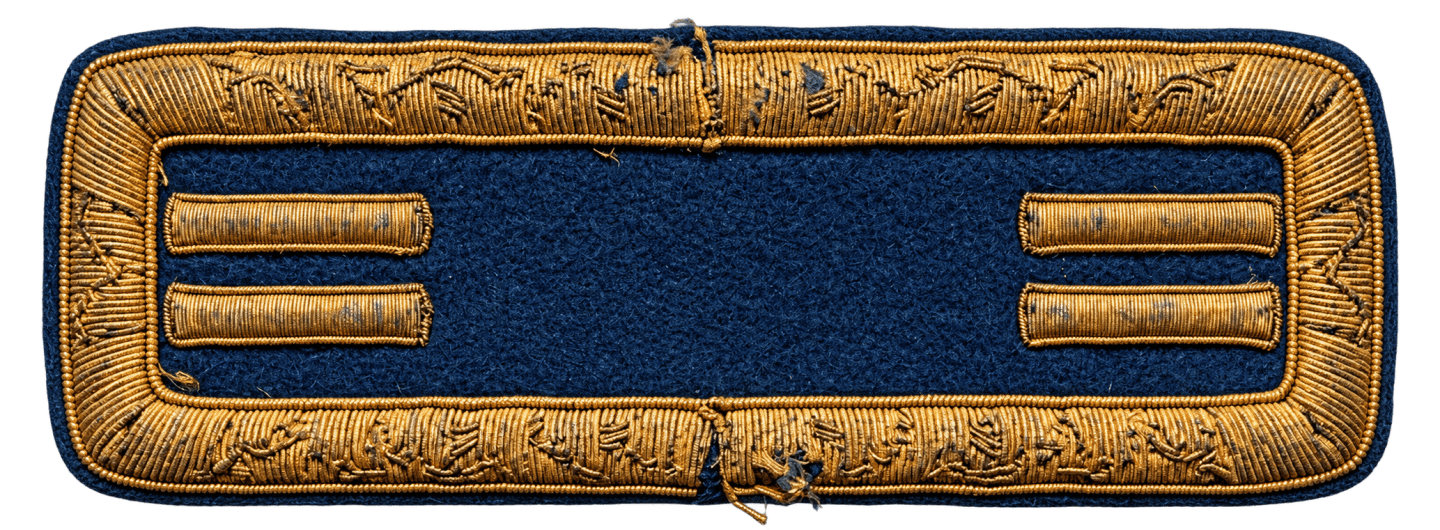
Wilmon Whilldin Blackmar was born on July 25, 1841, in Bristol, Bucks County, Pennsylvania. He grew up in an educated family and, as a young man, attended Phillips Exeter Academy in New Hampshire. His education was interrupted by the American Civil War, which transformed the twenty-one-year-old student into a cavalry soldier and ultimately one of the Union Army’s Medal of Honor recipients. Linda Pages In August 1862, Blackmar left his studies and enlisted in the United States Army as a private in Company K, 15th Pennsylvania Cavalry, also known as the Anderson Cavalry. He entered military service without officer rank, but his advancement was rapid. His early service demonstrated enough discipline and military ability for him to rise successively through the enlisted grades. Soon after enlistment, Blackmar participated in the Maryland Campaign of 1862, including the Battle of Antietam. Following this early combat experience he was promoted to Corporal. In 1863 he advanced to Sergeant and then to First Sergeant, establishing a pattern of steady promotion based on his performance in the field. Wikipedia The 15th Pennsylvania Cavalry subsequently served in the western theater, where Blackmar participated in the campaigns involving Union forces in Tennessee and Georgia. His regiment was involved in operations connected with the Chickamauga Campaign, and Blackmar gained valuable experience in mounted reconnaissance, rapid movement, skirmishing, and cavalry combat. Civil War cavalry performed far more than dramatic mounted charges. Cavalry units screened army movements, scouted enemy positions, carried dispatches, guarded roads and supply lines, conducted raids, pursued retreating forces, and frequently fought dismounted as conventional infantry. Blackmar’s years in the cavalry required adaptability and independent judgment—qualities that would later become central to his Medal of Honor action. Transfer to the 1st West Virginia Cavalry In 1864, Blackmar left the 15th Pennsylvania Cavalry to accept an officer’s commission in the 1st West Virginia Cavalry. The surviving historical sources differ slightly in describing the precise lieutenant grade associated with this transition—some records identify him as a Second Lieutenant while others describe him as a First Lieutenant. The official Medal of Honor record avoids that conflict and identifies his action rank simply as Lieutenant. For the final hero profile, therefore, “Lieutenant” is the safest verified Medal of Honor action rank. His later and highest verified rank was Captain. Congressional Medal of Honor Society Blackmar became associated with Company H, 1st West Virginia Cavalry, a regiment that played an important role in Union cavalry operations during the closing stages of the war. He also performed staff duties for senior cavalry commanders. Historical Grand Army of the Republic records describe him serving with officers including Colonel James M. Schoonmaker, General William H. Powell, and General Henry Capehart. During the Shenandoah operations of 1864, Blackmar was credited with undertaking a particularly hazardous ride that helped prevent his brigade from being trapped by Confederate forces under Lieutenant General Jubal A. Early. Linda Pages This period of service was important in preparing Blackmar for the initiative he later displayed at Five Forks. Staff and cavalry duties frequently required officers to interpret rapidly changing battlefield situations without waiting for detailed instructions from superiors. The Final Campaign Against Robert E. Lee By the spring of 1865, the Confederacy’s military position around Richmond and Petersburg was becoming increasingly desperate. General Robert E. Lee’s Army of Northern Virginia was stretched along an extensive defensive line while Lieutenant General Ulysses S. Grant prepared the Union Army for the final offensive. Major General Philip Sheridan’s cavalry became a crucial part of the campaign. Union cavalry moved aggressively against Confederate roads, railways, supply routes, and escape corridors. Blackmar served during this climactic period with cavalry formations connected to Sheridan’s command and the division associated with George Armstrong Custer. The campaign brought him to Five Forks, Virginia, on April 1, 1865. That battle became the defining action of his military career. Battle of Five Forks — April 1, 1865 Five Forks was a strategically important road junction southwest of Petersburg. Confederate forces under Major General George Pickett were positioned there to protect the South Side Railroad and critical routes by which Lee might move or receive supplies. Grant and Sheridan understood that defeating the Confederate force at Five Forks could make the Petersburg defensive system impossible for Lee to maintain. On April 1, Union infantry and cavalry attacked. The battlefield quickly became confused. Units moved through wooded and broken terrain. Commanders struggled to maintain contact with formations, and opportunities could appear or disappear within minutes. It was during one of these critical moments that Lieutenant Wilmon W. Blackmar acted without waiting for orders. His official Medal of Honor citation captures the essential act: At a critical stage of the battle, without orders, led a successful advance upon the enemy.
This was not simply disobedience or reckless enthusiasm. Blackmar recognized that the tactical situation required immediate action. Waiting for formal orders could have allowed the Confederate position to recover or the opportunity to disappear. Instead, he took responsibility. He organized an advance and led Union troops forward against the enemy. The attack succeeded. Congressional Medal of Honor Society Why His Action Was Important Blackmar’s Medal of Honor action is notable because it represents battlefield initiative. Many Medal of Honor citations describe a soldier capturing a flag, rescuing a wounded comrade, continuing to fight after being wounded, or personally attacking an enemy position. Blackmar’s action centered on leadership. At a moment when rapid action was required, a relatively junior officer recognized what needed to be done and acted without waiting for instructions from higher command. The success of his advance demonstrated that his judgment had been correct. Five Forks became a decisive Union victory. The Confederate defeat endangered the South Side Railroad and placed Lee’s Petersburg defenses in an increasingly untenable position. The following day, April 2, 1865, Union forces broke through the Confederate lines around Petersburg. Lee ordered the evacuation of both Petersburg and Richmond. The Army of Northern Virginia began retreating west. From Five Forks to Appomattox Blackmar continued serving during the final pursuit. Sheridan’s cavalry moved rapidly ahead of and around the retreating Confederate army, attempting to block routes, seize important crossroads, destroy supplies, and prevent Lee from escaping southward. The campaign culminated at Appomattox Court House. On April 9, 1865, Lee surrendered the Army of Northern Virginia to Lieutenant General Ulysses S. Grant. A Library of Congress photograph taken years later shows Blackmar standing beside the chair traditionally associated with Grant during the surrender. The chair had been presented to Blackmar by his friend and former cavalry comrade Major General Henry Capehart, reflecting Blackmar’s lasting personal connection with veterans of the Appomattox campaign. Library of Congress Promotion to Captain Blackmar’s wartime service ended with further advancement. He ultimately reached the rank of Captain in the 1st West Virginia Cavalry, which is the highest verified rank for the project database. Historical veteran and institutional records consistently preserve his progression from enlisted service in the 15th Pennsylvania Cavalry through the officer grades of the 1st West Virginia Cavalry and finally to Captain. He was mustered out on July 8, 1865. Wikimedia Commons This creates the project's required distinction: Rank at Medal of Honor Action: Lieutenant Highest Verified Rank: Captain Medal of Honor Formal national recognition came more than three decades after Five Forks. On October 23, 1897, Wilmon Whilldin Blackmar was presented the Medal of Honor for his action on April 1, 1865. The Congressional Medal of Honor Society records: Branch: United States Army Action Rank: Lieutenant Unit: Company H, 1st West Virginia Cavalry Action: Five Forks, Virginia Action Date: April 1, 1865 Presentation Date: October 23, 1897 Posthumous: No. Congressional Medal of Honor Society For the project's historical ribbon classification, the correct award is: Medal of Honor 1896–1903 Army — No device No V device, star, clasp, or other unsupported attachment should be placed on Blackmar’s Medal of Honor. Education and Legal Career After the war, Blackmar returned to civilian life and resumed the education that military service had interrupted. He studied law and became associated with Harvard Law School, eventually developing a successful legal career in Boston, Massachusetts. His postwar life demonstrates the transition made by many Union officers from wartime command to civilian professional leadership. Historical institutional material identifies Blackmar as an attorney practicing in Boston after the war. Indiana Historical Society His military experience, however, continued to influence his public life. Blackmar remained active in veterans’ affairs and maintained close relationships with other former Union officers. Massachusetts Military and Public Service Blackmar also remained connected with military affairs in Massachusetts. Veterans’ records show that he served for years as Judge Advocate General on the staffs of several Massachusetts governors. His legal training and Civil War experience made him well suited to duties combining military administration and law. Wikimedia Commons This phase of his career illustrates that his association with military service did not end when he removed his Civil War uniform. For decades afterward, he remained part of the institutional and veteran community created by the Union victory. Grand Army of the Republic Blackmar became particularly prominent in the Grand Army of the Republic (GAR). The GAR was the major national fraternal organization for veterans of the Union Army and Navy. It became enormously influential in American public life, advocating for veterans’ pensions, maintaining Civil War memory, organizing commemorations, and providing fellowship among former Union servicemen. Blackmar became deeply involved with the organization. He was a member and early commander of Edward W. Kinsley Post No. 113 in Boston, and over the following decades he became increasingly prominent in GAR leadership. Wikimedia Commons In 1904, Blackmar reached the highest office in the organization when he was elected: Commander-in-Chief of the Grand Army of the Republic. His election placed the former cavalry lieutenant at the head of one of the largest and most influential veterans’ organizations in the United States. Contemporary correspondence preserved in the Theodore Roosevelt Papers at the Library of Congress confirms Blackmar’s position as GAR Commander-in-Chief and his interaction with the federal government during this period. Library of Congress Final Journey and Death Blackmar remained Commander-in-Chief during 1905. While traveling in the western United States in connection with his GAR responsibilities, he became seriously ill. He died on July 16, 1905, in Boise, Idaho, only nine days before his sixty-fourth birthday. The Congressional Medal of Honor Society and contemporary GAR records both confirm Boise as the place and July 16 as the date of his death. Congressional Medal of Honor Society Blackmar died while still serving as Commander-in-Chief of the Grand Army of the Republic. His death prompted widespread mourning among Union veterans. His body was returned east, and he was buried in Cedar Grove Cemetery in Dorchester, Massachusetts. Congressional Medal of Honor Society His prominence was such that his death received exceptional public recognition in Massachusetts. Legacy Wilmon Whilldin Blackmar’s life followed an extraordinary progression. He began the Civil War as a twenty-one-year-old private who had left school to enlist. He rose through: Private Corporal Sergeant First Sergeant Lieutenant and finally Captain. He served in two cavalry organizations: 15th Pennsylvania Cavalry and 1st West Virginia Cavalry. He fought through campaigns in both eastern and western theaters, performed hazardous staff and cavalry duties, participated in the final campaign against Robert E. Lee, and at Five Forks demonstrated the independent battlefield leadership that later earned him the Medal of Honor. After the war, he became a lawyer, remained active in military and veterans’ affairs, served Massachusetts governors, and eventually became the national leader of the Grand Army of the Republic. Yet the defining moment preserved by the Medal of Honor remains remarkably concise: At a critical point during the Battle of Five Forks, Blackmar saw that action was needed, did not wait for orders, led the advance himself, and succeeded. That initiative helped secure his place among the Medal of Honor recipients of the American Civil War.
Become the named supporter for this profile and edit the tribute biography and portrait (Owner account required). Proceeds help keep the archive online.
$25 USD / year — annual sponsorship renewal. Keeps the page online and, where enabled, the family anniversary remembrance emails active.