★
Loading archive…
Loading archive…

Corporal, U.S. Army
Support & adopt this hero ↓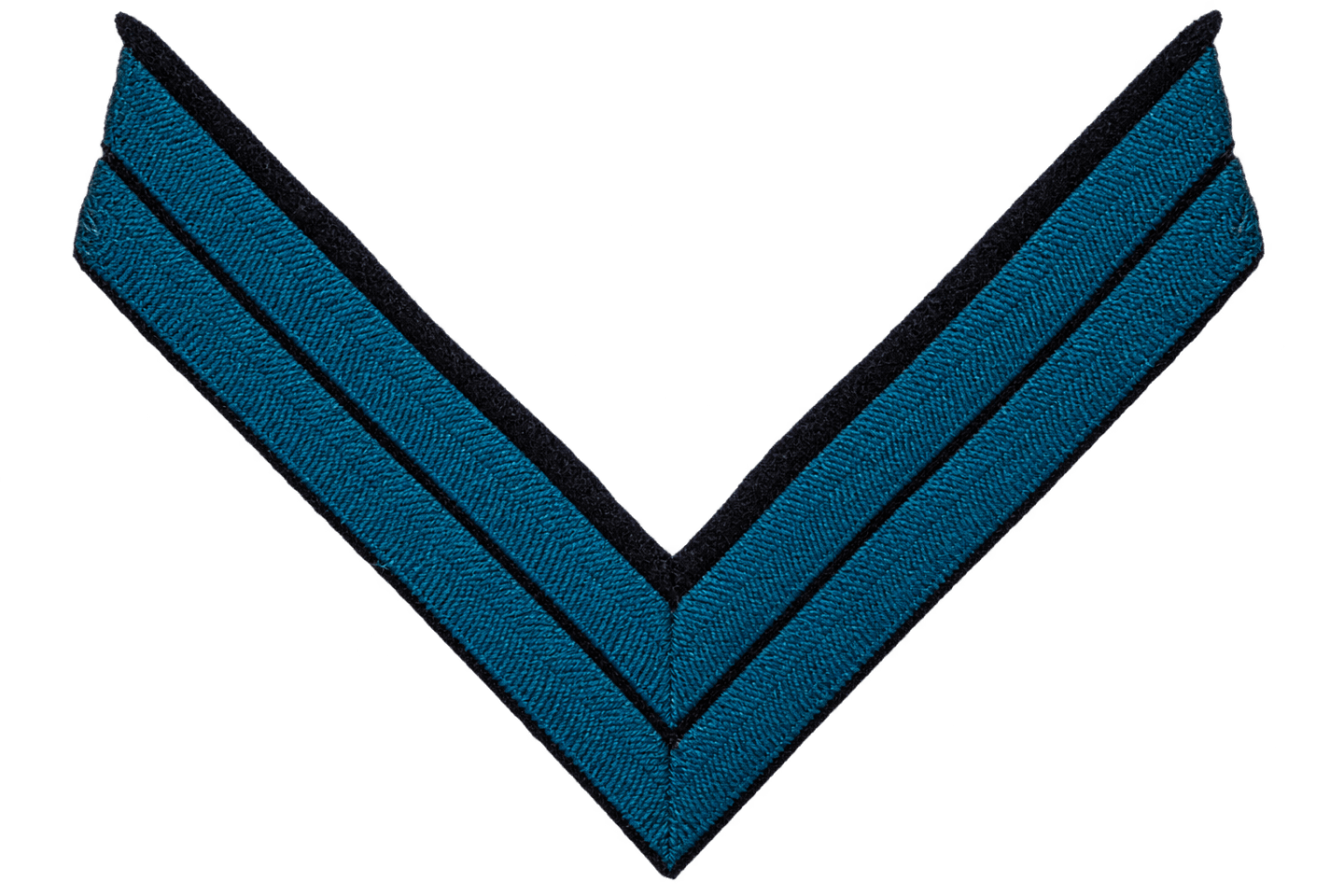
Corporal Absalom Jordan: Medal of Honor Hero of Sailor’s Creek
Three days before Robert E. Lee surrendered at Appomattox, the Confederate Army of Northern Virginia was breaking apart at Sailor’s Creek. In the confusion of cavalry charges, collapsing formations and desperate hand-to-hand fighting, Corporal Absalom Jordan captured an enemy flag. His official Medal of Honor citation contains only three words:
“Capture of flag.”
Those few words conceal a moment of extraordinary danger at one of the American Civil War’s final and most decisive battles.
Absalom Jordan was born in Brown County, Ohio. He entered military service from North Madison, Indiana, and served in Company A of the 3rd Indiana Cavalry. By the closing weeks of the Civil War, he held the rank of corporal in a regiment that had spent years campaigning with the Union Army in the Eastern Theater. The 3rd Indiana Cavalry had fought in some of the conflict’s hardest campaigns, but Jordan’s place in American military history would be secured during the final pursuit of Lee’s retreating army.
In early April 1865, Confederate forces abandoned Richmond and Petersburg and moved west in the hope of reaching supplies and continuing the struggle. Union armies followed closely, seeking to prevent Lee from escaping or joining another Confederate force. The pursuit became a race through the Virginia countryside, with exhausted soldiers, artillery and wagon trains crowded onto narrow roads.
On 6 April 1865, Union cavalry and infantry cut off a large portion of Lee’s army at Sailor’s Creek, also recorded as Sayler’s Creek. Nearly one-quarter of the retreating Confederate force was separated from the main army. Thousands of Confederate soldiers surrendered, including several general officers. The National Park Service describes the Union victory as the death knell of the Army of Northern Virginia. Lee surrendered at Appomattox Court House only seventy-two hours later.
It was during this violent collapse that Jordan captured a Confederate flag. Regimental colors were far more than ceremonial objects. Soldiers used them to locate and rally around their units amid smoke, noise and confusion. Capturing an enemy flag normally required a soldier to penetrate or overcome the men assigned to protect it, often at extremely close range.
The surviving federal citation does not identify the Confederate regiment whose flag Jordan captured or provide a detailed account of the encounter. It records only his rank, unit, location, date and achievement. Jordan was a corporal in Company A, 3rd Indiana Cavalry, and his recognized action took place at Sailor’s Creek on 6 April 1865. The Congressional Medal of Honor Society independently preserves the same brief citation, “Capture of flag.”
The simplicity of the citation should not be mistaken for insignificance. Civil War Medal of Honor citations were frequently much shorter than modern citations and often reduced a complex act of courage to a single sentence or phrase. At Sailor’s Creek, numerous Union soldiers were recognized for capturing Confederate colors during the disintegration of Lee’s army. Jordan’s action placed him among the men who pressed into the enemy’s final defensive formations and deprived a Confederate unit of its most visible symbol.
Jordan received the Medal of Honor on 3 May 1865, less than one month after the battle. The award recognized his conduct while serving in the United States Army and was issued soon after the war had effectively ended in Virginia. The National Archives preserves an index entry for his Medal of Honor case, identifying him as Corporal Absalom Jordan of Company A, 3rd Indiana Cavalry, under National Archives Identifier 146328355.
His reconstructed ribbon rack also includes the Civil War Campaign Medal. Unlike the Medal of Honor, the Civil War Campaign Medal was not a personal gallantry decoration and carried no individual citation. It recognized qualifying Federal Army service during the Civil War. The War Department established the medal in 1907, more than forty years after Jordan fought at Sailor’s Creek. It therefore represents his qualifying wartime service retrospectively rather than a medal presented to him during the conflict.
The distinction is historically important. The National Archives notes that the Medal of Honor was the only federal military medal officially awarded during the Civil War itself. Campaign medals recognizing earlier Army service were introduced decades later. Jordan’s Medal of Honor records a particular act of battlefield courage, while the Civil War Campaign Medal represents his broader service during the national conflict.
Much of Absalom Jordan’s personal story remains hidden behind the sparse language of nineteenth-century military records. The documents do not preserve his thoughts as he entered the fight, the precise circumstances in which he reached the enemy colors or the identity of the soldier who defended them. What survives is the essential fact that, during the Union victory at Sailor’s Creek, Corporal Jordan captured an enemy flag and was formally recognized with the United States’ highest military decoration.
Absalom Jordan’s legacy rests on a moment when the outcome of the war was nearly decided but the danger of battle had not diminished. On 6 April 1865, surrounded by the confusion of one of the Confederacy’s final defeats, he carried out an act that his country judged worthy of the Medal of Honor. His citation may be one of the shortest in the award’s history, but the courage behind it has endured for generations.
Become the named supporter for this profile and edit the tribute biography and portrait (Owner account required). Proceeds help keep the archive online.
$25 USD / year — annual sponsorship renewal. Keeps the page online and, where enabled, the family anniversary remembrance emails active.