★
Loading archive…
Loading archive…
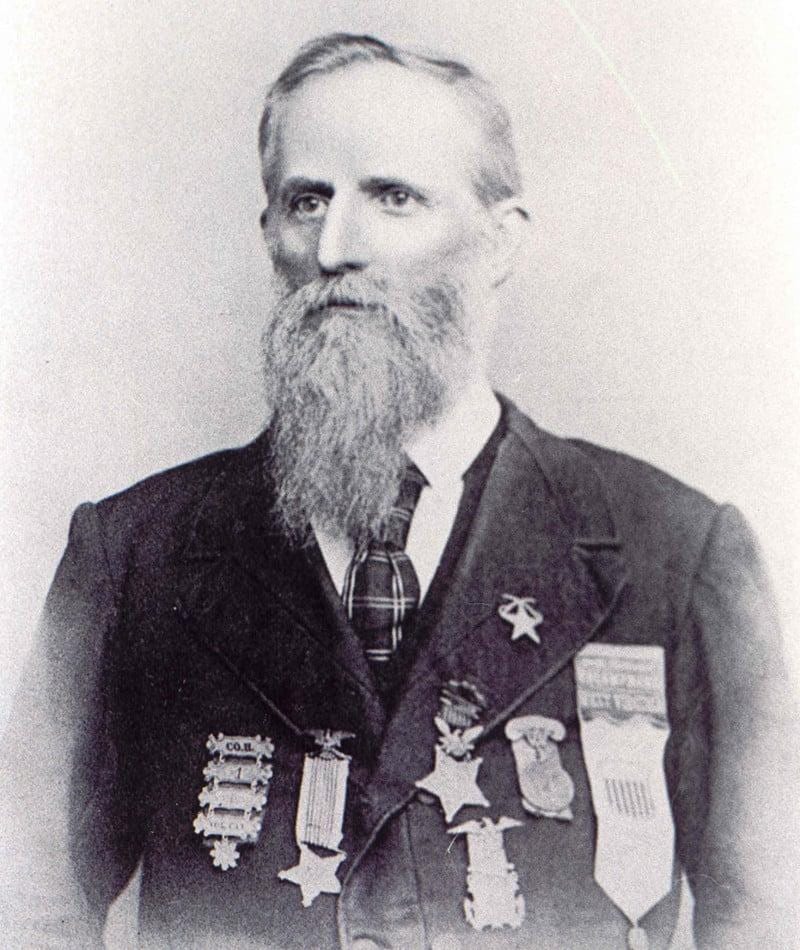
What happens when a regimental musician lays aside his instrument and takes up a rifle in the middle of a deadly battle? For Alason P. Webber, that extraordinary decision became an act of courage that saved wounded comrades and earned him the Medal of Honor. During the American Civil War, this unlikely battlefield hero proved that bravery is not defined by rank or military assignment, but by the willingness to risk everything for others.
Alason Pitts Webber was born on March 16, 1828, in Greene County, New York. He later settled in Illinois, where he enlisted in the Union Army in August 1862. Serving with the 86th Illinois Volunteer Infantry, Webber initially entered military service as a private before becoming a principal musician, also known as a fife major. Although his official duties involved military music, he would ultimately distinguish himself through remarkable courage on the front lines.
His defining moment came on June 27, 1864, during the Battle of Kennesaw Mountain in Georgia, one of the bloodiest engagements of Major General William T. Sherman's Atlanta Campaign. Union forces launched a determined assault against heavily fortified Confederate positions, only to encounter devastating resistance. As the attack collapsed, wounded Federal soldiers were left exposed between the opposing lines, facing enemy gunfire with little hope of reaching safety.
While others struggled to survive the deadly Confederate fire, Webber made an extraordinary choice. Voluntarily joining the assault despite his position as a musician, he took up a Henry repeating rifle supplied by Lieutenant Colonel Allen L. Fahnestock and engaged the enemy. His rapid and sustained firing helped shield wounded Union soldiers attempting to return to their lines.
But Webber's courage did not end there. As Confederate forces threatened to advance, he continued resisting alongside fellow soldiers, helping hold the enemy back while Union troops constructed temporary defensive works. His determination under fire provided precious time for his comrades to establish protection and prevented an already disastrous assault from becoming even more devastating.
What makes Webber's story particularly remarkable is that he was not serving in a conventional infantry combat role when he performed these heroic actions. He was a regimental musician who voluntarily entered one of the most dangerous moments of the battle because his fellow soldiers needed help. His actions demonstrated exceptional initiative, personal sacrifice, and a profound commitment to the lives of those fighting beside him.
Webber continued serving with the 86th Illinois Volunteer Infantry until the regiment was mustered out on June 6, 1865, following the Union victory in the Civil War. His service placed him among the thousands of volunteer soldiers who endured the hardships of the Western Theater and contributed to the preservation of the United States.
More than three decades after his heroic actions at Kennesaw Mountain, his bravery received the nation's highest military recognition. On June 22, 1896, Alason P. Webber was awarded the Medal of Honor for voluntarily joining the assault, protecting wounded soldiers through rapid rifle fire, and helping resist the enemy while defensive positions were established. The recognition immortalized an extraordinary act of battlefield heroism that might otherwise have remained a lesser-known chapter of Civil War history.
Alason P. Webber died on July 27, 1902, in Henry, Illinois, at the age of 74. He was laid to rest in Saratoga Methodist Church Cemetery in Marshall County, Illinois, leaving behind a legacy of courage that continues to resonate with students of American military history.
Today, Medal of Honor recipient Alason P. Webber is remembered not for commanding an army or leading a famous regiment, but for making a courageous choice when lives hung in the balance. His remarkable actions during the Battle of Kennesaw Mountain stand as an enduring reminder that true heroism often emerges from unexpected individuals. A musician by military assignment, a warrior by circumstance, and a hero by choice, Webber demonstrated that the greatest measure of a soldier is the courage to protect others when the danger is greatest.
Become the named supporter for this profile and edit the tribute biography and portrait (Owner account required). Proceeds help keep the archive online.
$25 USD / year — annual sponsorship renewal. Keeps the page online and, where enabled, the family anniversary remembrance emails active.