★
Loading archive…
Loading archive…
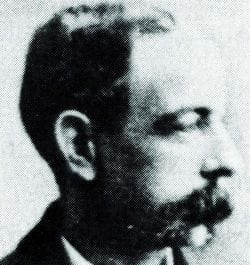
On 8 June 1857, amid the fierce fighting outside Delhi, Lieutenant Alfred Stowell Jones of the 9th (Queen's Royal) Lancers made a daring decision that would earn him Britain's highest award for battlefield gallantry. Spotting an enemy field gun being carried away from the battlefield at Badli-ki-Serai, he pursued the gun team, helped capture the weapon and, with Lieutenant-Colonel Yule's assistance, turned it against a village occupied by rebel forces. The defenders were quickly driven out. This remarkable act of initiative and courage earned Jones the Victoria Cross and established his place among the distinguished British cavalry officers of the Indian Rebellion of 1857.
Born on 24 January 1832 in Liverpool, England, Alfred Stowell Jones was the son of Reverend John Jones, later Archdeacon of Liverpool, and Hannah Jones, née Pares. He received his education at Liverpool College before entering the Royal Military College, Sandhurst. On 9 July 1852, he joined the 9th Lancers as a Cornet, receiving promotion to Lieutenant on 21 September 1855. His early military career soon took him to India, where the uprising of 1857 would test his courage and leadership under extraordinary circumstances.
Jones's Victoria Cross action took place during the Battle of Badli-ki-Serai on 8 June 1857, one of the important engagements preceding the Siege of Delhi. His official award citation was based on a despatch from Major-General James Hope Grant, K.C.B., dated 10 January 1858, and published in The London Gazette on 18 June 1858, Issue No. 22154, page 2960. The citation recorded how Jones and his squadron captured an enemy gun, killed its drivers and, with Lieutenant-Colonel Yule's assistance, turned it against a rebel-occupied village. Grant described the action as a "well-conceived act, gallantly executed." Queen Victoria personally presented Jones with the Victoria Cross on 2 August 1858 at Southsea Common, Portsmouth.
His courage at Badli-ki-Serai was only one chapter of his service during the rebellion. Jones remained with the Delhi Field Force throughout the siege, serving as Deputy Assistant Quartermaster-General to the Cavalry from 8 August to 23 September 1857. He participated in the operations surrounding the assault and capture of Delhi and subsequently served with Greathead's pursuing column, taking part in the actions at Bulandshahr and Aligarh and the Battle of Agra. His sustained contribution was recognised through three separate mentions in the despatches of Sir Hope Grant, as recorded in his military service history. His wider campaign service was also recognised with the Indian Mutiny Medal 1857–58, with the Delhi clasp supported by his documented service.
On 10 October 1857, at Agra, Jones faced another extraordinary test of survival. During a violent cavalry engagement, he was struck by a musket shot and received twenty-two sabre cuts. His injuries were so severe that he was left for dead. He nevertheless survived, although he lost an eye and carried deep scars for the remainder of his life. His recovery was remarkable, particularly considering the severity of his wounds and the conditions under which he had been injured.
Jones continued his military career after returning to Britain. On 16 March 1858, he was promoted to Captain and transferred to the 18th Light Dragoons, later redesignated the 18th Hussars. He subsequently transferred to the 13th Regiment of Foot on 18 October 1859 and received the brevet rank of Major on 30 November 1860. He also undertook further professional military education at the Staff College. Between 1861 and 1867, he served on the military staff at the Cape of Good Hope, gaining valuable experience in staff administration and military organisation.
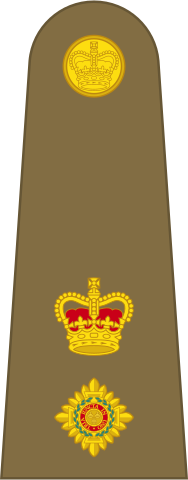
On 1 October 1871, Jones attained the brevet rank of Lieutenant-Colonel. His retirement notice in The London Gazette of 18 June 1872 formally described him as Captain and Brevet Lieutenant-Colonel Alfred Stowell Jones, V.C. He retired from the British Army effective 19 June 1872. This distinction is important because Lieutenant-Colonel was his highest brevet rank, while Captain was his substantive rank at retirement.
Retirement from the Army marked the beginning of an equally interesting second career. Jones developed a reputation as a civil and sanitary engineer, concentrating particularly on sewage disposal, sanitation and environmental management. He became a member of the Institution of Civil Engineers in 1878 and subsequently earned recognition for his work in sewage farming, including a prize from the Royal Agricultural Society for the management of a sewage farm. From 1895 until 1912, he managed the sewage works associated with the First Army Corps at Aldershot. His professional interests also brought him into association with the Royal Sanitary Institute, reflecting his commitment to improving public health and sanitation.
In his personal life, Jones married Emily Back at St James's, Piccadilly, London, on 13 June 1863. They had five sons and one daughter. The family eventually settled at Ridge Cottage, Finchampstead, Berkshire, where Jones became an established member of the local community and served as a Justice of the Peace. His contributions to the village extended beyond his earlier military achievements, and his memory was later honoured through the creation of the Jones Trophy, recognising outstanding voluntary contributions to the Finchampstead community.
Lieutenant-Colonel Alfred Stowell Jones, V.C., died at Finchampstead on 29 May 1920, aged 88. He was buried in the churchyard of St James's Church, Finchampstead. His life brought together exceptional battlefield courage, distinguished military service and a substantial contribution to civil engineering and public sanitation. Remembered for his daring capture of an enemy gun at Badli-ki-Serai, his survival of devastating wounds at Agra and his three mentions in despatches during the Siege of Delhi, Jones remains a notable Victoria Cross recipient of the Indian Rebellion of 1857. His legacy extends beyond the battlefield, reflecting a lifetime of service to both his country and his community.
Become the named supporter for this profile and edit the tribute biography and portrait (Owner account required). Proceeds help keep the archive online.
$25 USD / year — annual sponsorship renewal. Keeps the page online and, where enabled, the family anniversary remembrance emails active.