★
Loading archive…
Loading archive…
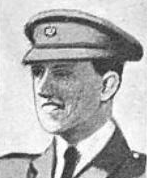
The Royal Engineer Who Defied Death at the Sambre-Oise Canal
The bridge was damaged, his fellow officers lay dead or wounded, and German machine guns were firing at point-blank range. Yet Major Arnold Horace Santo Waters stepped forward into the deadly fire, determined to finish what his men had started. His extraordinary courage during the final days of the First World War would earn him the Victoria Cross, Britain's highest award for gallantry.
Born on 23 September 1886 in Plymouth, Devon, Arnold Horace Santo Waters trained as a civil engineer before joining the British Army's Royal Engineers in January 1915. Arriving on the Western Front that May, he soon demonstrated that his engineering skills were matched by remarkable courage and determination under fire.
His bravery first earned major recognition during a dangerous operation at Nieuport, Belgium, on the night of 30 June to 1 July 1917. Volunteering to lead a Bangalore torpedo party, Waters was tasked with clearing German barbed-wire defences for a planned infantry raid. When an enemy patrol opened fire and destroyed the element of surprise, he refused to abandon the mission. After approximately 45 minutes of determined work, his party successfully blasted gaps through two belts of wire, allowing the raiding troops to advance. This courageous action earned him the Military Cross (MC), announced in the London Gazette on 26 September 1917.
His exceptional wartime service brought further recognition when he received the Distinguished Service Order (DSO) in June 1918, reflecting his distinguished service during operations in France and Flanders. He was also Mentioned in Despatches in June 1918, an additional acknowledgement of his military service.
But Waters' greatest test came on 4 November 1918, just seven days before the Armistice. During the Battle of the Sambre, he commanded the 218th Field Company, Royal Engineers, as they attempted to construct a crossing over the Sambre-Oise Canal near Ors, France. The operation was vital to the advancing British forces, but intense artillery and machine-gun fire devastated the bridging party. The bridge was damaged, casualties mounted, and every officer under Waters' command had reportedly been killed or wounded.
Knowing that the crossing could fail, Waters personally moved forward to direct the remaining engineers. Working on vulnerable cork floats under relentless enemy fire, he supervised the completion of the bridge despite the extraordinary danger. His leadership inspired the surviving men to continue their task and helped secure the crossing.
His official Victoria Cross citation, published in the London Gazette on 13 February 1919, credited the success of the operation to his courage and personal example. King George V personally presented him with the Victoria Cross at Buckingham Palace on 15 March 1919.
After leaving military service in 1919, Waters returned to civil engineering and built a distinguished professional career. He became the only person to serve twice as President of the Institution of Structural Engineers, holding the office in 1933 to 1934 and again in 1943 to 1944.
His contributions to public service earned him appointment as a Commander of the Order of the British Empire (CBE) in 1949, when he was Chairman of the Advisory Committee on Sand and Gravel Workings. In 1954, he was knighted by Queen Elizabeth II for his services to the Ministry of Housing and Local Government, adding another remarkable distinction to a lifetime devoted to service.
Despite his extraordinary achievements, Waters remained modest about his wartime heroism. He continued supporting former servicemen and their families, including through his work with local pensions committees. He died on 22 January 1981, aged 94, in Sutton Coldfield, Warwickshire.
Today, his Victoria Cross and surviving wartime medals are preserved at the Royal Engineers Museum in Chatham, Kent, honouring a man whose bravery helped carry British soldiers across a canal under devastating enemy fire.
Sir Arnold Horace Santo Waters left a legacy that extended far beyond the battlefield. He was an engineer who built for the future, a leader who refused to surrender under fire, and a soldier whose courage helped others move forward when the cost of failure could have been their lives.
Become the named supporter for this profile and edit the tribute biography and portrait (Owner account required). Proceeds help keep the archive online.
$25 USD / year — annual sponsorship renewal. Keeps the page online and, where enabled, the family anniversary remembrance emails active.