★
Loading archive…
Loading archive…
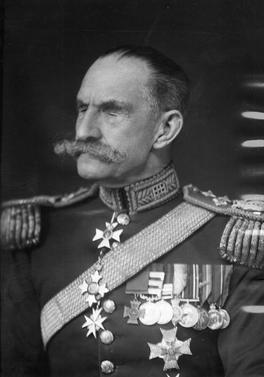
Captain, British Army
Support & adopt this hero ↓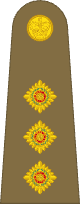
Blinded in action while leading a counterattack against a force many times the strength of his own small party, Captain Sir Ernest Beachcroft Beckwith Towse transformed a devastating battlefield wound into nearly half a century of service to veterans and blind people. Born at Regent's Park, Westminster, London, on April 23, 1864, he was the son of solicitor Robert Beckwith Towse and Julia Ann Corcoran. Educated at Stubbington House School and Wellington College, he entered the 3rd (Highland (Rifle) Militia) Battalion of the Seaforth Highlanders in 1884 before receiving a Regular Army commission in the Wiltshire Regiment in December 1885. He transferred to the Gordon Highlanders in January 1886. Wikipedia Towse married Gertrude Christie, the younger daughter of John Christie, in October 1892. Promoted captain on May 20, 1896, he had already begun the series of overseas campaigns that would establish his military reputation. He served with the Chitral Relief Force in 1895 and later on the North-West Frontier of India and in the Tirah Campaign of 1897–98. His India Medal ultimately carried the clasps Relief of Chitral 1895, Punjab Frontier 1897–98, and Tirah 1897–98. Wikipedia With the outbreak of the Second Boer War, Towse deployed to South Africa with the 1st Battalion, Gordon Highlanders. At Magersfontein on December 11, 1899, the British advance came under devastating Boer fire. When Lieutenant-Colonel G. T. F. Downman was mortally wounded near the front of the firing line, Towse attempted to carry his commanding officer to safety on his back. Unable to do so under the conditions, he remained with and supported Downman until Colour-Sergeant Nelson and Lance-Corporal Hodgson reached them. The act was subsequently incorporated into Towse's Victoria Cross citation. The Gazette His second Victoria Cross action came on April 30, 1900, at Mount Thaba. Towse and twelve men occupied an isolated position on the summit when a Boer force of about 150 men approached the same plateau. According to the official citation, the two parties did not become aware of one another until they were about one hundred yards apart. Some of the Boers advanced to within approximately forty yards and demanded the British party's surrender. Towse ordered his men to open fire and continued firing himself before charging forward. He was then severely wounded, both eyes being shattered, but his party succeeded in driving off the much larger enemy force. The London Gazette concluded that his vigorous action had saved the situation despite the numerical superiority of the Boers. The Gazette The Victoria Cross was announced in the London Gazette on July 6, 1900, specifically recognizing Towse's conduct at both Magersfontein and Mount Thaba. Queen Victoria subsequently presented him with the decoration at Windsor Castle. His injuries left him permanently blind and effectively ended his conventional regimental career, although they did not end his public or military service. His South African entitlement also included the Queen's South Africa Medal with the clasps Cape Colony, Paardeberg, and Driefontein. He had additionally been Mentioned in Despatches during the campaign. The Gazette Towse was appointed a Sergeant-at-Arms under Queen Victoria and was subsequently reappointed under later sovereigns. On January 1, 1903, King Edward VII appointed him to the Honourable Corps of Gentlemen-at-Arms, an appointment officially recorded in the London Gazette. He remained associated with the Corps until 1939, and official Royal Household records were still listing Captain Sir Ernest Beachcroft Beckwith Towse, VC, KCVO, CBE among the Gentlemen of the Corps in the 1930s. The Gazette The First World War brought Towse back into wartime service despite his total blindness. He served as an unpaid staff captain in connection with base hospitals in France, visiting wounded servicemen and using his skills as a typist to prepare letters and messages for men unable to write for themselves. His work with wounded soldiers and former servicemen resulted in a Mention in Despatches. His First World War medal entitlement comprised the 1914–15 Star, British War Medal, and Victory Medal, with the authorized Mention in Despatches oak leaf worn on the Victory Medal ribbon. Science Museum Group Collection Service to blind people became the central work of Towse's later life. He joined the council of the British and Foreign Blind Association in 1901 and served initially as vice-chairman. He later became chairman of its successor, the National Institute for the Blind, holding that position from 1923 until 1944. In 1928 he founded the British Wireless for the Blind Fund, which helped provide radio receivers to blind people, and he remained heavily involved in organizations supporting blinded veterans and civilians. During the Second World War he made his home at Long Meadow, Goring-on-Thames, available for the rehabilitation of civilians blinded in air raids, where it became the first Queen Elizabeth Home of Recovery. Science Museum Group Collection His long record of public and charitable service brought further honours. He was appointed Commander of the Order of the British Empire, Civil Division, in 1920, and on January 1, 1927 was appointed Knight Commander of the Royal Victorian Order, the latter honour conferring the title "Sir." Contemporary and later records also establish his eventual rank as a Knight of Grace of the Order of St John. The precise date of his advancement to Knight of Grace should presently be left unstated: the London Gazette records his appointment to the Order as an Esquire in 1905, while later secondary accounts give conflicting dates for his subsequent advancement. The Gazette By the final period of his life, Towse's complete wearable honours reflected more than fifty years of military, royal and charitable service. They comprised the Victoria Cross; Knight Commander of the Royal Victorian Order; Commander of the Order of the British Empire, Civil Division; Knight of Grace of the Order of St John; India Medal with three clasps; Queen's South Africa Medal with three clasps; 1914–15 Star; British War Medal; Victory Medal with Mention in Despatches oak leaf; King Edward VII Coronation Medal; King George V Coronation Medal; King George V Silver Jubilee Medal; and King George VI Coronation Medal. His surviving medal entitlement is recorded as this thirteen-honour group. Victoria Cross Captain Sir Ernest Beachcroft Beckwith Towse died at Goring-on-Thames on June 21, 1948, aged eighty-four, and was buried in the churchyard of St Thomas of Canterbury. His Victoria Cross and medal group are preserved by the Gordon Highlanders Museum in Aberdeen.
Become the named supporter for this profile and edit the tribute biography and portrait (Owner account required). Proceeds help keep the archive online.
$25 USD / year — annual sponsorship renewal. Keeps the page online and, where enabled, the family anniversary remembrance emails active.