★
Loading archive…
Loading archive…
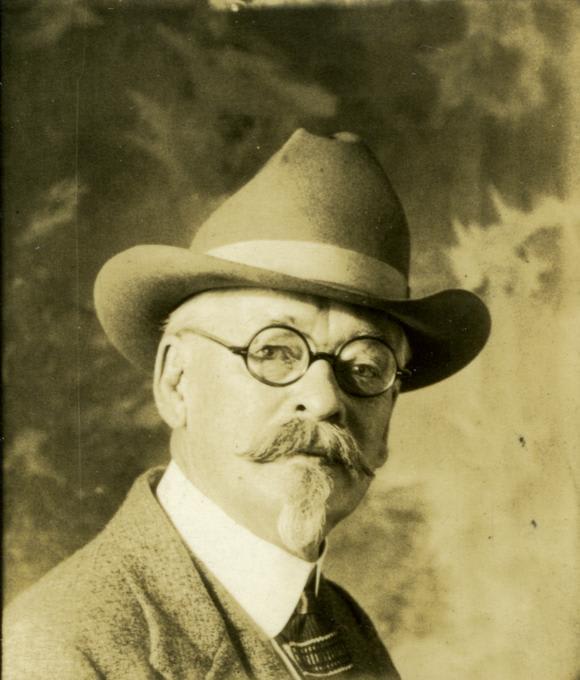
Private, U.S. Army
Support & adopt this hero ↓
He Captured a Flag Three Days Before the Surrender
Benjamin Gifford was born on September 13, 1833, in German Flatts, Herkimer County, New York. He served in the Union Army during the American Civil War and received the Medal of Honor for capturing a Confederate battle flag at the Battle of Sailor's Creek, Virginia, on April 6, 1865. His act of courage occurred during the final days of the conflict, only three days before General Robert E. Lee surrendered his Army of Northern Virginia at Appomattox Court House.
Gifford grew up in central New York, a region that contributed thousands of volunteers to the Union war effort. When the Civil War began in April 1861, the United States entered a prolonged conflict that would dramatically reshape the nation.
On August 13, 1862, Gifford enlisted at German Flatts for a three-year term of military service. He was mustered into Company H of the 121st New York Volunteer Infantry as a private on August 23, 1862.
The 121st New York Infantry was organized primarily from volunteers recruited in Herkimer and Otsego Counties. After entering federal service, the regiment traveled to Washington, D.C., and became part of the Army of the Potomac's VI Corps.
The regiment served in several major campaigns of the Civil War's Eastern Theater. Its operations included the Maryland Campaign, Fredericksburg, Chancellorsville, Gettysburg, the Overland Campaign, and the subsequent fighting around Petersburg.
Gifford's service placed him within a regiment that experienced repeated combat and significant casualties. During the fighting around Fredericksburg and Salem Church in May 1863, the 121st New York suffered particularly heavy losses. A contemporary casualty report identified Gifford among the wounded soldiers of Company H, listing an injury to his mouth.
Despite the demands of military service, Gifford remained with his regiment as the war continued. The 121st New York subsequently participated in operations in Virginia and the Shenandoah Valley, where Union forces fought to defeat Confederate armies and protect strategically important territory.
By the spring of 1865, the Union Army was closing in on Confederate forces defending Richmond and Petersburg. Lieutenant General Ulysses S. Grant's armies had maintained sustained pressure on General Robert E. Lee's positions, gradually weakening the Confederate ability to continue organized resistance.
On April 2, 1865, Union forces broke through Confederate defenses at Petersburg, forcing Lee to abandon both Petersburg and Richmond. Confederate troops began retreating westward, hoping to reach supplies and eventually unite with other Confederate forces farther south.
Union cavalry and infantry pursued the retreating army, attempting to prevent its escape.
On April 6, 1865, the opposing forces met at Sailor's Creek, Virginia, in a series of engagements that became among the final major battles of the Civil War in Virginia.
The 121st New York Infantry participated in the fighting as part of the Union VI Corps. Federal soldiers attacked Confederate formations attempting to continue their withdrawal, while the Confederate troops struggled to maintain their defensive positions.
The battle developed into a major Union victory. Thousands of Confederate soldiers were captured, including several senior officers, severely weakening Lee's already exhausted army.
It was during this engagement that Benjamin Gifford performed the action for which he received the Medal of Honor.
Serving as a private in Company H, Gifford captured a Confederate battle flag amid the fighting.
Regimental flags were important symbols of military identity and served as visible rallying points during Civil War battles. Capturing an enemy flag was regarded as a distinguished military achievement because the colors were frequently defended by soldiers fighting at close range.
Gifford's official Medal of Honor citation described his achievement in just three words: "Capture of flag."
Although brief, the citation established the specific action that distinguished him during the battle. His capture of Confederate colors took place while Union forces were inflicting a devastating defeat on Lee's retreating army.
Three days later, on April 9, 1865, General Lee surrendered to Grant at Appomattox Court House, effectively ending major Confederate military resistance in Virginia.
Gifford's bravery received official recognition shortly afterward.
On May 10, 1865, Benjamin Gifford was awarded the Medal of Honor for his conduct at Sailor's Creek on April 6. The decoration recognized his capture of an enemy battle flag while serving with the 121st New York Infantry.
Established during the Civil War, the Army Medal of Honor recognized exceptional gallantry and distinguished conduct in military service. Gifford belonged to the generation of Union soldiers whose battlefield achievements helped establish the decoration's early history.
Unlike many Civil War recipients whose actions were recognized decades after the conflict, Gifford received his Medal of Honor just over a month after his heroic action.
His military service concluded on June 25, 1865, when he was mustered out with Company H near Hall's Hill, Virginia. He had served for nearly three years, from the summer of 1862 through the final months of the Civil War.
Following his discharge, Gifford returned to civilian life. The surviving military and Medal of Honor records provide limited details about his later personal activities, but his wartime service remained permanently recognized through the decoration he had earned.
Benjamin Gifford died on July 14, 1901, at the age of sixty-seven. He was buried at Hinsdale Cemetery in Hinsdale, New York.
His military legacy centers on the events at Sailor's Creek, where he captured a Confederate battle flag during one of the final major engagements of the Civil War.
As a private in the 121st New York Infantry, Gifford served through years of demanding military campaigns before distinguishing himself in the closing days of the conflict. His Medal of Honor preserves the memory of his courage and his contribution to the Union victory.
Benjamin Gifford remains remembered as an American Civil War soldier whose actions at Sailor's Creek earned him the nation's highest military decoration for valor.
Become the named supporter for this profile and edit the tribute biography and portrait (Owner account required). Proceeds help keep the archive online.
$25 USD / year — annual sponsorship renewal. Keeps the page online and, where enabled, the family anniversary remembrance emails active.