★
Loading archive…
Loading archive…
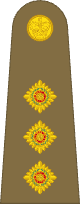
History remembers the famous aces of the First World War for their victories in the skies, but true greatness was often measured by endurance rather than numbers alone. Few pilots flew longer, fought harder, or accepted greater risks than Captain Cyril Burfield Ridley. Surviving more than 200 operational sorties over the Western Front, he repeatedly faced overwhelming odds in the air and carried out daring low-level attacks against enemy positions before tragedy claimed his life in a flying accident shortly after the war had ended.
Born on 22 January 1895 at Esher, Surrey, England, Cyril Burfield Ridley spent part of his youth in Toronto, Canada, before returning to Britain following the outbreak of the First World War. Determined to serve as a military aviator, he earned his Royal Aero Club Aviator's Certificate at Hendon and was commissioned as a Flight Sub-Lieutenant in the Royal Naval Air Service on 25 June 1916. After initial service defending the English Channel, he joined No. 1 Naval Squadron at Dunkirk, where he began flying the agile Sopwith Triplane and later the legendary Sopwith Camel over the Western Front.
Ridley's first confirmed aerial victory came on 29 April 1917, when he shared in the destruction of an Albatros D.III over Villers-les-Cagnicourt. Over the following eighteen months he became one of the Royal Naval Air Service's most experienced combat pilots, participating in well over 200 operational sorties and taking part in dozens of aerial engagements. Officially credited with 11 aerial victories, contemporary squadron records and recommendations for his decoration suggest his actual combat success may have been considerably higher, with many victories remaining unconfirmed under the strict verification procedures of the day.
What truly distinguished Ridley was his willingness to support troops on the ground. Rather than remaining at altitude, he repeatedly descended to treetop level to attack German trenches, machine-gun nests, and troop concentrations. During one remarkable operation in September 1917, he flew at little more than ten feet above the ground, weaving between trees while strafing retreating enemy forces. British soldiers advancing below reportedly cheered as his fearless attack disrupted German positions and relieved pressure on the advancing infantry.
For his exceptional leadership, courage, and aggressive fighting spirit, Ridley was awarded the Distinguished Service Cross (DSC), with the award announced in the London Gazette on 17 April 1918. His citation praised both his aerial combat achievements and his repeated low-flying attacks against enemy positions, including an action in which he closed to point-blank range before driving down an opposing fighter. His gallantry also earned personal praise from General Sir William Birdwood, who commended Ridley for his invaluable support of British ground forces during offensive operations.
Following the creation of the Royal Air Force on 1 April 1918, Ridley became a Captain and Flight Commander with No. 201 Squadron RAF, continuing to lead combat patrols while mentoring younger pilots entering frontline service. After completing more than 200 combat sorties, he was finally withdrawn from operational flying in July 1918 and assigned to evaluate new aircraft, where his extensive combat experience proved invaluable. His frank assessments helped identify shortcomings in experimental designs intended for frontline service.
Unlike many of his fellow fighter aces, Ridley survived the First World War. Remaining in the Royal Air Force after the Armistice, he served with No. 12 Squadron as part of the British occupation forces in Germany. Tragically, on 17 May 1920, while flying near Cologne, his aircraft collided in mid-air with another RAF aircraft during a training flight. Both pilots were killed. Captain Cyril Burfield Ridley was just 25 years old and was laid to rest in Cologne Southern Cemetery, Germany.
Throughout his distinguished military career, Ridley's gallantry and service were recognised by the Distinguished Service Cross, the British War Medal 1914–1920, and the Victory Medal, reflecting both his extraordinary courage and his sustained service throughout the Great War.
Today, Captain Cyril Burfield Ridley DSC is remembered as one of the Royal Naval Air Service's and Royal Air Force's most courageous fighter pilots. His remarkable record of more than 200 operational sorties, relentless low-level attacks in support of Allied troops, and unwavering determination in aerial combat exemplified the highest traditions of British military aviation. Though his life was cut tragically short in peacetime, his legacy endures as one of exceptional courage, skill, and devotion to duty during one of history's most demanding conflicts.
Become the named supporter for this profile and edit the tribute biography and portrait (Owner account required). Proceeds help keep the archive online.
$25 USD / year — annual sponsorship renewal. Keeps the page online and, where enabled, the family anniversary remembrance emails active.
