★
Loading archive…
Loading archive…
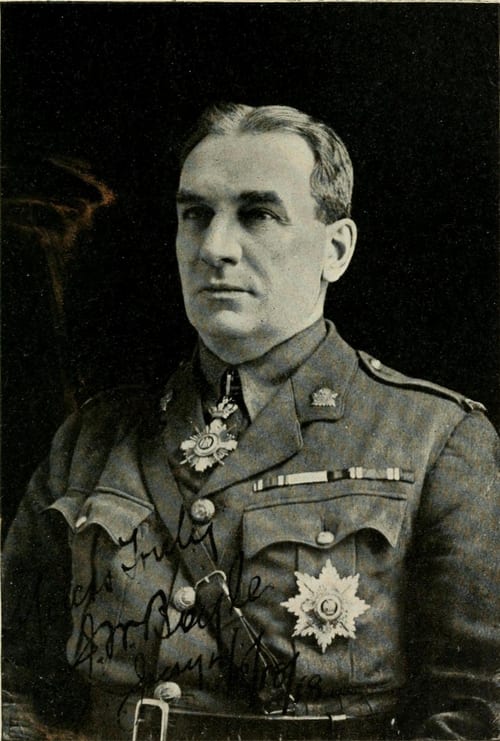
Lt Colonel, Canadian Army
Support & adopt this hero ↓
Klondike King, Canadian Lieutenant-Colonel and Wartime Mission Leader
Few Canadians lived a life that sounds more like fiction than Joseph Whiteside Boyle, the legendary “Klondike Joe.” He built a mining empire during the Klondike Gold Rush, raised and financed a machine-gun company for Canada during the First World War, then carried his Canadian uniform into revolutionary Russia and wartime Romania. There he became a railway organizer, negotiator, intelligence operative and trusted figure at the Romanian royal court. Behind the legends, however, survives an extraordinary documentary record that makes Boyle’s real achievements remarkable enough without embellishment.
Joseph Whiteside Boyle was born in Toronto on 6 November 1867 and raised in Woodstock, Ontario. After an adventurous early life that included going to sea and involvement in professional sport, he reached Dawson during the Klondike Gold Rush in 1897. Boyle quickly recognized that the future of the Klondike lay not only with individual prospectors but with large-scale industrial mining. Parks Canada credits him with founding the Klondike Mining Company in 1904, and his later operations employed enormous dredges and electrical power on a scale that helped transform mining in the Yukon. His importance as a mining entrepreneur would eventually lead to his designation as a National Historic Person of Canada.
When the First World War began, Boyle was already too old for conventional enlistment, but he refused to remain on the sidelines. He recruited and financed a 50-man machine-gun company from the Yukon for Canadian service. For this contribution, Minister of Militia and Defence Sir Sam Hughes granted him the honorary rank of lieutenant-colonel in the Canadian Militia. Boyle did not command the contingent in the field, and its men were subsequently absorbed into larger Canadian formations, but his honorary rank soon became far more than ceremonial.
In 1916 Boyle left the Klondike for England. While there, he became involved with the American Committee of Engineers and accepted a mission connected with reorganizing Russia’s badly disrupted railway system. His surviving British medal index card identifies him not only with the Canadian Militia, but also as head of a “Canadian Mission” and with the British Military Mission in Romania. The same card records Russia as his first theatre of war and gives 16 June 1917 as the official theatre-entry date used in his medal record. Significantly, its Star entry is blank, confirming that Boyle did not receive the 1914-15 Star.
Then came the part of Boyle’s life that would make him famous far beyond Canada. In revolutionary Russia he worked to restore railway movement through a transportation system collapsing under war and political upheaval. The Dictionary of Canadian Biography credits him with helping clear the enormous Moscow railway bottleneck in late 1917. He also assisted in returning Romanian archives and paper currency that had been sent to Moscow for safekeeping. Contrary to later legend, the documented operation involved archives and currency, not the recovery of Romanian crown jewels and bullion.
By early 1918, Boyle’s work had drawn him deeply into Romanian affairs. Acting as an intermediary for the Romanian government, he helped negotiate a ceasefire with revolutionary forces in Bessarabia. In March and April he played a central role in securing the release of about 50 high-ranking Romanians held at Odessa, an achievement that made him a national hero in Romania and brought him into close contact with the royal court. Working with Captain George Alexander Hill of the British intelligence service, Boyle also participated in clandestine activity against German and Bolshevik forces in Bessarabia and southwestern Russia.
His relationship with Queen Marie of Romania became one of the most famous aspects of his later life. Boyle became a valued confidant during one of the darkest periods in Romania’s wartime history. Later writers sometimes transformed that relationship into romance, but the Dictionary of Canadian Biography notes that there is no incontrovertible evidence that Boyle and Queen Marie were lovers. What is documented is his remarkable political influence. At the Paris Peace Conference in 1919, Boyle helped Romania obtain a $25-million credit from the Canadian government, extending his role from wartime troubleshooter into postwar diplomacy.
Britain formally recognized Boyle on 3 June 1919. The London Gazette announced the award of the Distinguished Service Order for “distinguished services rendered in connection with Military Operations in Eastern Russia.” The Gazette printed his first name as “James,” but Boyle’s Canadian honours record corrects the name to Joseph Whiteside Boyle and records the DSO with London Gazette issue 31376 as its authority.
His honours did not end there. Boyle’s surviving Canadian Military Honours and Awards citation card records the French Croix de Guerre 1914-1918, as well as the Order of the Star of Romania, Grand Cross, Order of the Crown of Romania, Commander, and Order of Regina Maria, identified in the reconstructed entitlement as the Order of Queen Marie, First Class. The card associates these French and Romanian honours with London Gazette issue 31615 of 24 October 1919. The London Gazette independently names “Lieutenant-Colonel J. W. Boyle, Canadian Militia” among recipients of the French Croix de Guerre.
Russia also recognized Boyle’s service. His Canadian honours record lists the Order of St Vladimir, Fourth Class, the Order of St Anne, Fourth Class with Swords, and the Order of St Stanislaus, Second Class, with the Russian awards linked on the card to War Office authority dated 16 July 1921. These entries are particularly valuable because they provide recipient-specific official evidence rather than relying upon later biographies or reconstructed ribbon displays.
Boyle’s campaign medal record completes the picture. His medal index card confirms both the British War Medal 1914-1920 and the Victory Medal, giving the roll reference Canadian Militia Officers 163, page 1. The same record contains correspondence from the British Military Mission in Romania stating that Boyle’s Romanian Commemorative Cross for the War of 1916-1918 was forwarded to him on 4 February 1920. Together with his eight documented orders and decorations, these three medals bring Boyle’s reconstructed wearable honours entitlement to eleven.
There was also another official recognition that should not be confused with those eleven honours. Boyle’s Canadian record states that his name was brought to the notice of the Secretary of State for War for valuable services rendered in connection with military operations in the field. It was an official wartime commendation, but the surviving evidence does not justify turning it automatically into an additional medal or assuming a Mention in Despatches ribbon emblem. It is therefore best preserved as a separate distinction in his historical record.
The war had taken a heavy toll. Boyle suffered a stroke in 1918 and never completely recovered. His great Klondike business interests also deteriorated while he devoted himself to Russia and Romania. He died at Hampton Hill, London, on 14 April 1923, aged 55. Six decades later, in 1983, his remains were returned to Canada and reinterred in Woodstock, the Ontario community in which he had grown up.
In 1984, Joseph Whiteside Boyle was designated a National Historic Person of Canada. Parks Canada commemorates him principally as the mining entrepreneur whose large-scale operations helped shape the Klondike, while also recognizing the extraordinary wartime services for which European nations decorated him.
What makes Boyle compelling more than a century later is that the documented story is already astonishing. He went from the goldfields of the Yukon to the railway yards of revolutionary Russia, from rescuing Romanian prisoners at Odessa to negotiating amid revolution and war, and from financing a small Canadian machine-gun force to receiving honours from Britain, France, Romania and Russia. Joseph Whiteside Boyle did not simply witness one of the most turbulent periods of the early twentieth century. He repeatedly found his way into the centre of it.
Become the named supporter for this profile and edit the tribute biography and portrait (Owner account required). Proceeds help keep the archive online.
$25 USD / year — annual sponsorship renewal. Keeps the page online and, where enabled, the family anniversary remembrance emails active.