★
Loading archive…
Loading archive…
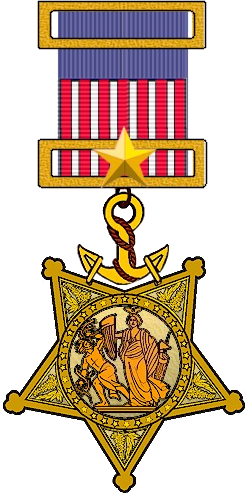
Coxswain, U.S. Navy
Support & adopt this hero ↓
At the Pivot Gun When the Alabama Went Down
Charles A. Read was born in Sweden in 1837 and later entered the United States Navy, becoming one of the sailors whose courage during the American Civil War earned the Medal of Honor. On June 19, 1864, he served aboard USS Kearsarge during its celebrated engagement with the Confederate commerce raider CSS Alabama off Cherbourg, France. Working as the first sponger of a pivot gun, Read distinguished himself through his composure and disciplined performance under enemy fire.
Read's Navy service was accredited to Ohio. By the time of the Battle of Cherbourg, he held the enlisted rating of Coxswain aboard USS Kearsarge, a steam-powered sloop-of-war operating in European waters.
As a coxswain, Read belonged to a naval rating associated with seamanship and the handling of ships' boats. During battle, however, sailors were assigned to stations according to the needs of the ship's fighting organization. Read's combat assignment placed him directly with one of Kearsarge's artillery crews.
USS Kearsarge had been commissioned on January 24, 1862, and deployed to European waters during the Civil War. Its mission included searching for Confederate vessels that attacked United States merchant shipping across international trade routes.
One of the most successful Confederate raiders was CSS Alabama, commanded by Captain Raphael Semmes. During nearly two years at sea, Alabama captured or destroyed more than sixty merchant vessels, making it a major threat to Union maritime commerce.
In June 1864, Alabama arrived at Cherbourg, France, seeking repairs and supplies after its extended cruise.
News of the Confederate warship's arrival reached USS Kearsarge, commanded by Captain John A. Winslow. The Union vessel arrived off Cherbourg on June 14 and began patrolling outside the harbor.
Semmes subsequently decided to challenge Kearsarge rather than remain in port.
On the morning of June 19, 1864, CSS Alabama departed Cherbourg and moved into open waters to confront the waiting Union warship.
Captain Winslow maneuvered Kearsarge farther offshore to ensure that the engagement took place beyond French territorial waters. Once the ships had reached a suitable position, they prepared for battle.
Alabama opened fire first, while Kearsarge waited until the range had narrowed before responding.
The two vessels maneuvered in broad circular courses, attempting to bring their guns to bear against one another. The engagement developed into a sustained exchange of naval artillery fire.
During the battle, Charles A. Read served as the first sponger of one of Kearsarge's pivot guns.
His assigned duty was essential to the safe and effective operation of the weapon.
After a naval cannon discharged, burning fragments could remain inside its barrel. Before the next powder charge could be loaded, the bore had to be thoroughly swabbed with a wet sponge to extinguish any remaining embers.
Failure to complete this task correctly could cause a premature ignition, placing the entire gun crew in danger.
The first sponger therefore carried considerable responsibility. The work required physical effort, concentration, and precision, particularly when a gun crew was attempting to maintain an effective firing rate during combat.
Read performed these duties while Kearsarge exchanged heavy fire with Alabama.
As shot and shell struck or passed near the Union vessel, the sailors at their battle stations continued loading, aiming, and firing their weapons.
The noise, smoke, and danger of naval artillery combat made disciplined teamwork essential.
Read's conduct attracted the attention of his divisional officer, who recommended him for recognition.
His official Medal of Honor citation praised his marked coolness and good conduct while serving as the first sponger during the engagement.
The citation recognized the courage involved in maintaining his duties at the gun while his ship was under hostile fire.
As the battle continued, Kearsarge gradually gained the advantage. Its well-trained gun crews delivered effective fire against the Confederate vessel, while Alabama struggled with deteriorated ammunition and increasing battle damage.
Kearsarge also benefited from protective chain cables secured along portions of its hull, which helped shield important machinery spaces.
After approximately an hour of fighting, Alabama suffered severe damage near the waterline. Water began entering the Confederate ship, and its crew could no longer prevent the vessel from sinking.
Captain Semmes ordered the Confederate colors lowered and attempted to surrender.
Shortly afterward, CSS Alabama sank off the French coast.
The victory ended the career of one of the Confederacy's most destructive commerce raiders and became one of the best-known naval engagements of the American Civil War.
Survivors of the Confederate vessel were rescued by Kearsarge and other vessels in the area, including the British yacht Deerhound.
The engagement demonstrated the importance of effective naval gunnery and the coordinated efforts of sailors serving at every level of a warship's fighting organization.
Read's performance formed part of the disciplined service that enabled Kearsarge to defeat its opponent.
For his courage during the battle, Charles A. Read received the Navy Medal of Honor.
His award was recorded under Navy General Order No. 45, dated December 31, 1864.
The decoration recognized his conduct aboard USS Kearsarge on June 19, 1864, particularly the composure and determination he demonstrated while performing the demanding duties of first sponger under enemy fire.
Read was among seventeen members of the Kearsarge crew who received the Medal of Honor for their actions during the battle.
His recognition illustrated the important role of enlisted sailors in naval combat. Although Read did not command the ship or determine its tactical movements, his responsibilities at the pivot gun contributed to the effective operation of one of its principal weapons.
His Medal of Honor acknowledged the courage required to remain at his battle station and perform an essential technical duty throughout a dangerous engagement.
Read's life ended less than a year after the victory at Cherbourg.
Charles A. Read died on May 7, 1865, at the age of twenty-seven. He was buried at the Cemetery of the Evergreens in Brooklyn, New York.
His death came during the closing weeks of the Civil War, shortly after the surrender of General Robert E. Lee's Army of Northern Virginia.
Although his life was brief, Read's military service became permanently associated with one of the Union Navy's most celebrated victories.
On June 19, 1864, he stood at his assigned pivot gun aboard USS Kearsarge while the ship fought CSS Alabama off Cherbourg. Through his calmness, technical skill, and determination under enemy fire, he fulfilled a critical responsibility during the engagement.
His actions earned the Medal of Honor and secured his place among the distinguished sailors of the American Civil War.
Charles A. Read is remembered for the courage and professional discipline he demonstrated during the destruction of CSS Alabama, a naval victory that remains an important chapter in United States maritime history.
Become the named supporter for this profile and edit the tribute biography and portrait (Owner account required). Proceeds help keep the archive online.
$25 USD / year — annual sponsorship renewal. Keeps the page online and, where enabled, the family anniversary remembrance emails active.